The Race for Arctic Dominance: The Case of Greenland
Greenland
matters now more than ever. The year 2026 has been described as a potential
crisis point, marked by U.S. tariff threats and rhetoric suggesting annexation
“one way or another.” Such statements underscore how strategic calculations in
the Arctic have hardened. Greenland sits at the intersection of North America
and Europe, commanding access to the Greenland-Iceland-UK (GIUK) Gap and
emerging Arctic shipping lanes. As polar ice melts, these routes are becoming
viable alternatives to traditional maritime corridors, potentially reshaping
global trade flows.
Beyond
geography, Greenland holds immense resource significance. It hosts an estimated
1.5 million tons of rare earth elements—minerals essential for artificial
intelligence technologies, electric vehicles, renewable energy systems, and
advanced defense equipment. Following tightened Chinese export controls on rare
earths in late 2025, Western nations declared an urgent need to diversify
supply chains. Greenland’s deposits are now viewed not merely as economic
assets, but as critical components of NATO’s defense-industrial base and the
broader green transition.
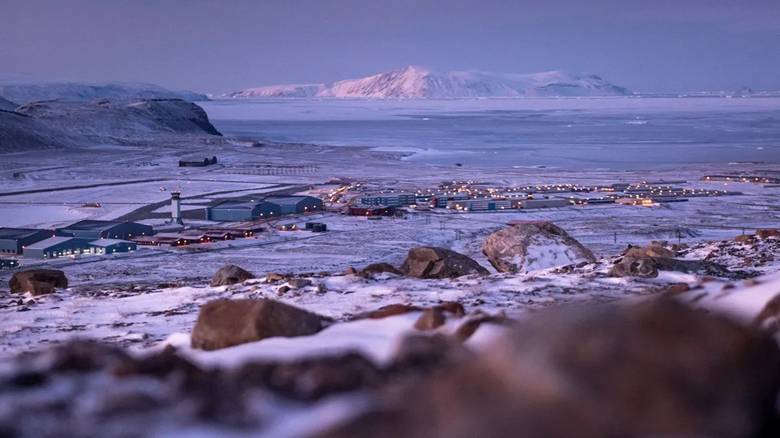
Militarily,
Greenland is indispensable. The Pituffik Space Base—formerly Thule Air
Base—represents the northernmost installation of the U.S. Space Force and plays
a vital role in ballistic missile early warning and space surveillance. Control
over Greenland’s coastline also influences the eastern gateway to the Northwest
Passage, while the GIUK Gap remains a critical chokepoint for monitoring
Russian submarine activity and safeguarding transatlantic supply lines.
However,
Denmark and Greenland have firmly rejected any notion of external acquisition
or coercion. Greenland’s leadership has emphasized that its future will be
decided in Nuuk—not Washington. Denmark has reinforced that sovereignty is
non-negotiable. NATO leadership has likewise stressed that alliance unity must
remain the center of gravity and that disputes among allies must be resolved
through dialogue rather than economic pressure.

China and
Russia add further complexity. China’s “Polar Silk Road” integrates Arctic
shipping into the Belt and Road Initiative, potentially shortening trade routes
to Europe by thousands of kilometers. Chinese firms have pursued mining and
infrastructure projects in Greenland, including interests in rare earth
ventures such as Kvanefjeld. Russia, meanwhile, maintains the world’s largest
icebreaker fleet and has revitalized Arctic military bases, viewing the region
as a zone of national interest. Moscow possesses the capability to establish
anti-access/area denial zones that could threaten NATO reinforcement routes and
undersea infrastructure.
International
law remains clear. The UN Charter prohibits the threat or use of force against
the territorial integrity or political independence of any state. Sovereign
equality and indigenous self-determination—particularly the rights of
Greenland’s Inuit population—are foundational principles that must guide Arctic
governance.
Looking ahead,
several pathways are possible: enhanced NATO-managed security, accelerated
Greenlandic independence, a transatlantic mining pact to secure supply chains,
or escalation that fractures alliance cohesion.
In conclusion,
the Arctic is no longer peripheral. Climate change has accelerated competition
for resources and strategic positioning. Greenland stands at the heart of this
transformation—where geography, minerals, military power, and international law
intersect. How the international community manages this contest will determine
not only Arctic stability but also the credibility of alliances in the
twenty-first century.