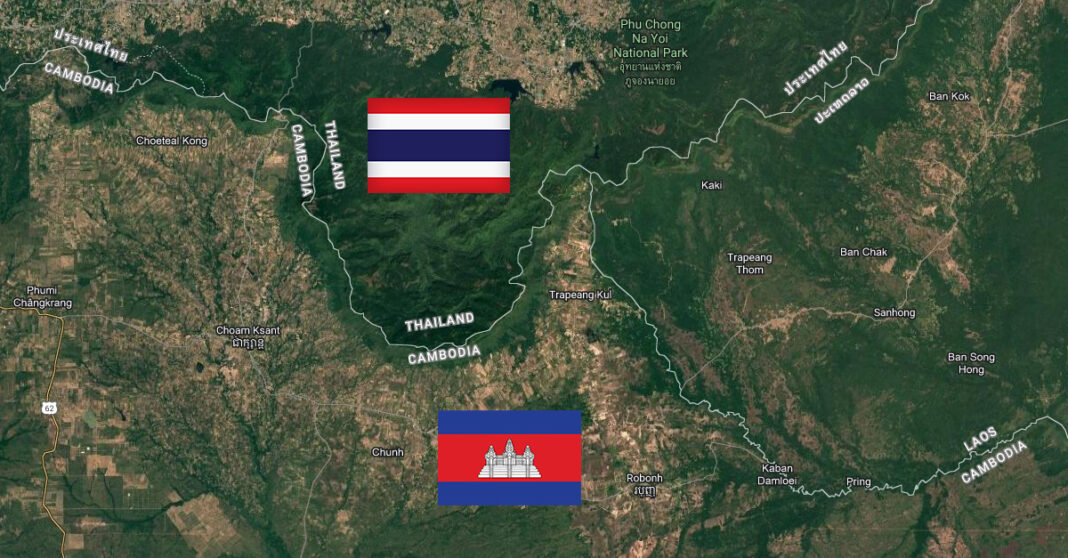
The
ASEAN response to the Thailand-Cambodia border conflict, which escalated
in December 2025, marks a pivotal moment in the region’s diplomatic evolution.
Historically, ASEAN has adhered to a policy of non-interference,
avoiding direct involvement in the internal disputes of member states. However,
the recent border clashes between Thailand and Cambodia prompted ASEAN to take
an active role in conflict mediation, showcasing the organization’s
growing capacity to address geopolitical tensions within Southeast Asia.
The
border dispute between Thailand and Cambodia, fueled by territorial
disagreements and control over resources, had already resulted in civilian
casualties and displacement, putting pressure on ASEAN’s diplomatic principles.
The conflict began to gain significant international attention, especially from
external powers such as the United States and China, both of which have
economic and strategic interests in the region. This created a challenge for
ASEAN, as it had to navigate external pressures while asserting its regional
influence. ASEAN’s decision to step in diplomatically was not just a response
to the immediate conflict but also a signal of its intent to solidify its
role as a regional security actor.
ASEAN’s
diplomatic response culminated in a high-level meeting in Kuala
Lumpur on December 22, 2025, where ASEAN foreign ministers convened to
discuss a pathway forward for Thailand and Cambodia. ASEAN’s active mediation
represents a shift from its previous, more passive role in conflict management.
The organization’s proactive engagement reflects a broader trend of
ASEAN member states seeking greater regional autonomy in addressing security
challenges, particularly in the face of rising U.S.-China tensions in
the Indo-Pacific. ASEAN’s intervention was a clear statement of its commitment
to regional peace and its desire to prevent external powers from
undermining its diplomatic authority.
One
of the key challenges that ASEAN faced during this mediation was
balancing great-power influence. While the United States and China have
strategic interests in the region, ASEAN’s response was designed to ensure that
these external actors did not overshadow the region’s ability to resolve its
own conflicts. By taking the lead in negotiations, ASEAN sent a powerful
message that Southeast Asia could manage its internal conflicts without
becoming a battleground for external rivalries.
From
a geopolitical standpoint, the outcome of this mediation will have
far-reaching consequences. A successful resolution will not only enhance
ASEAN’s credibility as a security provider in Southeast Asia but will
also help solidify its role as a leading actor in the broader Indo-Pacific
region. It will demonstrate that ASEAN is capable of handling not only
economic but also political and military tensions. This could, in turn,
enhance ASEAN’s influence on the global stage and attract more international attention
to its conflict-resolution capabilities.
In
conclusion, ASEAN’s diplomatic response to the Thailand-Cambodia border
conflict reflects the organization’s evolving role in regional security.
By actively engaging in the mediation process, ASEAN has demonstrated that it
is capable of balancing internal and external pressures while preserving its
core values of regional autonomy. The conflict’s resolution will not only
impact Southeast Asia but will also serve as a significant test for ASEAN’s
future role in global diplomacy.