Chief Adviser Professor Muhammad Yunus’s Landmark Visit to Japan
and Bangladesh-Japan Relations
In a
significant diplomatic milestone, Chief Adviser Professor Muhammad Yunus
undertook an official visit to Japan from May 28 to 31, 2025. This marked his
first visit to Tokyo since assuming office and reinforced a bilateral
relationship that has been steadily deepening for decades. The visit, hosted at
the invitation of Japanese Parliamentary Vice-Minister Ikuina Akiko, was a
powerful reaffirmation of the “strategic partnership” established between the
two nations in 2023.
The foundations
of Bangladesh-Japan relations are robust and long-standing. Diplomatic ties
were established in February 1972, shortly after Bangladesh's independence, and
have since evolved from a “comprehensive partnership” in 2014 to a strategic
one. Japan has consistently been a major development partner, providing
substantial financial and technical assistance across critical sectors like
infrastructure, power, and rural development. Iconic projects, such as the
Dhaka Metro Rail, stand as testaments to this enduring cooperation. This
history of high-level exchanges and mutual support in international forums has
cultivated a deep sense of trust, making Japan one of Bangladesh's most
reliable allies.
The Chief
Adviser's four-day visit was meticulously designed to translate this strong
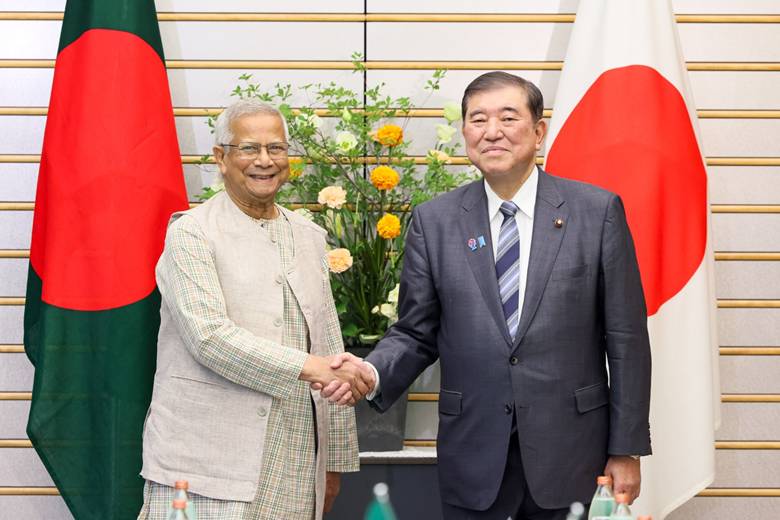
foundation into tangible future gains. The centerpiece was a meeting with
Japanese Prime Minister Shigeru Ishiba on May 30, where the leaders focused on
solidifying economic ties. A key outcome was the shared commitment to finalize
an Economic Partnership Agreement (EPA), a deal that promises to unlock new
levels of trade and investment. This commitment was further underscored by the
signing of six Memorandums of Understanding (MoUs) covering crucial areas such
as energy cooperation, human resources development, support for Small and
Medium Enterprises (SMEs), and the development of Special Economic Zones (SEZs)
for Japanese investors.

Beyond
bilateral meetings, the visit achieved several concrete successes for
Bangladesh. Dhaka secured a commitment of approximately $1 billion in soft
loans from Japan, providing crucial budgetary support. Specific allocations
were made for infrastructure development, including $641 million for bolstering
railway projects and $418 million in direct budget support. Furthermore, Japan
agreed to channel a significant portion of its pledged $29 billion investment
into Bangladesh, a move that will greatly enhance the country's foreign
investment potential. The visit also elevated the international profile of the
interim government, with Professor Yunus receiving an honorary doctorate from
Soka University and delivering a keynote address at the prestigious Nikkei 30th
Future of Asia Conference on “Asia’s Challenge in a Turbulent World.”
Looking ahead,
the future trajectory of Bangladesh-Japan relations is exceptionally promising.
Enhanced economic cooperation will likely expand into high-speed rail, smart
cities, and green energy sectors. As Bangladesh prepares for its graduation
from LDC status, Japan's support will be vital for trade diversification. The
two nations are also poised to deepen cooperation on regional stability,
particularly concerning the Rohingya crisis, as well as on climate change and
sustainable development. The Chief Adviser's visit was more than a diplomatic
formality; it was a strategic engagement that solidified Japan's full support
for Bangladesh's interim government and charted a course for a future defined
by shared prosperity, security, and a robust people-to-people partnership.