Trump’s
Push for Ukraine Peace Plan: Fragile Peace or A Lasting One?
Efforts to negotiate an
end to the war in Ukraine gained renewed momentum following the election of
Donald Trump. During his campaign, Trump argued that the conflict could be
resolved within 24 hours. More recently, however, the complexity of the war has
been acknowledged, with Washington continuing to push for a negotiated
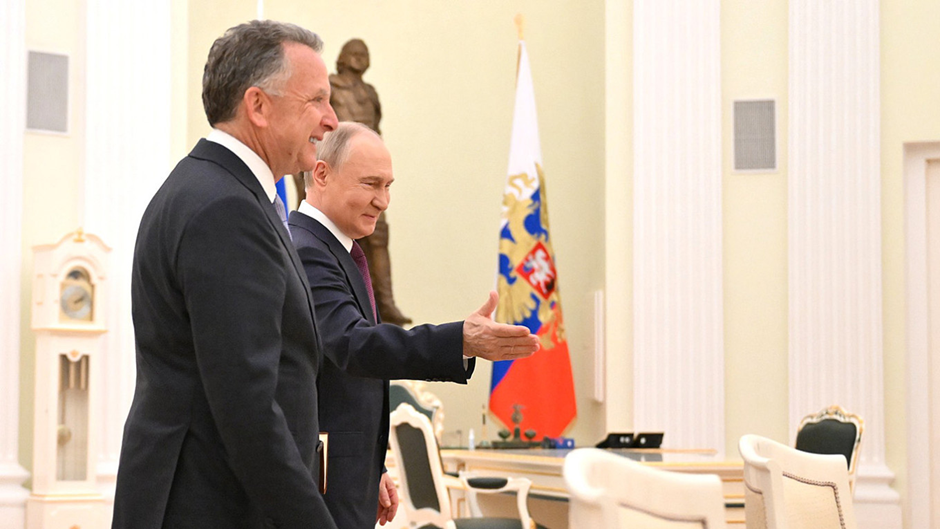
settlement. A recent meeting between Trump and Ukrainian President Volodymyr
Zelenskyy at Mar-a-Lago underscores the urgency and evolving nature of these
diplomatic efforts.
The current negotiations
emerged after a prolonged battlefield stalemate. In mid-November, reports
surfaced that the United States and Russia had drafted a 28-point peace
proposal. Although initially criticized as a Russian-authored framework,
Washington later acknowledged that the proposal had been jointly developed with
Moscow. The draft triggered significant concern in Kyiv and among European
allies, prompting an emergency meeting in Geneva involving the United States,
Ukraine, and European partners. Further negotiations followed in Berlin in
mid-December, eventually leading to a revised 20-point framework unveiled on 23
December.
The initial 28-point plan
proved highly contentious, particularly regarding territorial arrangements. The
proposal included de facto recognition of Russian control over Crimea and the
Donetsk and Luhansk regions—collectively known as the Donbas—along with
territories still held by Ukrainian forces. It also suggested freezing the
conflict lines in Kherson and Zaporizhzhia, effectively recognizing current
frontlines as borders. Ukraine would withdraw from parts of Donetsk still under
its control, creating a demilitarized buffer zone that would ultimately fall
under Russian sovereignty.
Beyond territorial
concessions, the draft also proposed constitutional amendments preventing
Ukraine from joining NATO, capping the Ukrainian armed forces at 600,000
personnel, and holding Ukrainian presidential elections within 100 days.
Sanctions relief for Russia and its return to international economic forums
were also contemplated. Unsurprisingly, these provisions were widely
interpreted as signaling a strategic defeat for Ukraine and were strongly
opposed by Kyiv and its European allies.
European governments countered several aspects of the proposal. They rejected any arrangement forcing Ukraine to surrender additional territory and opposed limits on the size of the Ukrainian military. They also resisted a permanent constitutional ban on NATO membership, arguing that alliance enlargement depends on collective consensus. Controversial provisions allowing the United States to unilaterally control frozen Russian assets were later removed.

Subsequent negotiations produced a revised 20-point framework jointly supported by the United States and Ukraine. The updated proposal replaced vague security assurances with NATO-style Article 5–like guarantees and abandoned the demand that Ukraine relinquish the remaining parts of Donetsk under its control. Instead, the current frontline would become the de facto boundary, accompanied by the creation of demilitarized zones and potential free economic zones in disputed areas. Economically, the framework envisions a multilateral reconstruction effort aiming to mobilize roughly $800 billion for Ukraine’s recovery.
Despite these revisions,
several core disputes remain unresolved. One major issue concerns the control
of the Zaporizhzhia nuclear power plant. While earlier proposals suggested
joint management by Ukraine, Russia, and the United States, Kyiv has rejected
any arrangement involving Russian control, instead advocating a joint
U.S.–Ukraine framework for managing electricity distribution.
The status of the Donbas
remains the central obstacle. Russia continues to demand full recognition of
its control over the region, while Ukraine refuses to acknowledge either de
facto or de jure Russian sovereignty. The revised U.S.–Ukraine proposal suggests
demilitarized zones or free economic zones as potential interim arrangements,
but Moscow has not yet accepted this framework.
Recent discussions
between Trump and Zelensky indicate partial progress, with both sides
suggesting that up to 90–95 percent of issues have been broadly addressed.
Nevertheless, territorial concessions remain the most contentious question.
Zelensky has emphasized that any decision involving territorial changes must be
approved through a national referendum, as Ukraine’s constitution requires
public approval for the cession of territory.
Even if Washington, Kyiv,
and European allies reach a consensus, the ultimate outcome will depend on the
acceptance of Vladimir Putin. Russia’s refusal to recognize the legitimacy of
the Zelensky administration further complicates negotiations. As diplomatic
engagements continue, the prospects for peace remain uncertain.
In theory, the emerging
framework seeks to produce a durable settlement. In practice, however,
unresolved territorial disputes, competing strategic objectives, and deep
mistrust among the parties suggest that any agreement may produce only a
fragile peace rather than a lasting one.