Bangladesh Institute of International and Strategic Studies
Bangladesh Institute of International and Strategic Studies
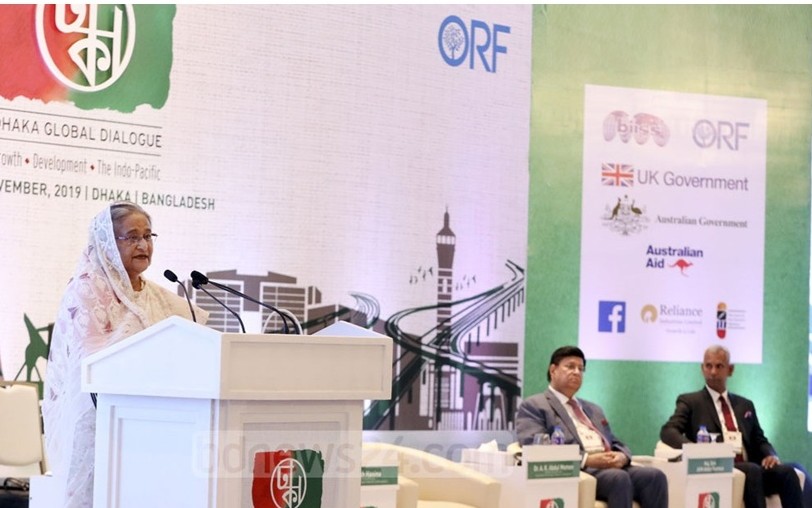
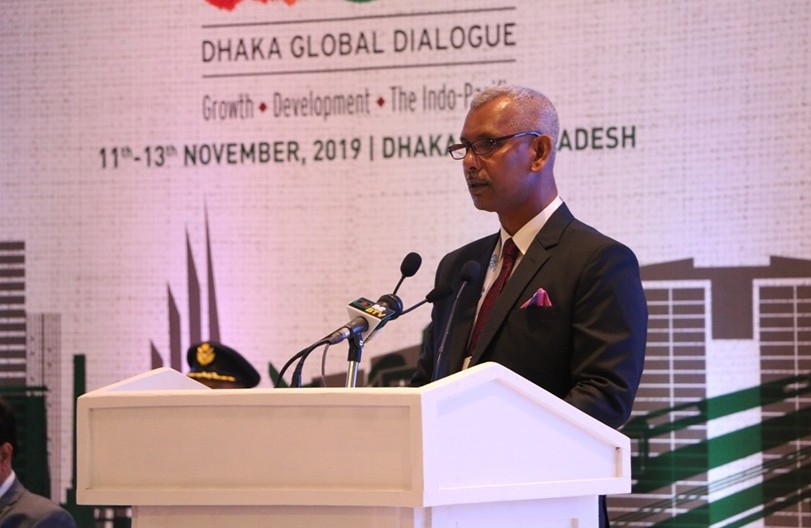
Welcome address by Major General A K M Abdur Rahman,
ndc, psc, Director General, BIISS at the Global Dhaka Dialogue 2019
Bismillahir Rahmanir Rahim
Hon’ble Chief Guest, Her Excellency Sheikh Hasina, Prime
Minister of the People’s Republic of Bangladesh
Hon’ble Ministers, Members of Parliament, Other Dignitaries from
home and abroad
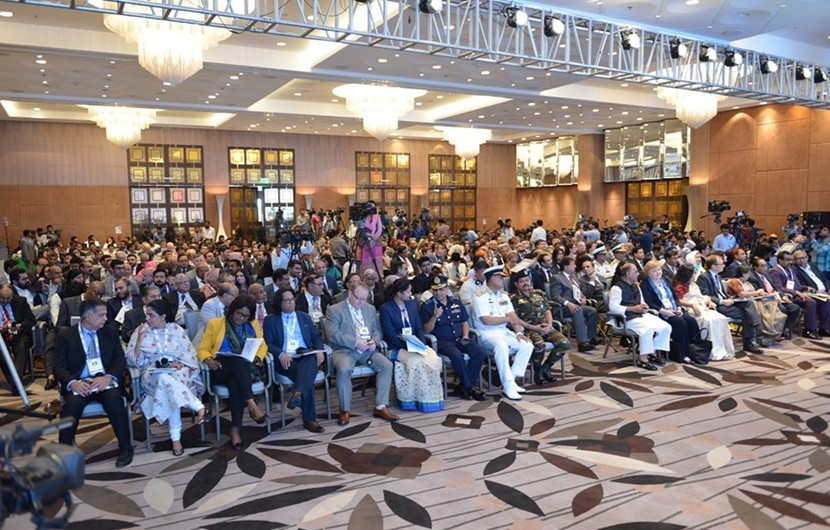
Excellencies, Distinguished Guests, Ladies and Gentlemen
Assalamu Alaikum and Good Morning
At the outset of this august gathering, may I express my deepest
respect to the architect of independent Bangladesh and the Father of the Nation
Bangabandhu Sheikh Mujibur Rahman. May I also pay my profound homage to the
martyrs of our great liberation war who, on the call of our Father of the
Nation, gave their life for the independence of Bangladesh.
Ladies and Gentlemen,
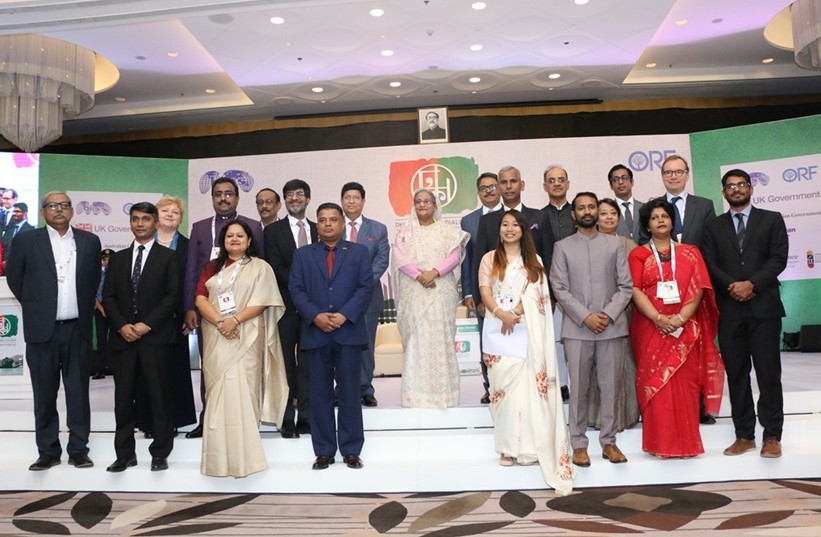
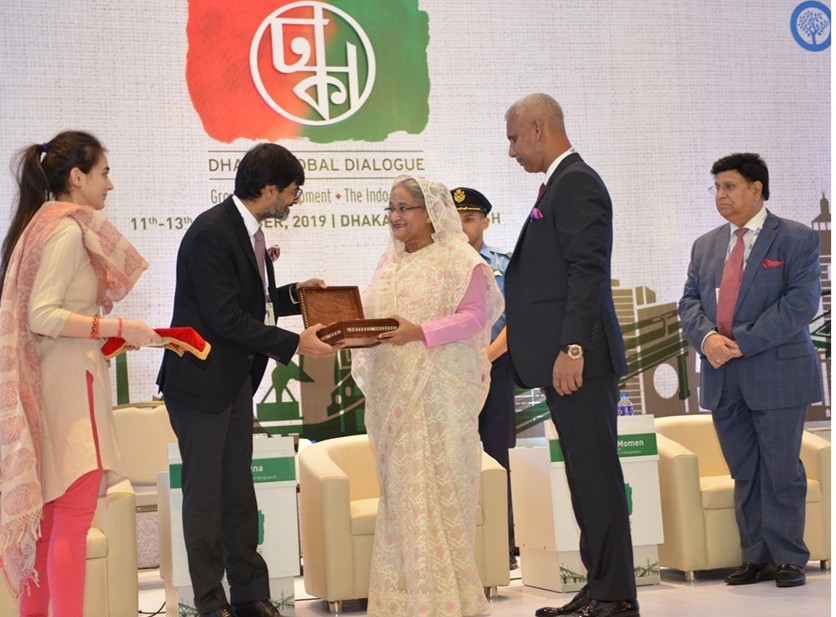
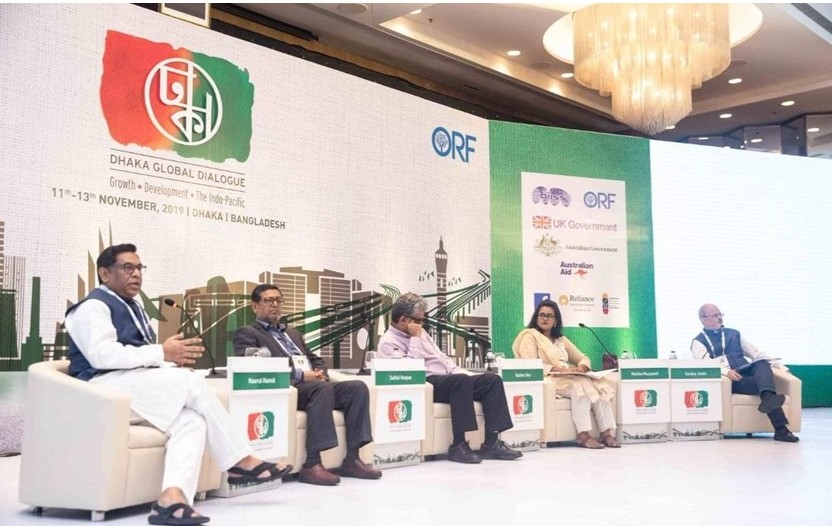
It is indeed a great pleasure to welcome you all to the ‘Dhaka
Global Dialogue 2019’ which is co-hosted by Bangladesh Institute of
International and Strategic Studies (BIISS) and Observer Research Foundation
(ORF) of India. We are deeply honoured and privileged that Her Excellency
Sheikh Hasina, the Hon’ble Prime Minister of the Government of the People’s
Republic of Bangladesh is present here today as the Chief Guest. We express our
heart-felt thanks and gratitude to the Hon’ble Prime Minister for her gracious
presence amongst us, and giving us consent and guidance in organising this
Dialogue.
Distinguished Guests,
Bangladesh has performed phenomenally in economic development.
In the last 10 years, the country has unlocked immense socio-economic
development, business potential, built conducive infrastructure to facilitate
growth, and harnessed the power of ICT to propel the country to the next phase
of development. For several consecutive years, the country has maintained over
seven per cent growth. According to Asian Development Bank, in 2019, Bangladesh
exhibited the fastest growth among the Asia-Pacific economies. It forecasted
that in the fiscal year 2019-2020, Bangladesh’s economy will grow at 8 per
cent, which would be the highest in Asia. Bangladesh is now a model of how a
populous country can transform its population into human resources by taking
advantage of technology in combination with far-sighted policies. All this was
possible due to the prudent leadership of our Hon’ble Prime Minister Sheikh
Hasina.
Excellencies and Distinguished Audience,
This rapid growth and development requires greater engagement
with the world. Bangladesh’s progress has been recognised as an economic
miracle that placed it ahead of many other emerging economies. The country is
expected to be an upper middle-income country by 2021 and as a developed
country by 2041. This internal change needs to be commensurate with the
country’s external outreach. Therefore, it is imperative to engage more deeply
at the regional and global level. Because, Bangladesh has a lot to contribute
in terms of partnership and sharing experiences.
Ladies and Gentlemen,
The future of Bangladesh is tied closely with its greater
neighbourhood. Therefore, the future of the Indo-Pacific region which happens
to be the confluence of two great oceans, lies in conceiving conducive regional
architectures that are broad-based and inclusive. The ‘Dhaka Global Dialogue’
will provide an excellent opportunity to discuss and debate the core
developmental issues in the Asian century where all nations can gain from
partnership and collaboration.
Distinguished Participants,
Bangladesh was born with a great vision under the leadership of
our Father of the Nation, Bangabandhu Sheikh Mujibur Rahman. He had a dream to
develop Bangladesh as “the Switzerland of the East”. After long and challenging
trajectories, the Hon’ble Prime Minister Sheikh Hasina took the helm of the
country to materialise that vision of Banghabandhu Sheikh Mujibur Rahman. Her
strong and able leadership is transforming Bangladesh’s outlook and global
stature.
Before I conclude, may I very humbly say a few words to the
Hon’ble Prime Minister. Hon’ble Prime Minister, you are the architect of 21st
century Bangladesh. You have given us the vision to be a developed country. We
assure you that we all are ready to march behind you for making Bangladesh a
happy, prosperous and developed country.
Thank you Hon’ble Prime Minister and thank you ladies and
gentlemen.
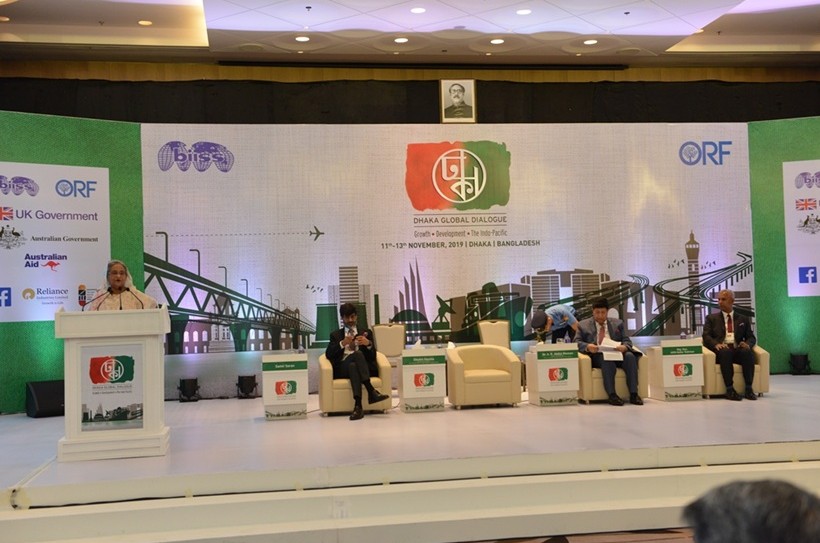
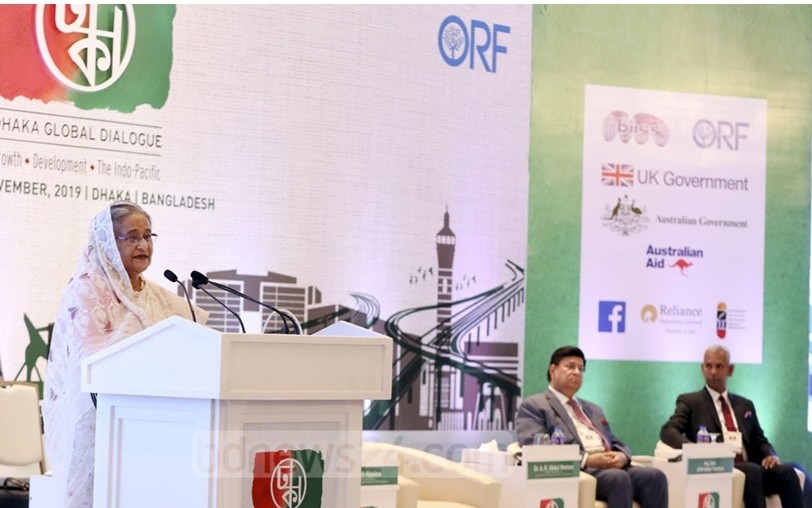
Inaugural Keynote of Hon’ble Prime Minister Bangladesh,
Sheikh Hasina at the Global Dhaka Dialogue 2019
Bismillahir Rahmanir Rahim
The chair,
Colleagues,
Respected guests from home and abroad,
Ladies and gentlemen.
Assalamu Alaikumand and a very Good Morning.
I welcome you all at the inaugural ceremony of the ‘Dhaka Global
Dialogue-2019’, organized by Bangladesh Institute of International and
Strategic Studies (BIISS) and India’s Observer Research Foundation (ORF). I
hope, this Dialogue would substantially contribute to the socio-economic
development and in maintaining security of the countries in Asia and the
Pacific region.
At the very outset, I pay my deep homage to the greatest
Bangalee of all times, Father of the Nation Bangabandhu Sheikh Mujibur Rahman.
I also recall the four martyred national leaders, 3 million martyrs of the
Liberation War, and 2 lakh mothers and sisters who sacrificed their modesty for
the cause of independence. My greetings go to the heroic freedom fighters.
The Father of the Nation not only dreamt of a prosperous ‘Sonar
Bangla’ (Golden Bengal), he called upon everyone to come forward to build a
world free from poverty, hunger and conflict, appearing in the United Nations
in 1974. He emphasized on global peace and security for the sake of human
welfare.
Ladies and Gentlemen,
Nowadays, Bangladesh is very often being termed as a ‘Miracle of
Development’ in the international arena. Today Bangladesh is one of the fastest
growing economies in the world. According to the World Bank, Bangladesh stands
second in Asia and fifth in the world among the fastest growing economies. This
year economy of Bangladesh has exceeded 300 billion dollar mark. According to
IMF, Bangladesh has 30th largest GDP in the world in terms of PPP.
Bangladesh has already achieved the recognition of the status of
a ‘Developing Country’, graduating from LDC status. We have undertaken ‘Vision
2021’ and ‘Vision 2041’ to be a ‘Middle Income Country’ by 2021 and a
‘Developed-Prosperous Nation’ by 2041. Therefore, we have concentrated, as
development strategy, on poverty alleviation, sustainable growth, environmental
preservation and human resources development.
After achieving most of the MDGs we have undertaken firm steps
to achieve Sustainable Development Goals (SDGs). The rate of poverty has been
reduced to 21% in 2018 from 41.5% in 2006. Free books are being distributed
among students up to secondary level and different stipends are being provided
to 2 crore 3 lacs students. Recently a project of providing lunch to 2 lac
students has been undertaken. 18,000 community clinics and union health centers
has been established to ensure healthcare for all.
Lots of projects such as ‘Amar Gram, Amar Sohor’, ‘Amar Bari,
Amar Khamar’, ‘Asrayan Prokalpo’ etc. are being implemented, apart from
providing different allowances to marginalized and non-secured portion of the
society for ensuring inclusive development.
93% people of Bangladesh are having electricity coverage.
Currently, the number of Internet users is over 90 million. 5800 digital
centers have been set up. The facility of expansion of broadcasting to remote
areas is reached by ‘Bangabandhu Sattellite-1’
Ladies and Gentlemen,
Bangladesh has been one of the most vulnerable countries to the
impacts of climate change although the country has no significant role for it.
As a result, floods, cyclones, droughts and other natural disasters can
threaten people's lives and livelihoods. We have been implementing some
adaptation and mitigation programs with our own finance. We have adopted the
‘Delta Plan-2100’ as a part of the long term planning. The aim of this plan is
to ensure sustainable development, including food security, availability of
drinking water, and disaster management through proper and appropriate
utilization of water resources.
Geographically Bangladesh is a country ashore of the Bay of
Bengal, and as such of the Indian Ocean. This Ocean has huge significance for
various reasons. Indian Ocean consists of a number of vital maritime routes,
which contribute significantly to the largest economies of Asia. Half of the
global container shipment and 80% of global fuel trade pass through the Indian
Ocean. 16.8% of the global reserve of oil and 27. 9% of natural gas is situated
in this Ocean. 28% of the total fisheries are collected from Indian Ocean.
Indian Ocean, being the source of immense resources and the part of
strategically important seaways, is thus considered very important. The present
century is being considered as the ‘Century of Asia’ in term of socio-economic
development and prosperity. As a result, peace and harmony must be maintained
for the prosperity of the region.
Poverty is our main enemy. Therefore, the main goal of all our
activities should be directed to eradicate people's poverty and ensure their
comfortable lives.
As an offshore country, the sea plays an extremely important
role in Bangladesh’s economy, and for many reasons Bangladesh puts high
priority on the Indian Ocean as well as on Bay of Bengal.
Firstly, 90% of total external trade of
Bangladesh is conducted through maritime routes. The security and stability of
these maritime routes is very important for the economic stability of
Bangladesh.
Secondly, after the reconciliation of maritime
boundaries with Myanmar in 2012 and with India in 2014, Bangladesh’s absolute
sovereignty has been established over an area of 1,18,813 square km in the Bay
of Bengal. This huge maritime area, including 200 nautical miles, can be a
source of huge resources for Bangladesh. The utilization of these resources for
the economic development of the country largely depends on the stability of
this region.
Thirdly, apart from natural gas, Bay of
Bengal and Indian Ocean contain huge amount of fisheries as well as mineral and
other resources. Through proper sustainable planning and with collective and
sincere efforts of all, these resources can be utilized for the sustainable
development of the countries of this region. A study shows that the tentative
amount of resources that can be collected from the maritime area of Bangladesh,
is almost equal to the tentative amount of resources Bangladesh produces in its
land.
Ladies and Gentlemen,
Not only Bangladesh, there are total 40 developing countries
surrounding the Indian Ocean, where lives 35 per cent of the global population.
There are six countries surrounding the Bay of Bengal, and few more countries
like Nepal, Bhutan, the Maldives, Malaysia and Singapore have important impact
of the Bay on their economies despite not being at the coast.
The economies of the countries ashore of or dependent on the
Indian Ocean and the Bay of Bengal, and the lives of their peoples, are hugely
influenced by the ocean and the sea. The resources, environment, ecology and
security of the ocean and the sea directly affect the economy and the security
of these nations. Therefore, peace and stability in the Indian Ocean and the
Bay of Bengal is essential for the economic progress and security of these
countries.
In terms of regional security, I would like to say that more
than 1.1 million Rohingya citizens of Myanmar fled to Bangladesh in the face of
persecution and they are a threat to the security not only for Bangladesh but
also for the region. I urge the world community to take appropriate action
realizing the gravity of the threat.
‘Friendship to all, malice to none’, the dictum inculcated
by Bangabandhu, is indeed the main principle of Bangladesh’s foreign policy.
Also in the area of maritime boundary and maritime economy, Bangladesh believes
that strong competition among each other or ‘zero-sum game’ will not be helpful
in flourishing the ‘Blue Economy’ of the Bay of Bengal or the Indian Ocean,
rather would act as a stumbling block in ensuring security and stability in
this region. I also believe that, in order to extract maritime resources
sustainably as well as for the durable development of the ‘Blue Economy’, the
relations between coastal countries need to be cooperative, amicable, dignified
and equitable.
Bangladesh always exerts strong efforts to enhance peaceful and
cooperative relations in the region of the Bay of Bengal and the Indian Ocean.
Bangladesh has resolved its disputes on maritime boundaries in a peaceful
manner with its two neighbours, India and Myanmar. Such cooperative approach
and efforts of us in resolving crises can be a learning lesson for other
regions.
Ladies and Gentlemen,
Different threats like piracy, armed robbery, terrorists attacks
in coastal and maritime areas, human trafficking, arm and drug smuggling, are
existent in Indian Ocean and Bay of Bengal region. These unconventional risks
are needed to be addressed collectively by all.
Excessive extraction of marine resources, including fisheries,
as well as various pollutions is jeopardizing the maritime environment. Not
only the Bay of Bengal and the Indian Ocean, but all oceans and seas in the
globe are now suffering from these dual crises. Every year, 8 million tons of
plastic wastes are being gathered in the oceans and seas in the world.
Pollution and excessive extraction of marine resources are destroying the
ecologies in the sea, damaging the overall environment of the world. As a result,
threats are creating for human health and livelihood. To resolve these crises
is not possible by a single country.
In order to resolve all these problems, I call upon all
concerned countries to strengthen bilateral and multilateral cooperation as
well as partnerships. Bangladesh believes that such cooperation is needed to be
inclusive for all and with the aim of everyone’s development and security.
Bangladesh, due to its geographical location, is acting as a
bridge between South Asia and South-East Asia. In the same manner, ‘Dhaka
Global Dialogue’ will act as a platform for the countries in this region on the
way of achieving environmentally sustainable peace and prosperity. I believe
that the recommendations emerging from this Dialogue would be helpful in
enhancing relations, strengthening collaboration, and maintaining peace and
stability among the neighbours of this region. Nations outside this region
would also learn and be benefitted from this success, as I believe.
I expect regular holding of ‘Dhaka Dialogue’ and declare the
‘Dhaka Global Dialogue-2019’ open. Thank you all.
Khoda Hafez.
Joi Bangla, Joi Bangabandhu
May Bangladesh Live Forever.