Bangladesh Institute of International and Strategic Studies
Bangladesh Institute of International and Strategic Studies
Strategic Imperatives for Bangladesh in a Changing World
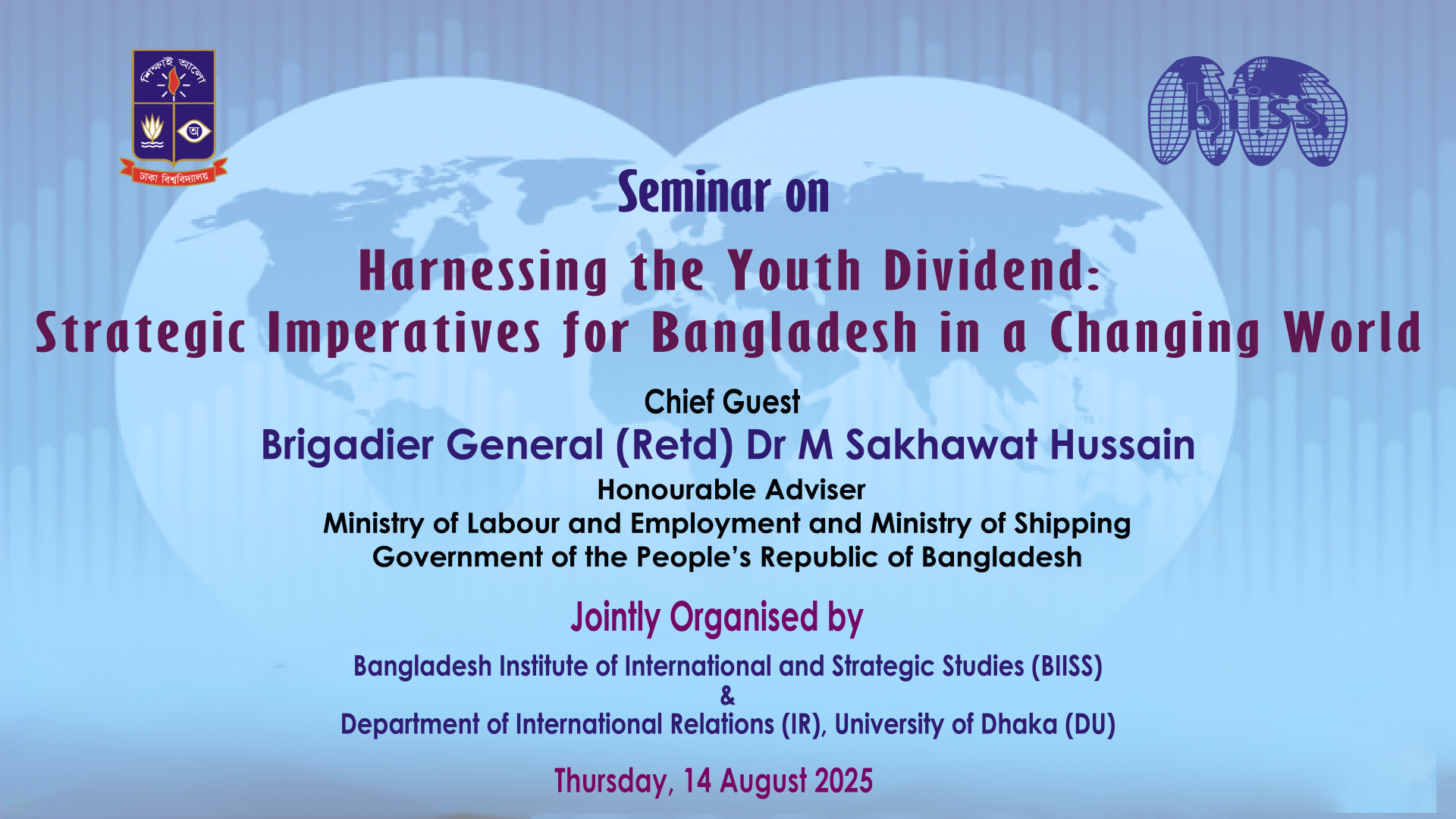
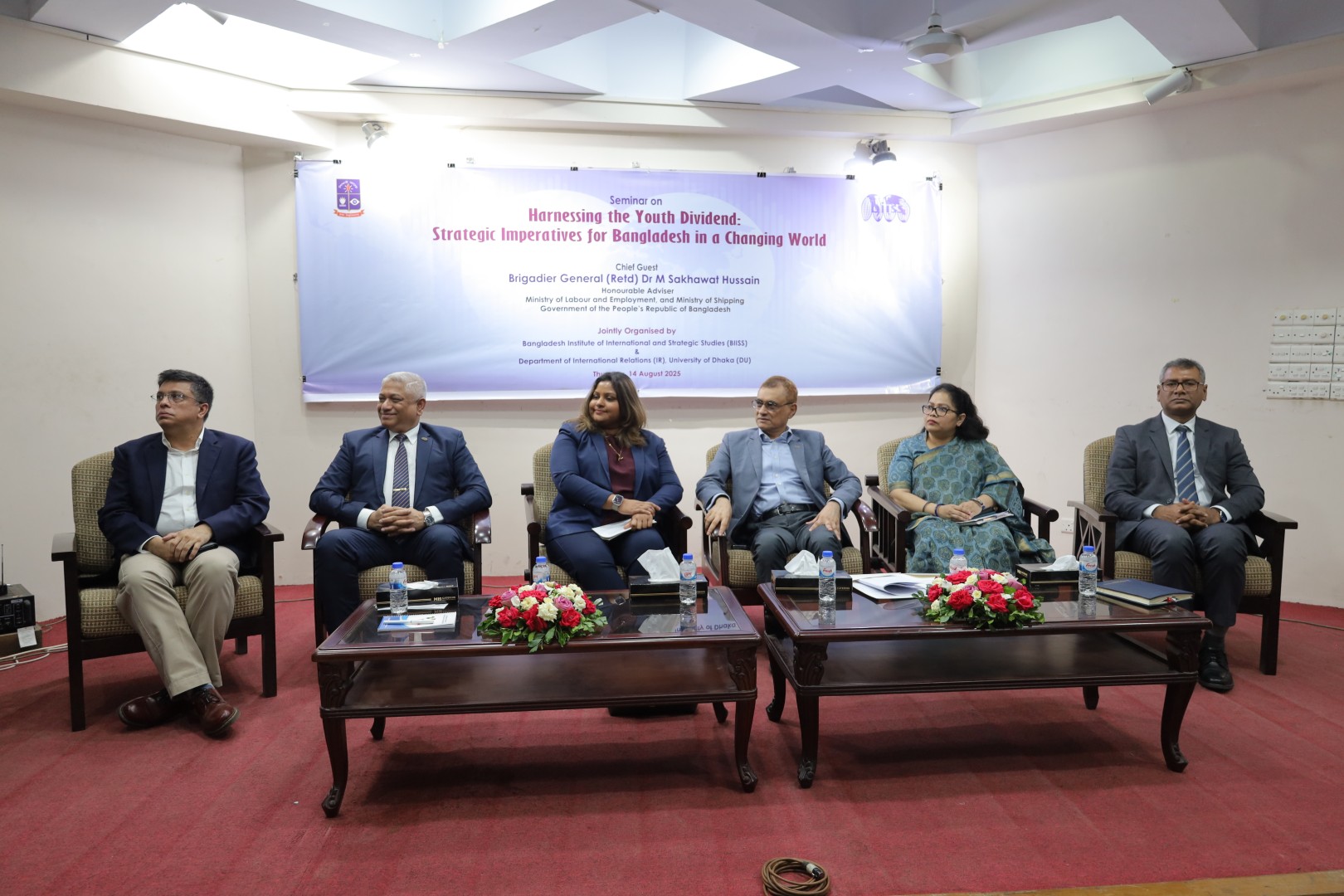
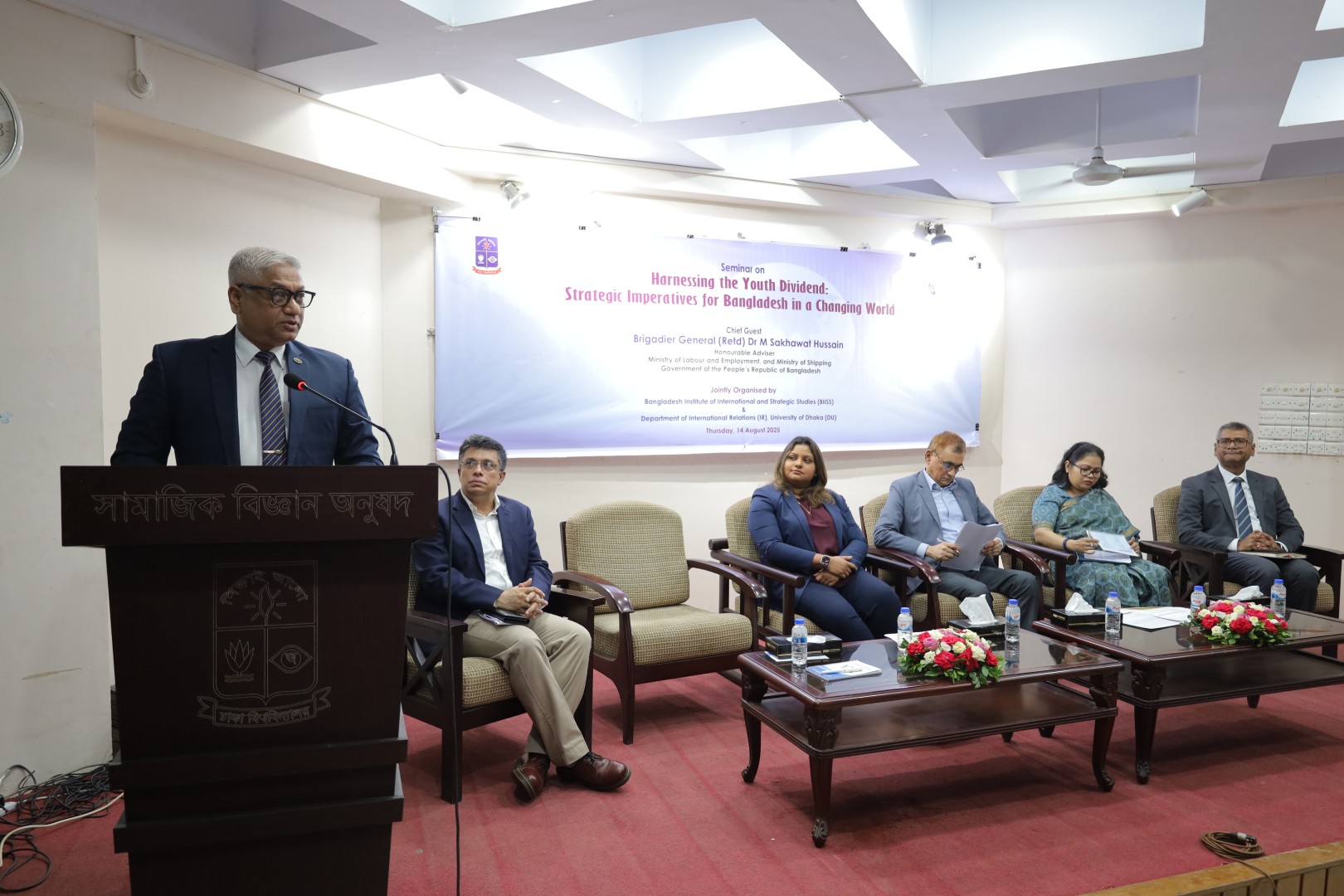
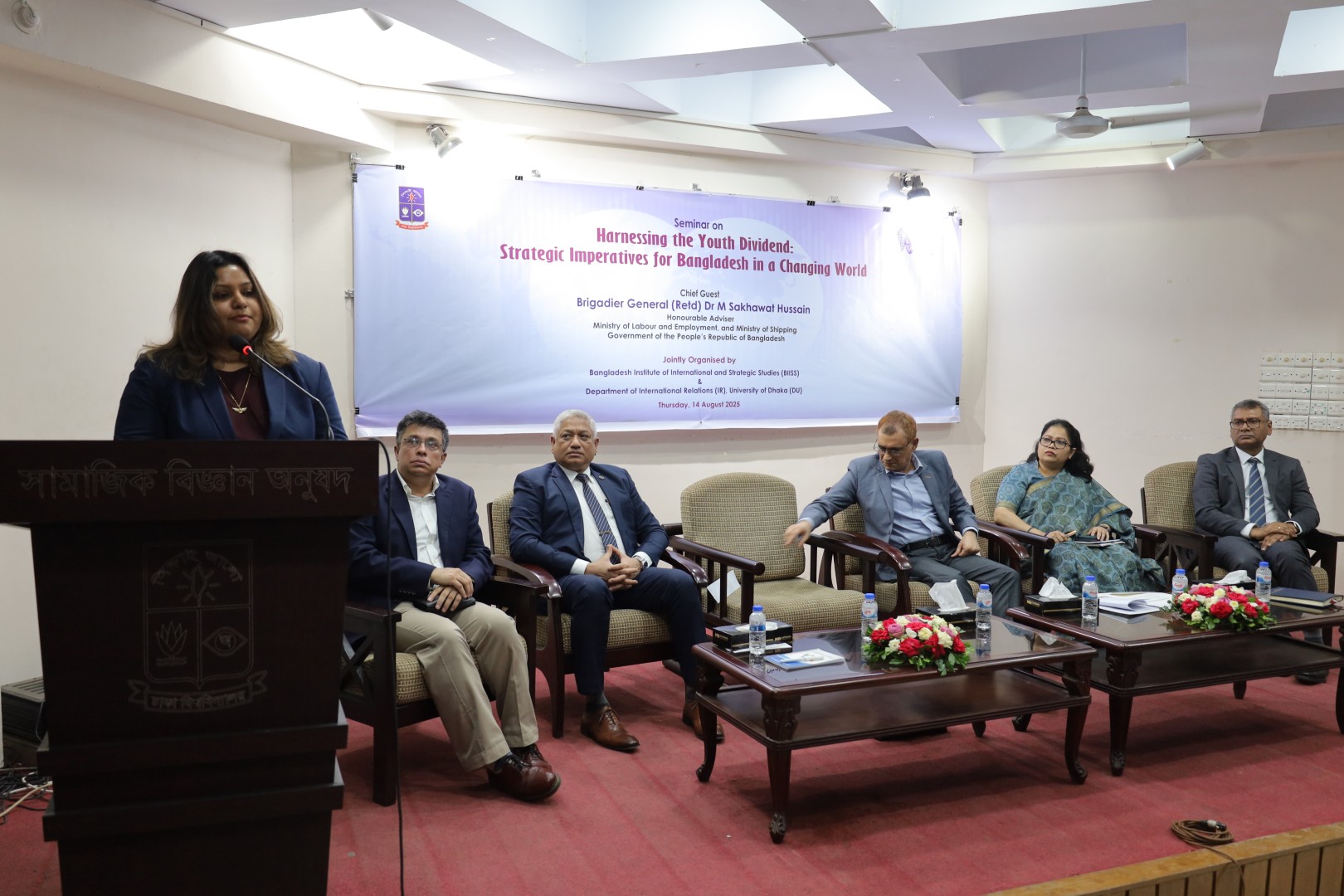
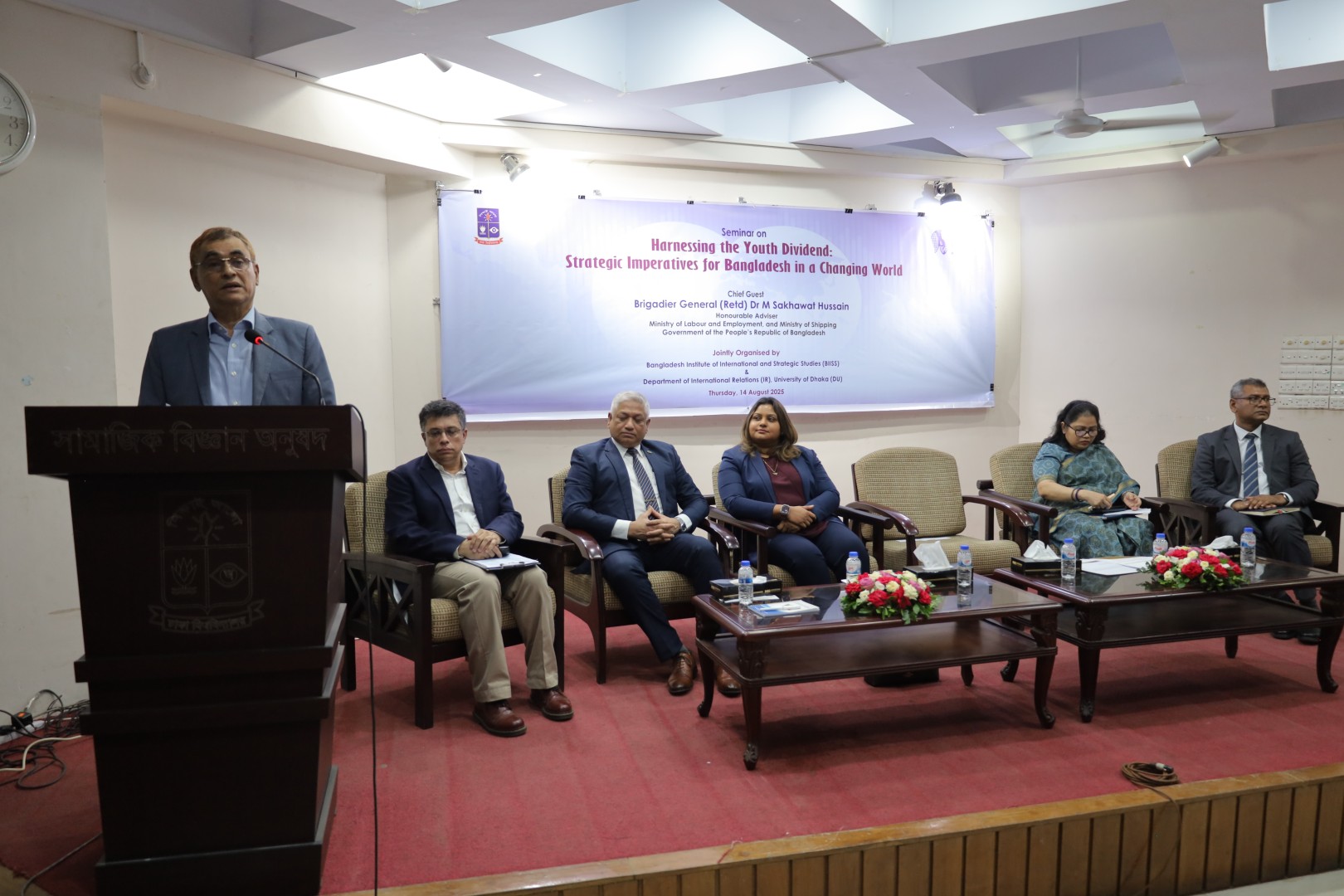
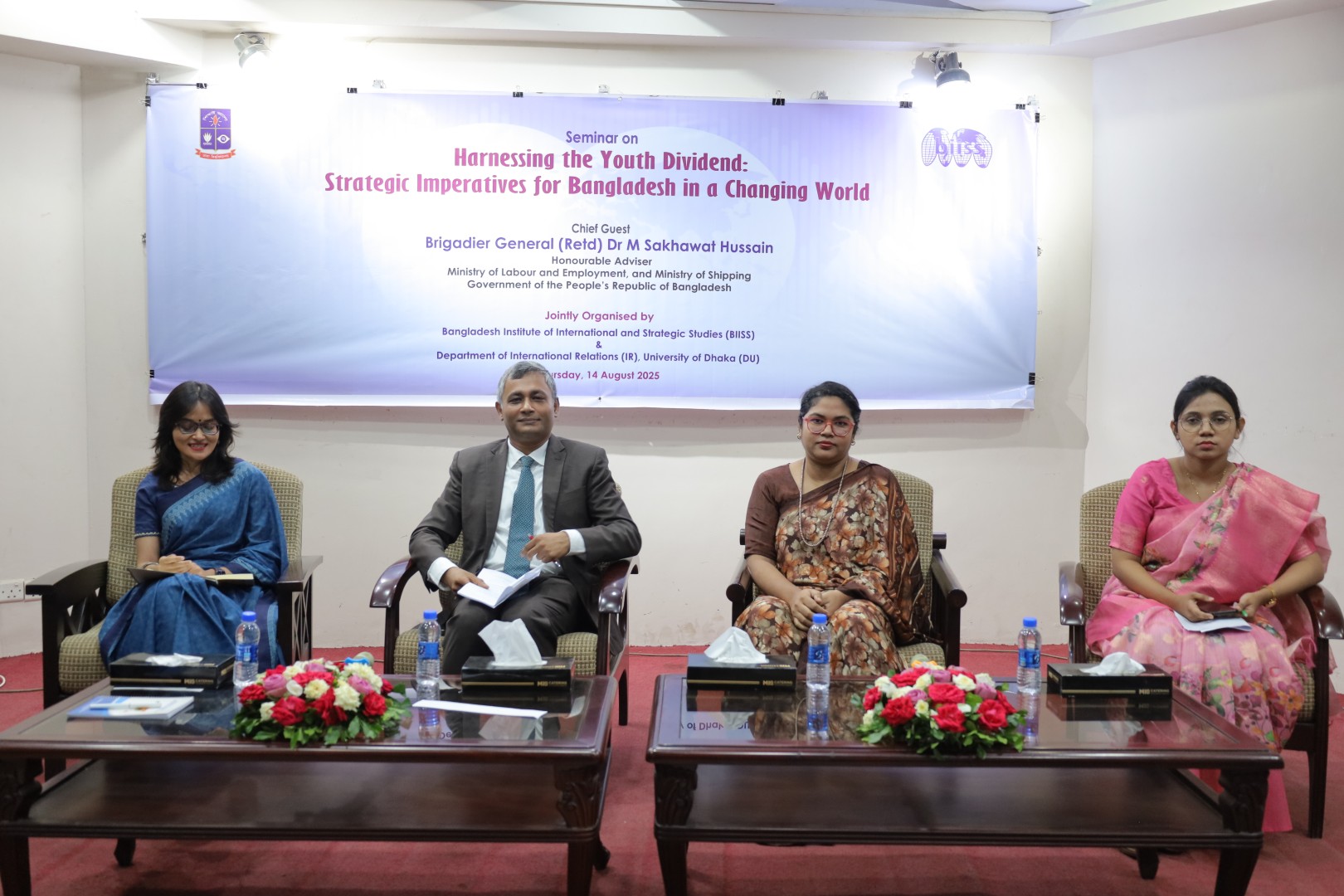
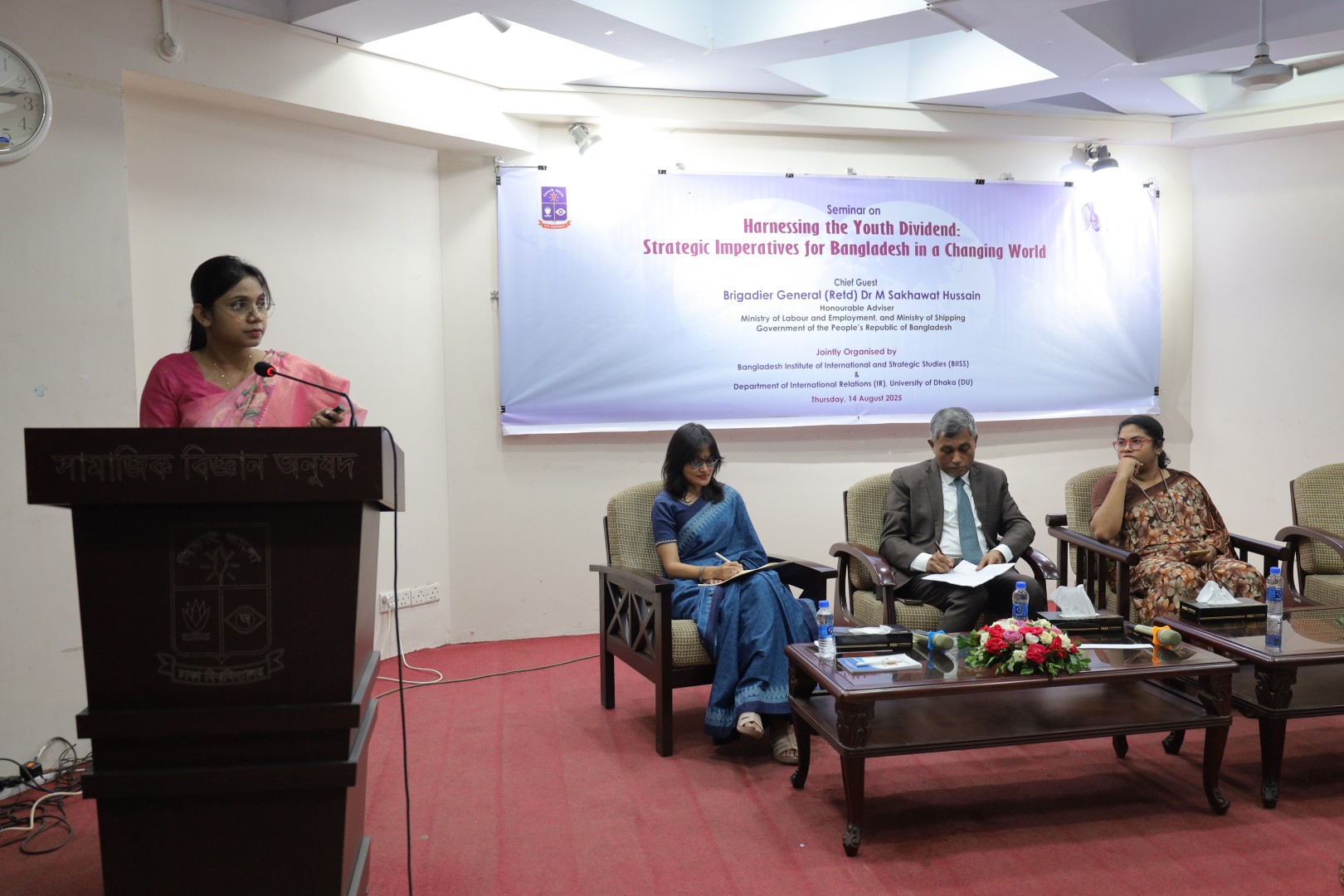
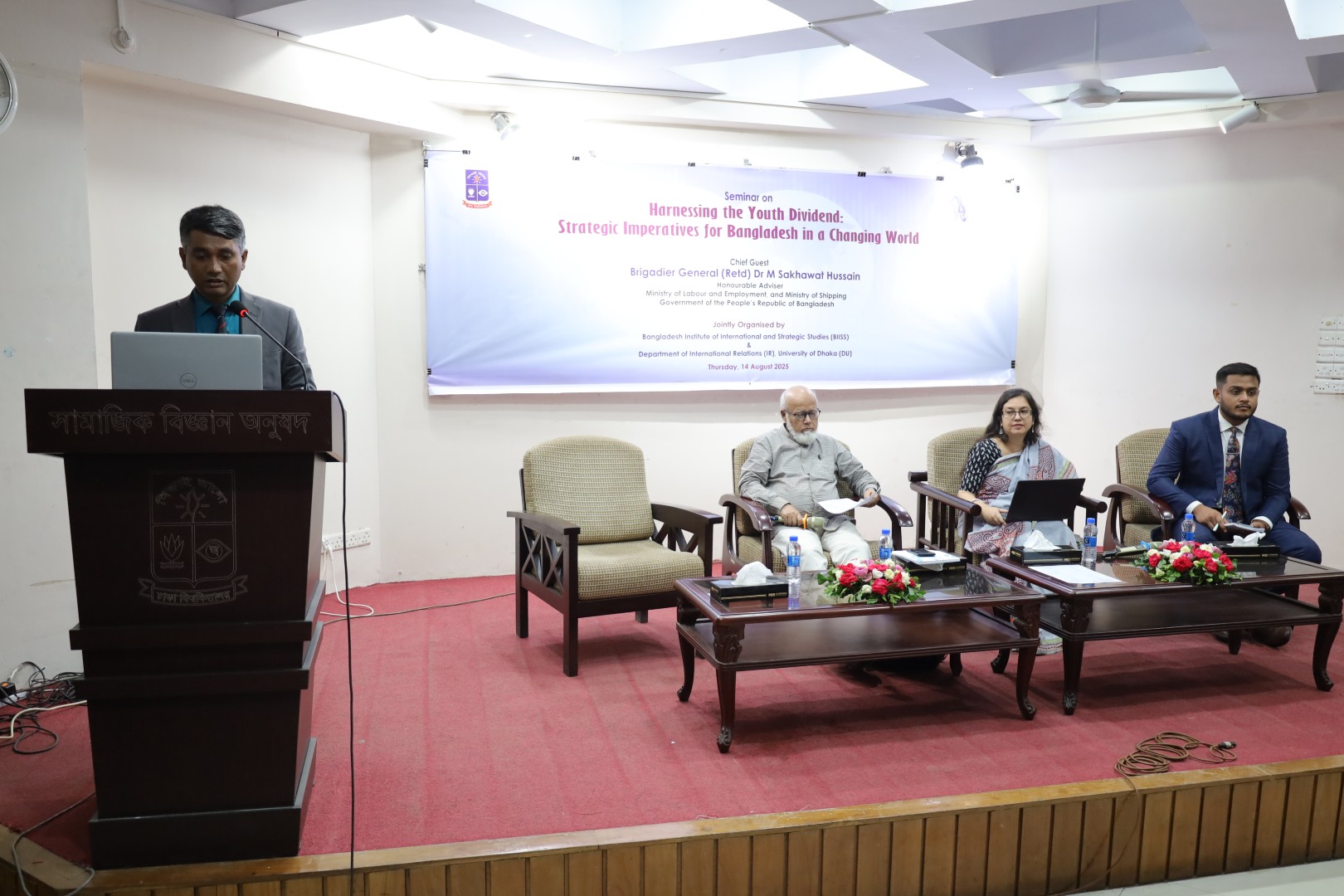
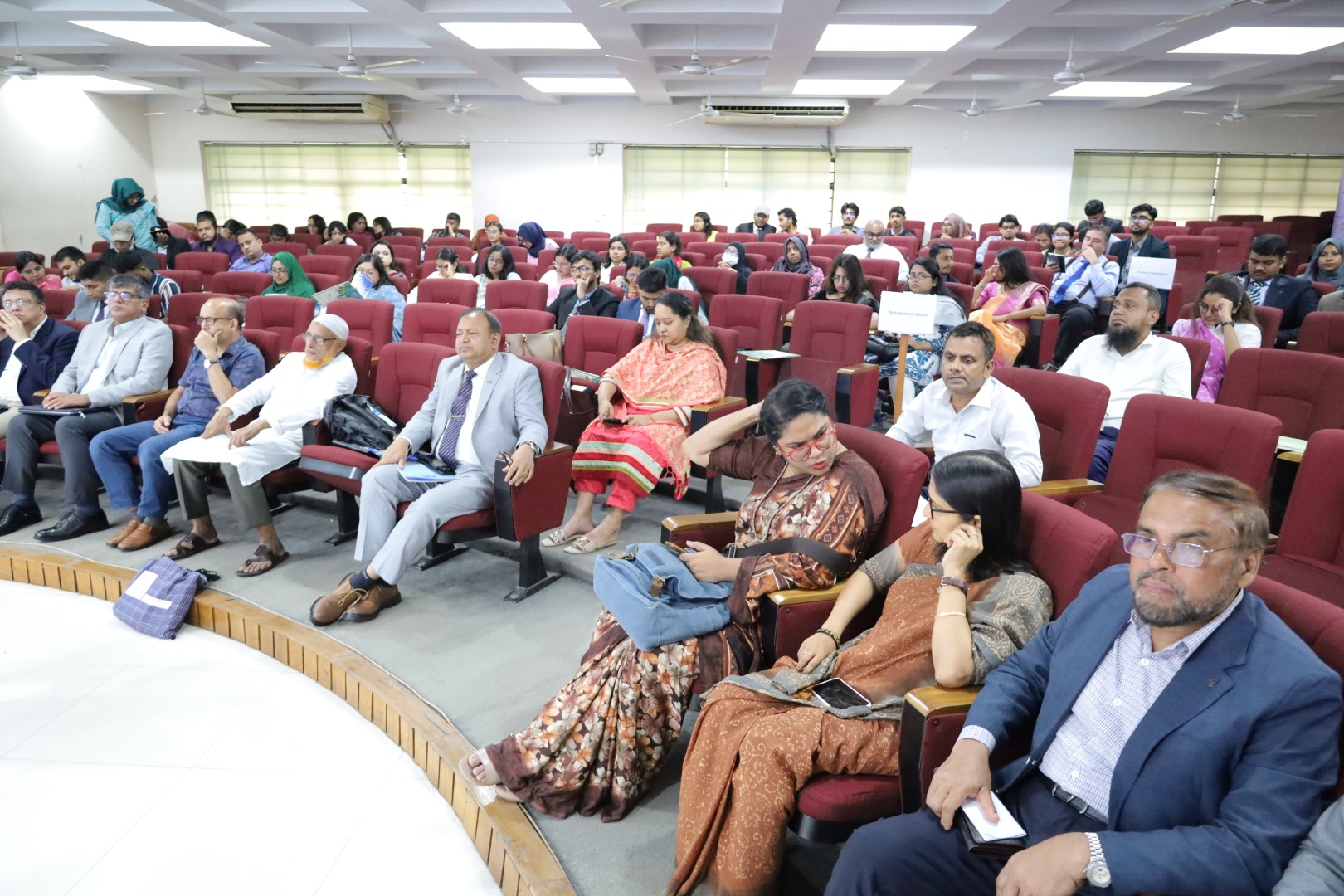
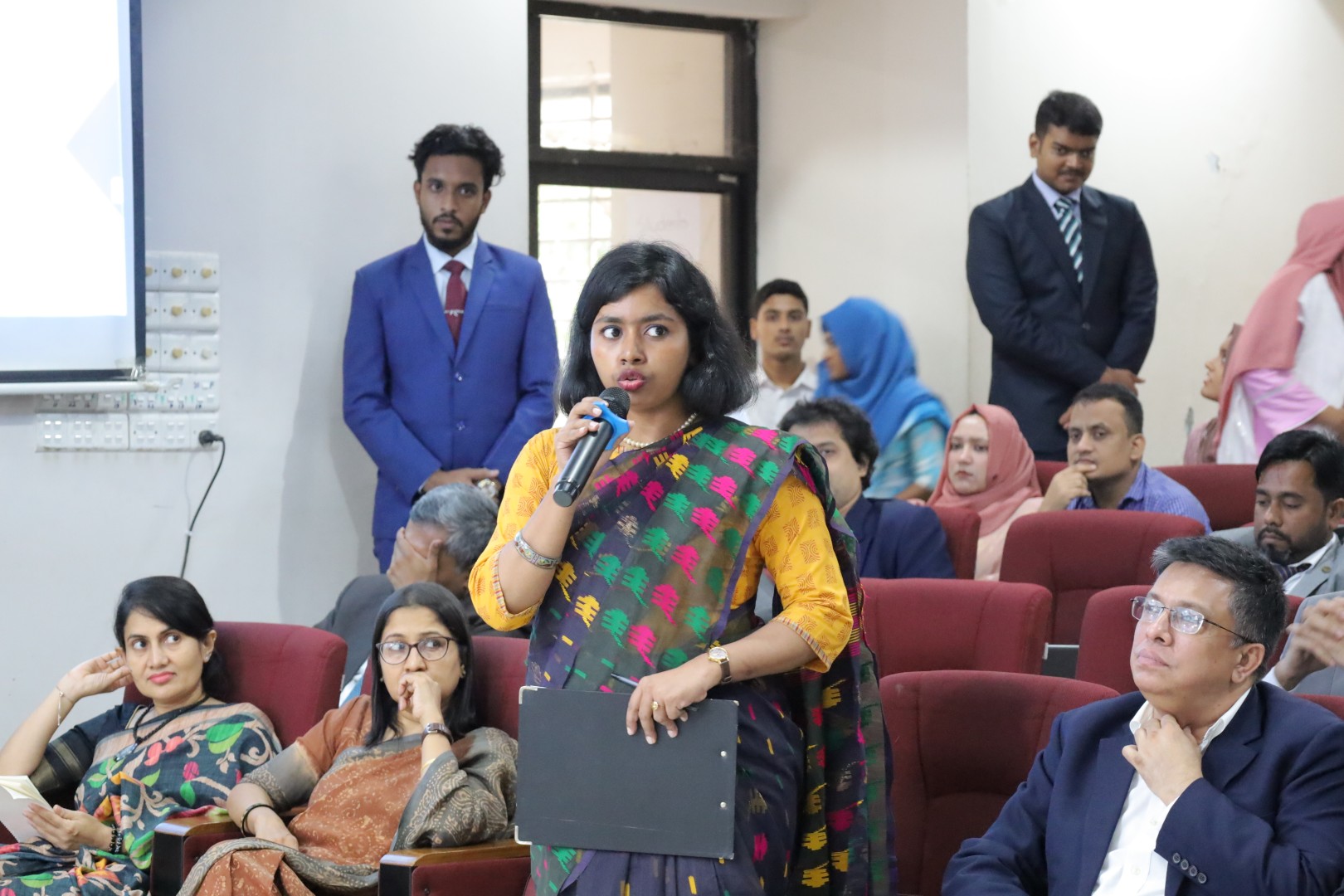
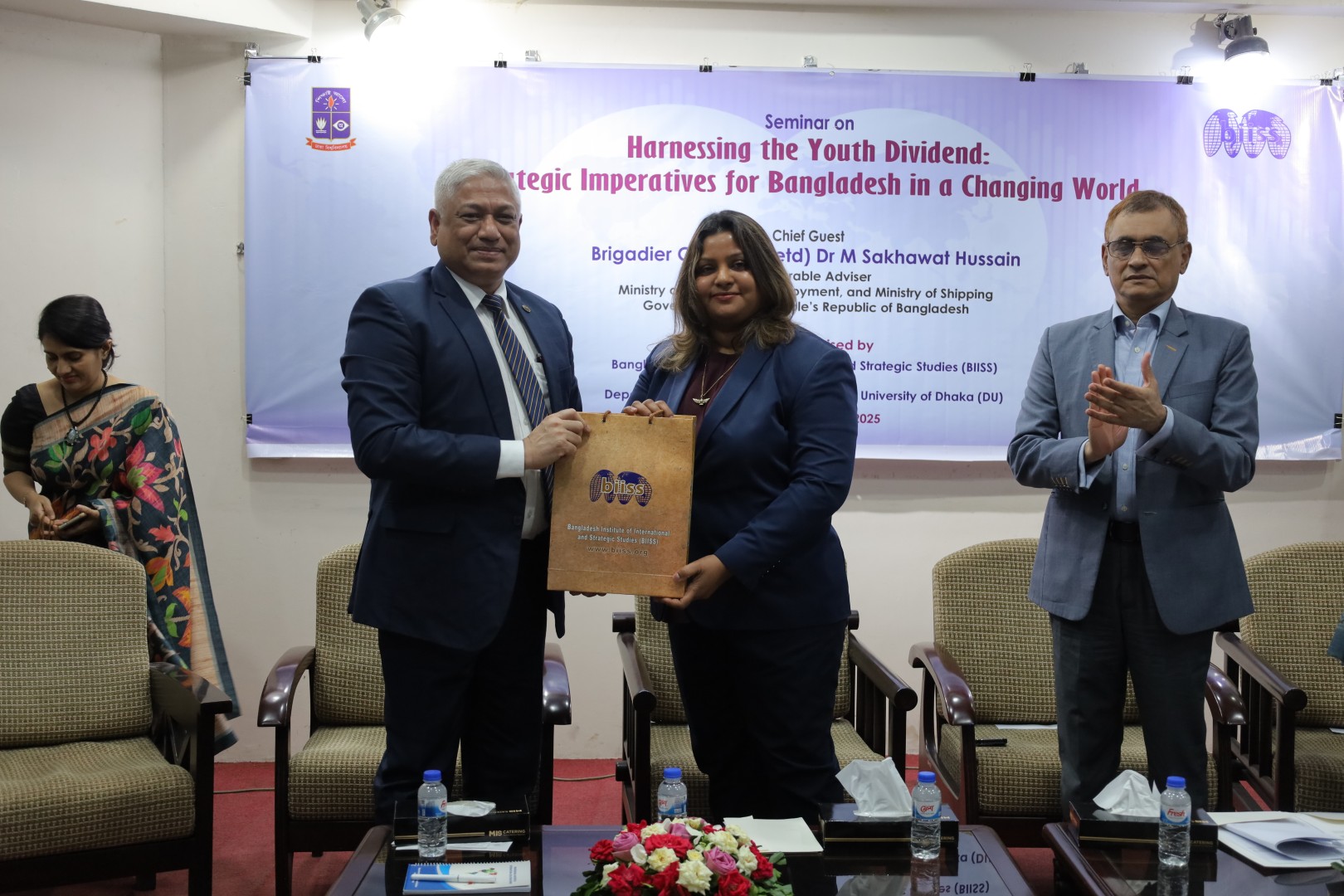
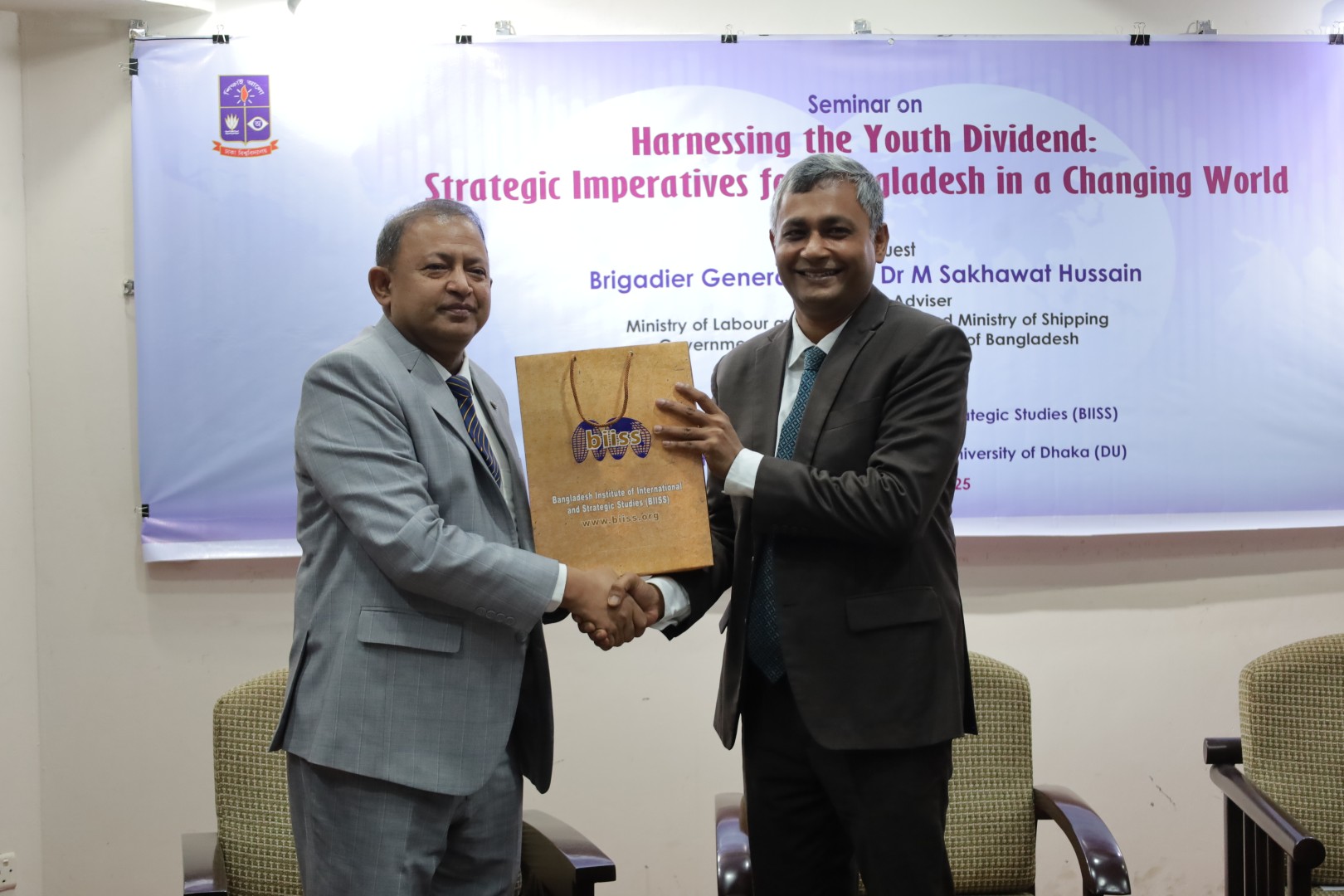
The Bangladesh Institute of International and Strategic Studies (BIISS) and the Department of International Relations (IR), University of Dhaka (DU), jointly organized a seminar titled “Harnessing the Youth Dividend: Strategic Imperatives for Bangladesh in a Changing World” on 14 August 2025
The inaugural session was chaired by Professor Dr. Rashed Uz Zaman from the Department of IR, DU
The technical program was divided into three thematic sessions focusing on foreign policy, national reforms, and digital transformations:
Session 1 (Youth in Shaping Foreign Policy, Diplomacy, and Security): Chaired by Professor Dr. Niloy Ranjan Biswas (DU), this segment featured papers by Lam-ya Mostaque (Research Fellow, BIISS), Ms. Monzima Haque (Assistant Professor, DU), and Ms. Faria Islam (Student, DU) navigating global geopolitics, multipolar diplomacy, and people-to-people connectivity
Session 2 (Youth in National Policy Making and Reform): Chaired by Professor Dr. Tofail Ahmed, PhD (Chairman, Local Government Reform Commission), this session explored structural decision-making pathways, diaspora youth integration, and education policy adjustments with presentations from Dr. Mahfuz Kabir (Research Director, BIISS), Dr. Saima Ahmed (Assistant Professor, DU), and Mr. Nafis Fuad (Student, DU)
Session 3 (Youth in Digital Platforms & Digital Diplomacy): Chaired by Major General (Retd) Md Emdad-Ul-Bari (Chairman, BTRC), the final module investigated digital transformation tools, diplomatic connectivity, and social media literacy, featuring findings from Muhammad Mazedul Haque (Research Officer, BIISS), Mr. Md Tanvir Habib (Assistant Professor, DU), and Afia Ibnat Shuchi (Student, DU)
The seminar concluded with a formal vote of thanks delivered by Colonel A H M Yeaseen Chowdhury, MPhil, PhD, Research Director at BIISS
To integrate youth perspectives into foreign policy: Examining how youth voices and public diplomacy can help Bangladesh navigate shifting regional and global geopolitics
To create institutional pathways for governance reform: Identifying practical models and overcoming roadblocks to include young demographics and diaspora youth directly within national decision-making bodies
To bridge rural-urban divides through digital transformation: Showcasing modern digital tools and digital literacy frameworks driven by the youth to promote inclusive national development
To foster responsible digital citizenship: Enhancing social media literacy and utilizing digital diplomacy platforms to securely connect Bangladesh with the global community
To build cross-sectoral collaboration: Strengthening strategic research partnerships among state institutions, academic faculties, and the student body to harness the country's demographic dividend effectively