Bangladesh Institute of International and Strategic Studies
Bangladesh Institute of International and Strategic Studies
From Crisis Management to Resilient Energy Transition, Monday, 07 September 2026
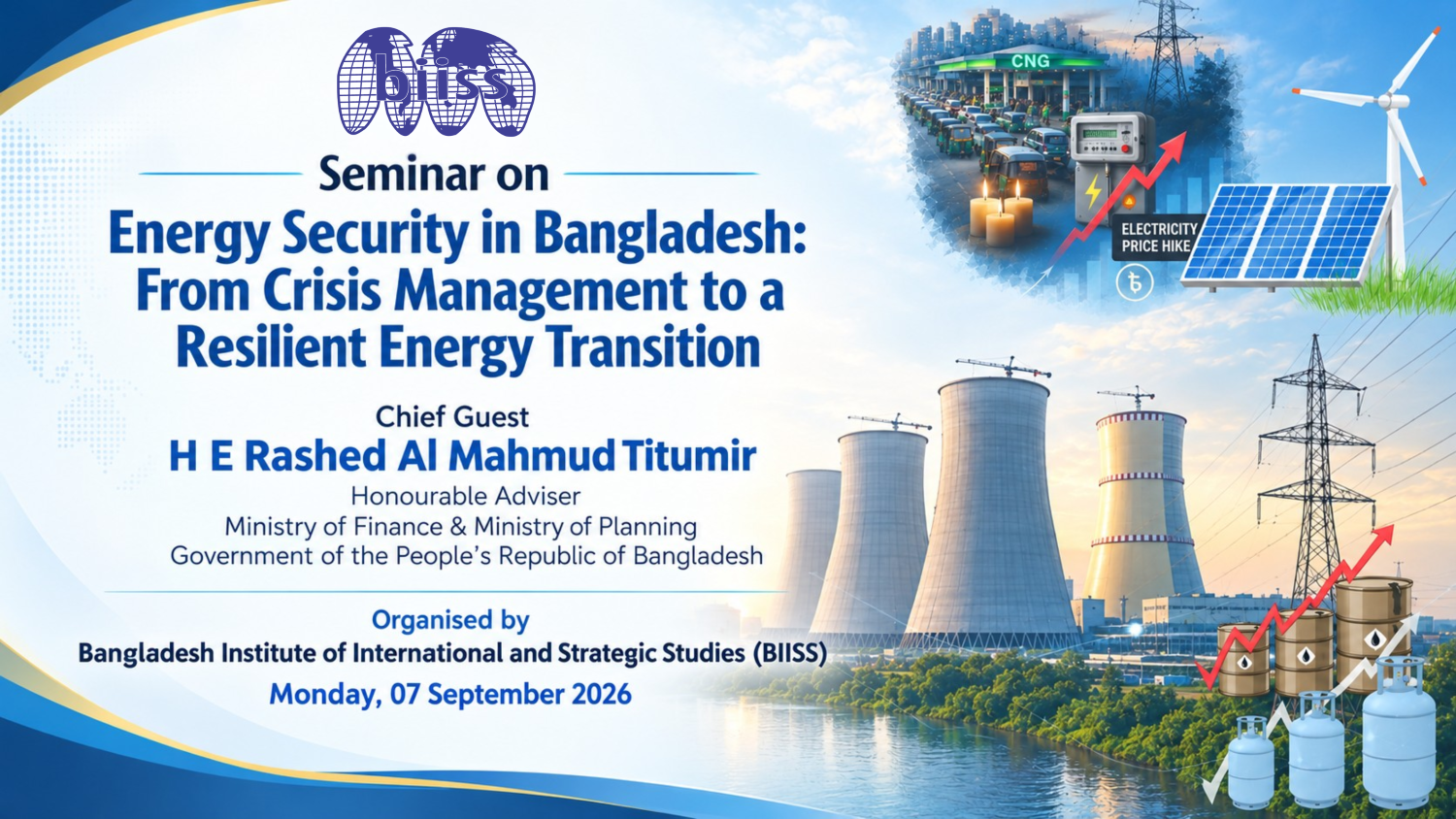
Seminar on “Energy Security in
Bangladesh: From Crisis Management to Resilient Energy Transition” Held at
BIISS, Dhaka, 07 September 2026
The Bangladesh Institute of
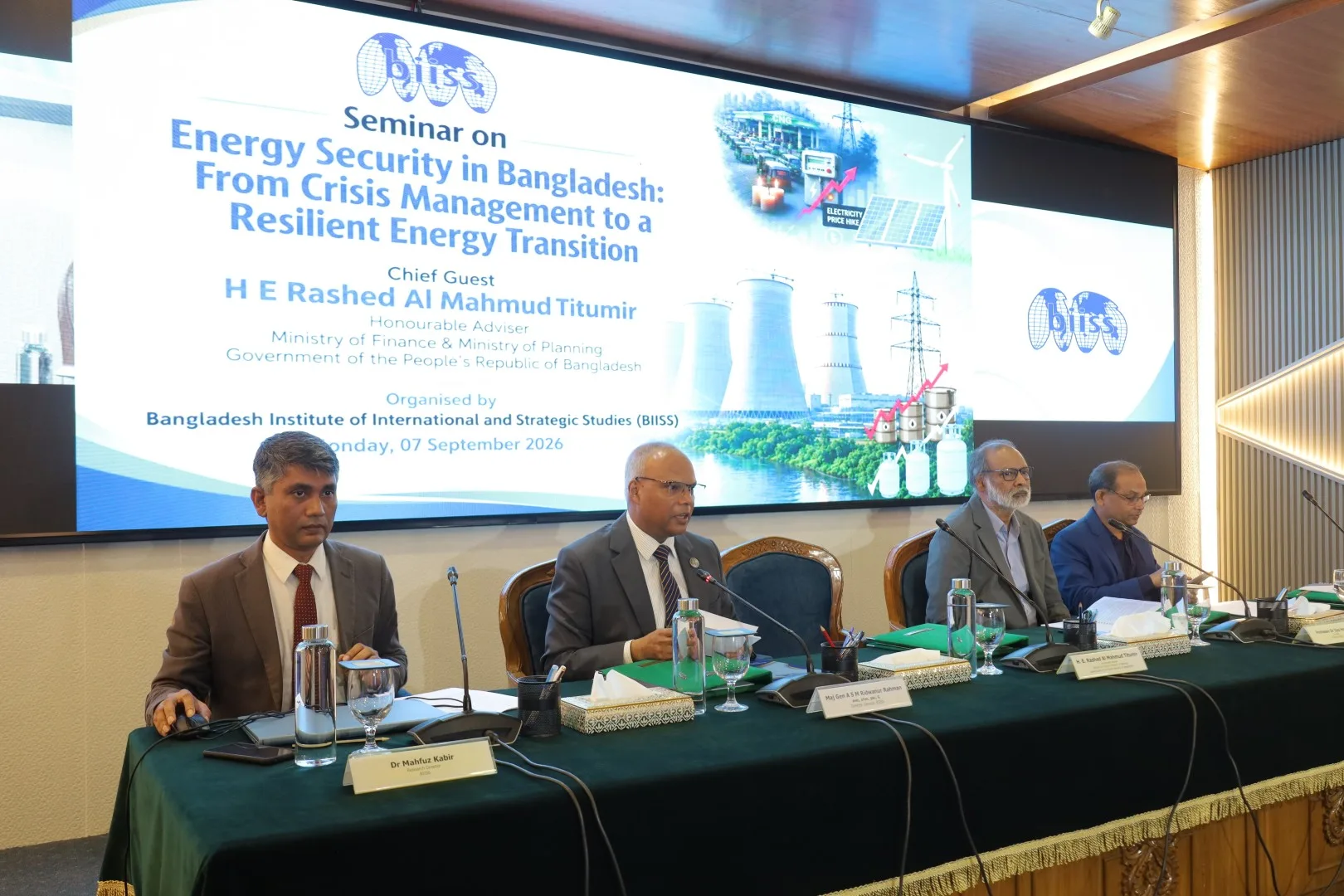
International and Strategic Studies (BIISS) organised a seminar titled “Energy
Security in Bangladesh: From Crisis Management to Resilient Energy Transition”
on Monday, 07 September 2026, at the BIISS Auditorium, Dhaka.
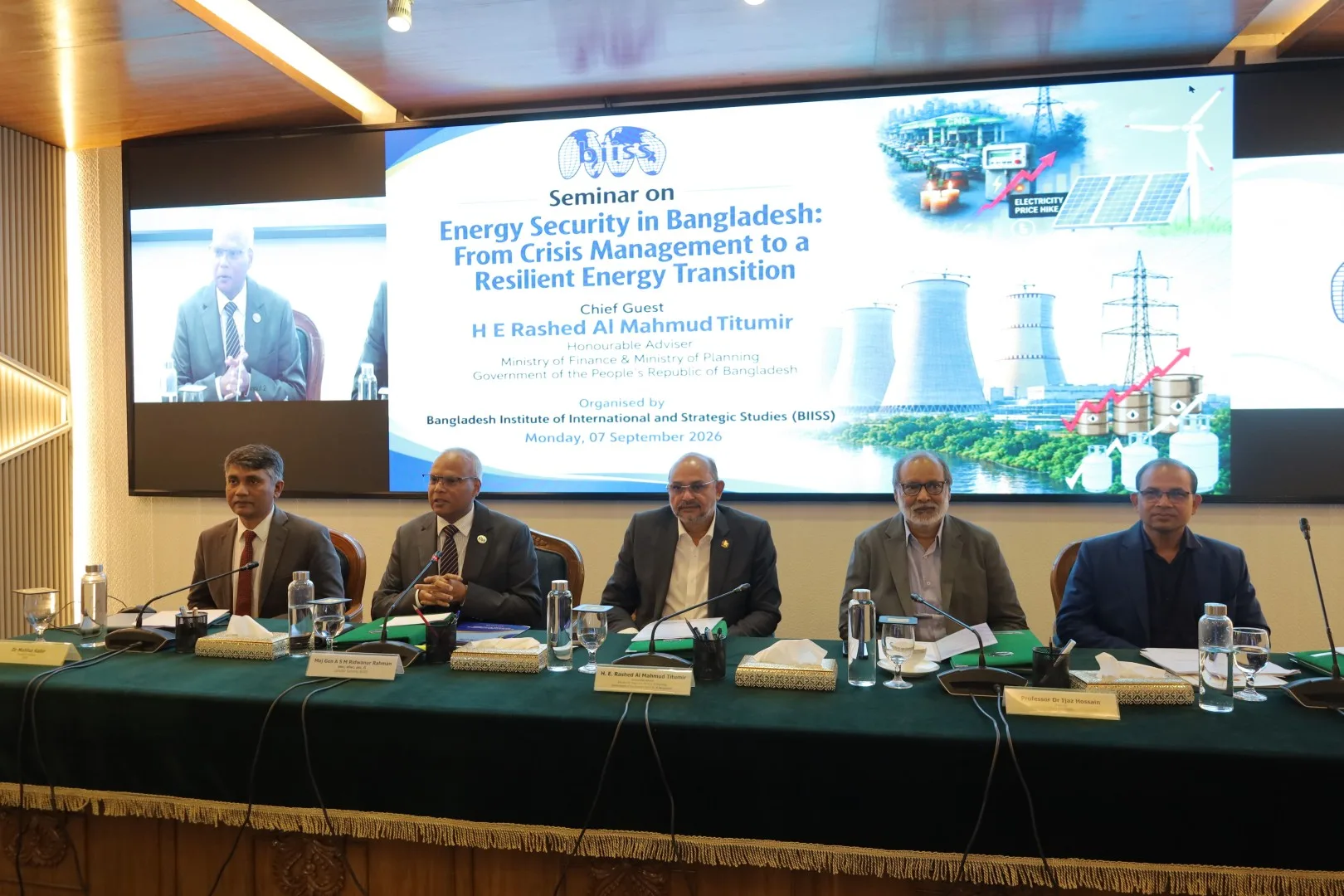
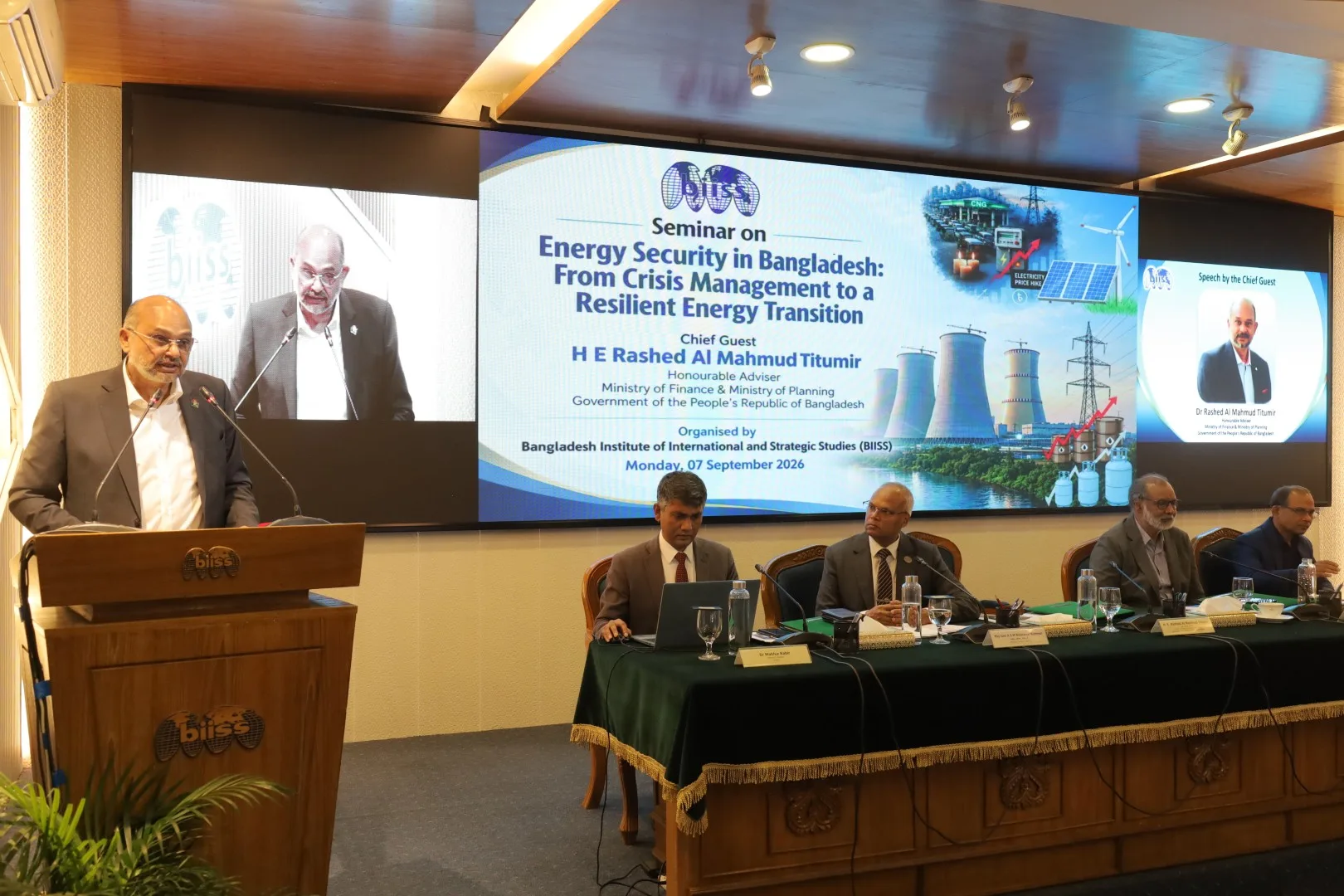
H.E. Rashed Al Mahmud Titumir,
Honourable Advisor to the Ministry of Finance and Ministry of Planning,
Government of Bangladesh, attended the seminar as the Chief Guest. The
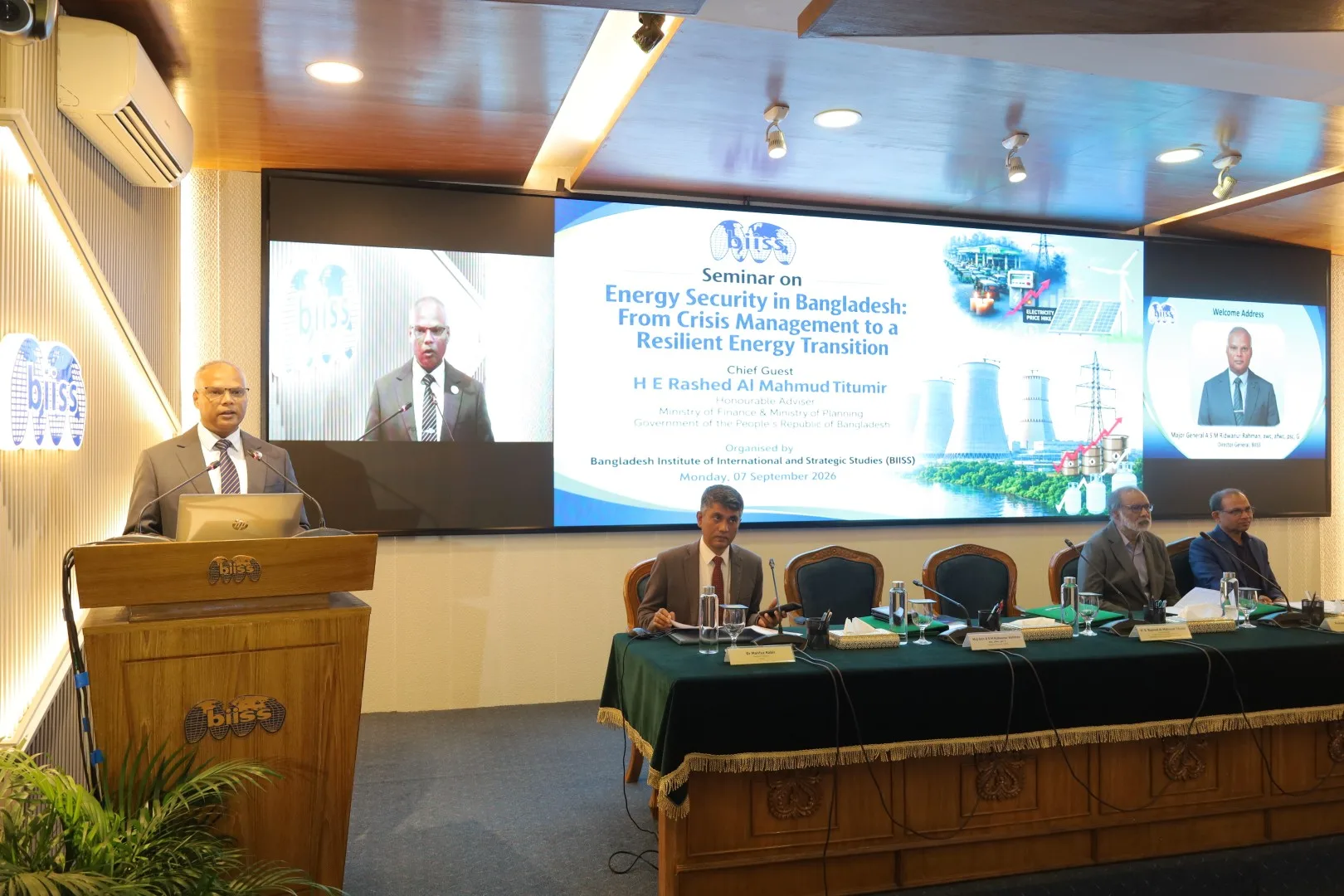
programme commenced with a welcome address by Major General A S M Ridwanur
Rahman, awc, afwc, psc, G, Director General, BIISS, who also chaired the
session.
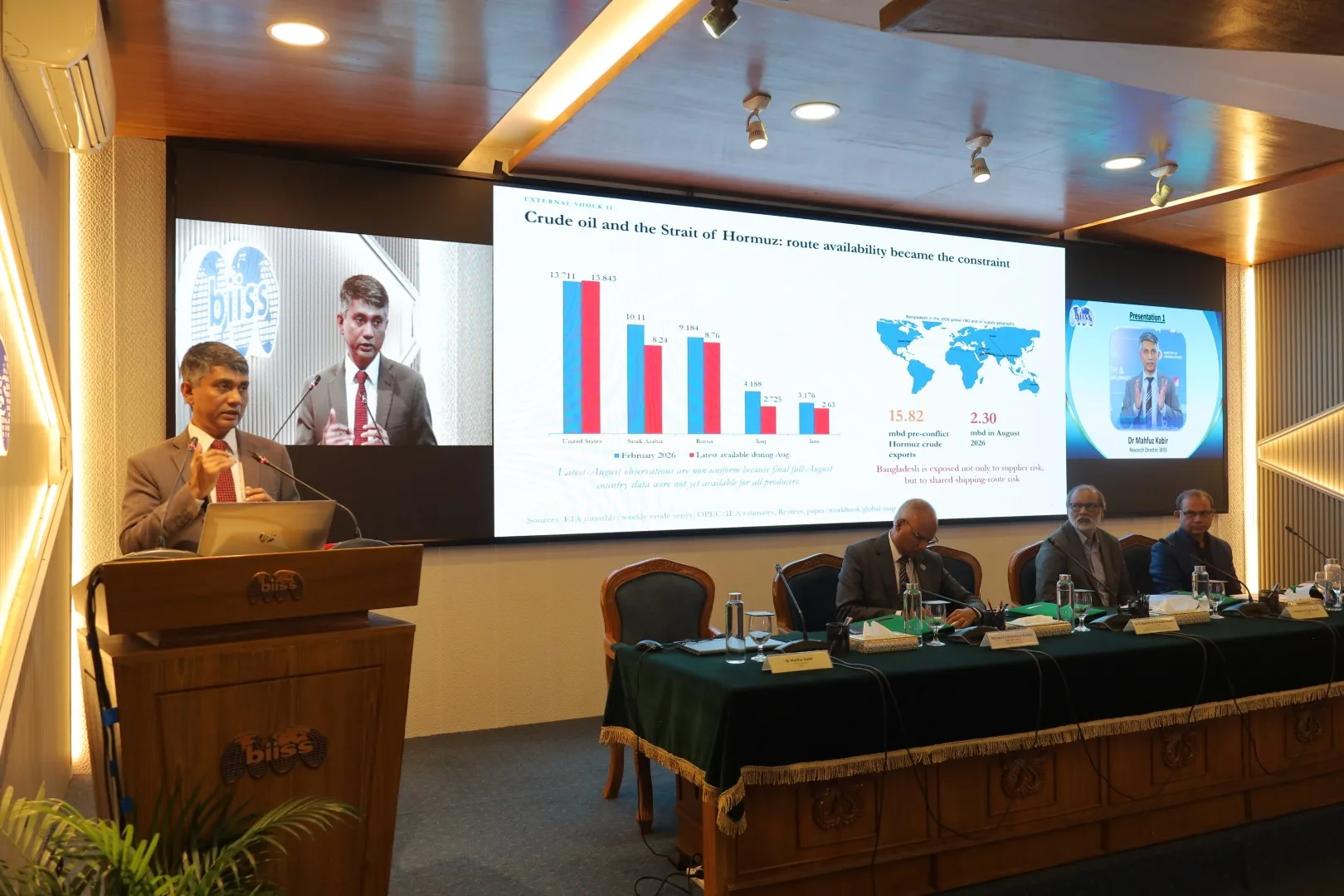
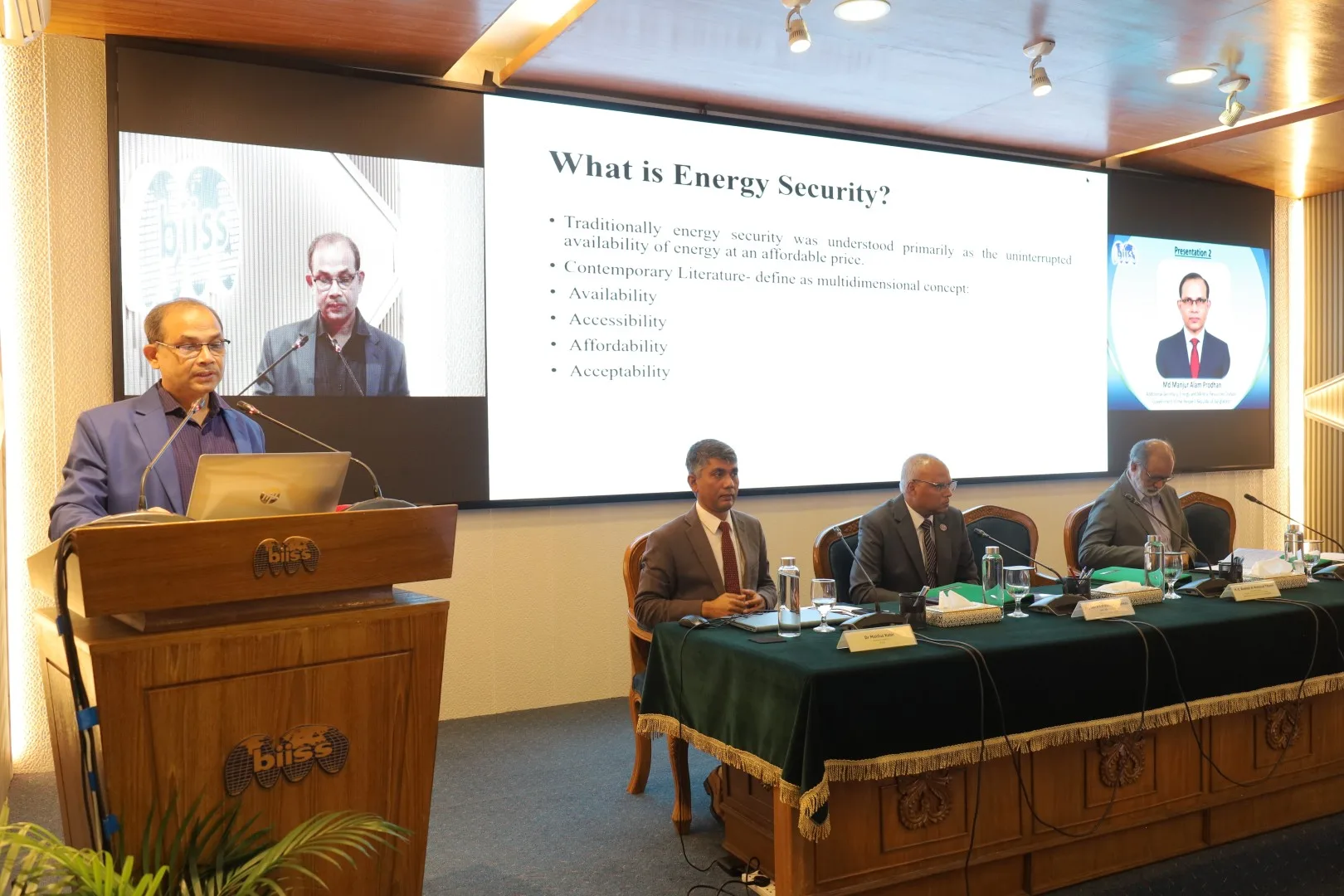
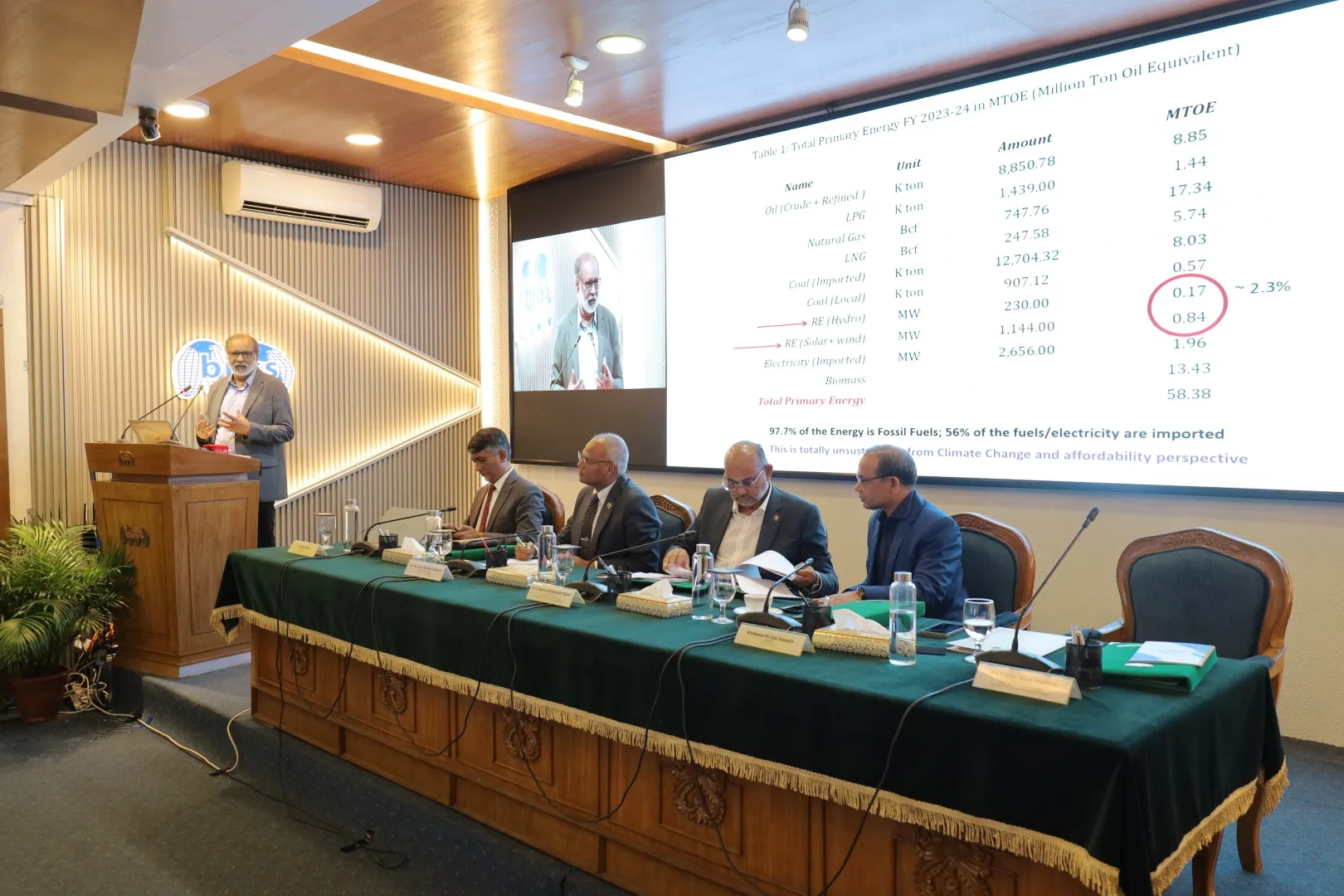
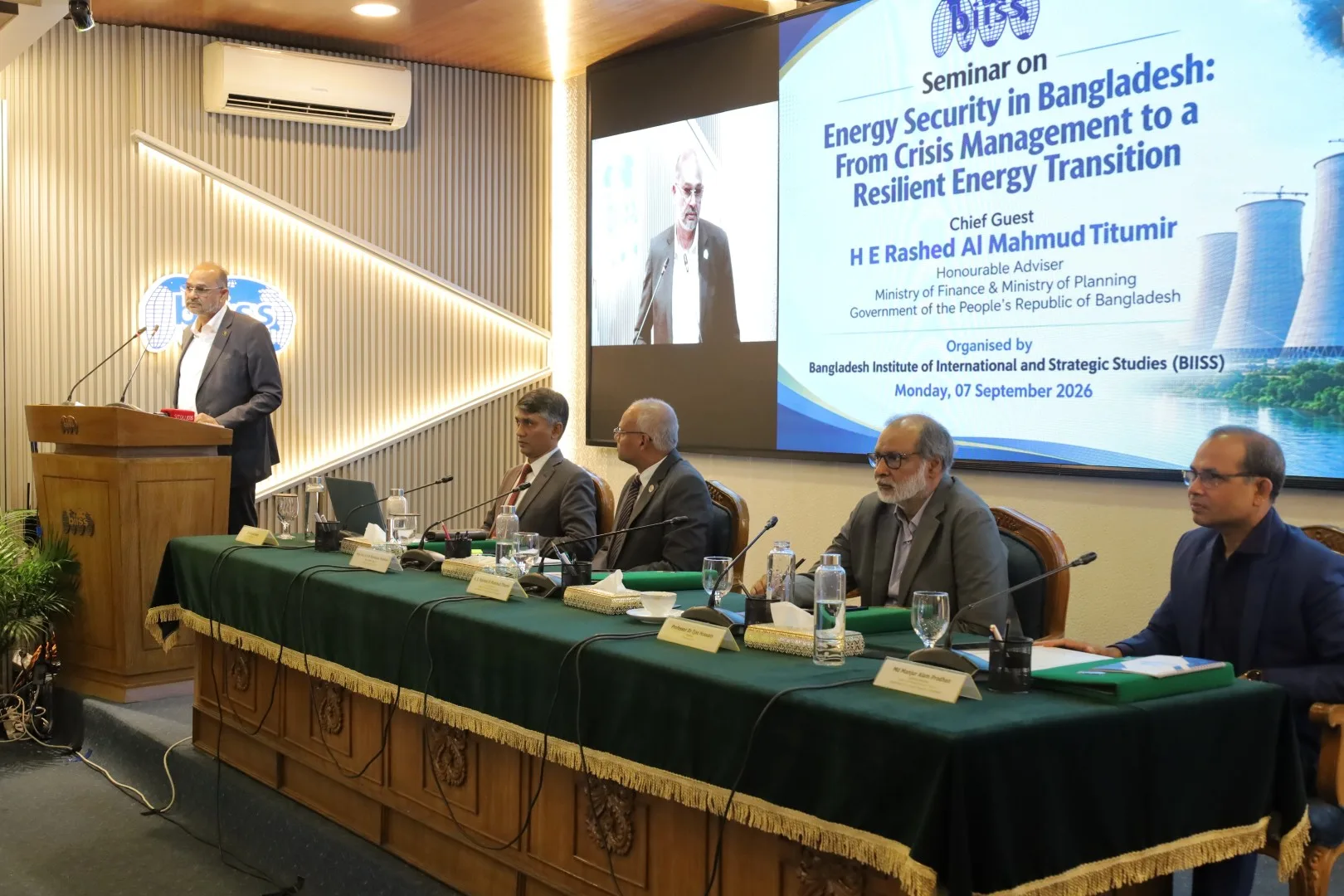
The seminar featured
presentations by Dr Mahfuz Kabir, Research Director, BIISS; Mr Manjur
Alam Prodhan, Additional Secretary, Energy and Mineral Resources Division
(EMRD); and Professor Dr Ejaz Hossain, Chairman, ESTex Foundation. The
presentations and subsequent discussions examined Bangladesh’s energy security
from strategic, economic and technological perspectives, focusing on energy
supply and affordability, import dependence, domestic energy resources,
infrastructure resilience, renewable energy, energy efficiency and the broader
economic implications of energy insecurity.
In his welcome address, the
Director General, BIISS, emphasised that energy security is integral to
economic security, industrial competitiveness, foreign policy and national
resilience. He noted that Bangladesh’s energy challenge is not limited to generation
capacity but also involves ensuring affordable, reliable and sustainable
primary energy. He stressed the need to move from crisis management to
resilience, from import dependence to diversification, and from short-term
responses to strategic planning.
He also highlighted the
importance of domestic energy exploration, strategic reserves, renewable
energy, grid and energy storage development, regional cooperation and
institutional accountability in strengthening the country’s long-term energy
security.
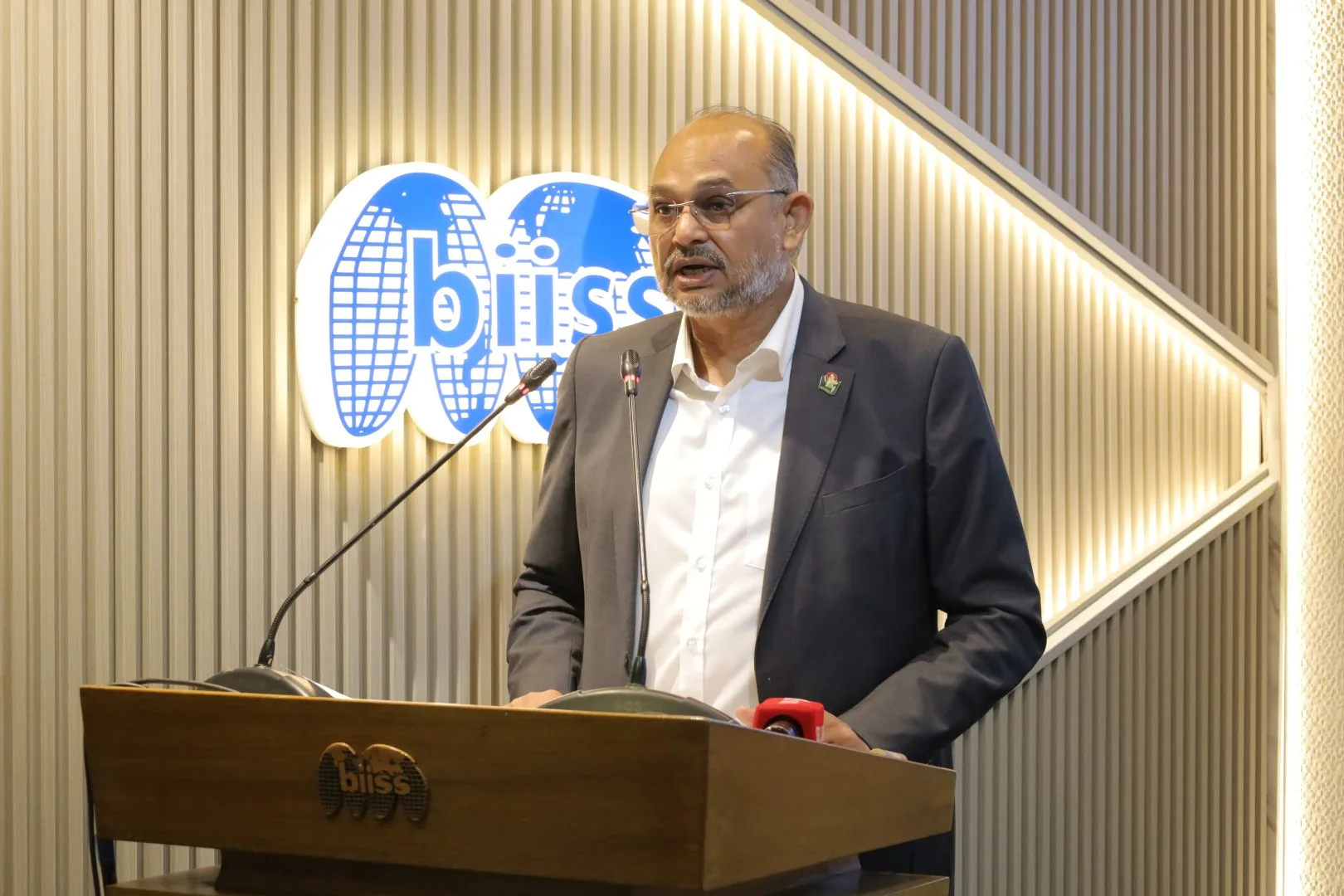
In his remarks, the Chief Guest, H.E.
Rashed Al Mahmud Titumir, underscored that energy security is closely
linked with economic security and national development. He stressed the
importance of diversifying energy sources and supply routes, strengthening
domestic energy capabilities, improving infrastructure and contingency
arrangements, and promoting energy efficiency.
He further emphasised the need
for a pragmatic and sustainable energy transition that balances energy
security, affordability, economic competitiveness and environmental
sustainability. He also called for stronger coordination among government
institutions and greater engagement with the private sector, academia and
development partners.
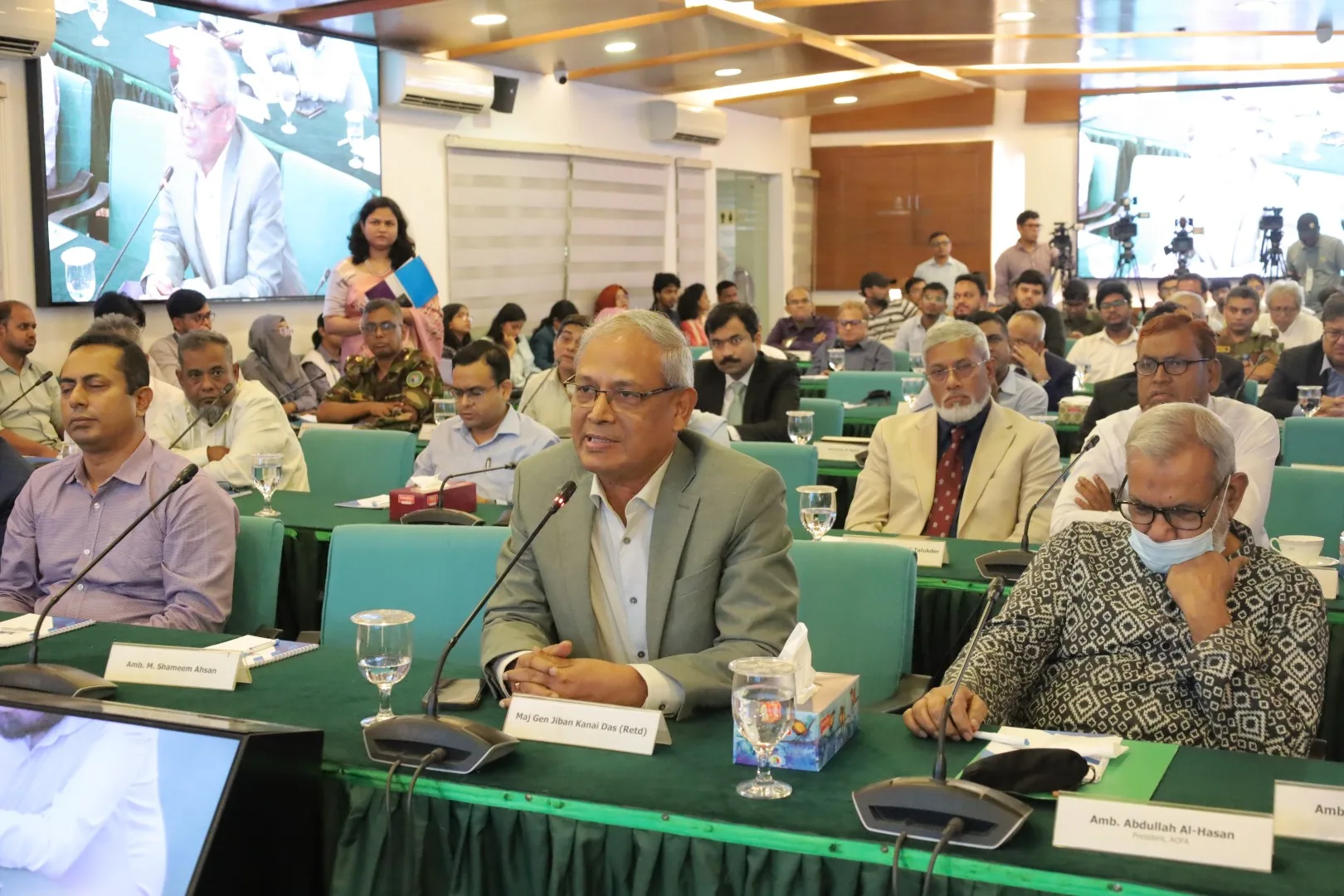
An open discussion followed, with
participants exchanging views on Bangladesh’s present and future energy
challenges and possible policy responses. The discussion emphasised the
importance of developing a diversified, resilient and sustainable energy system
capable of responding effectively to geopolitical, market and
infrastructure-related disruptions.
In his concluding remarks, the
Director General, BIISS, expressed hope that the seminar would contribute to
developing an actionable roadmap for strengthening Bangladesh’s energy security
and ensuring a secure, affordable, diversified and resilient energy future.
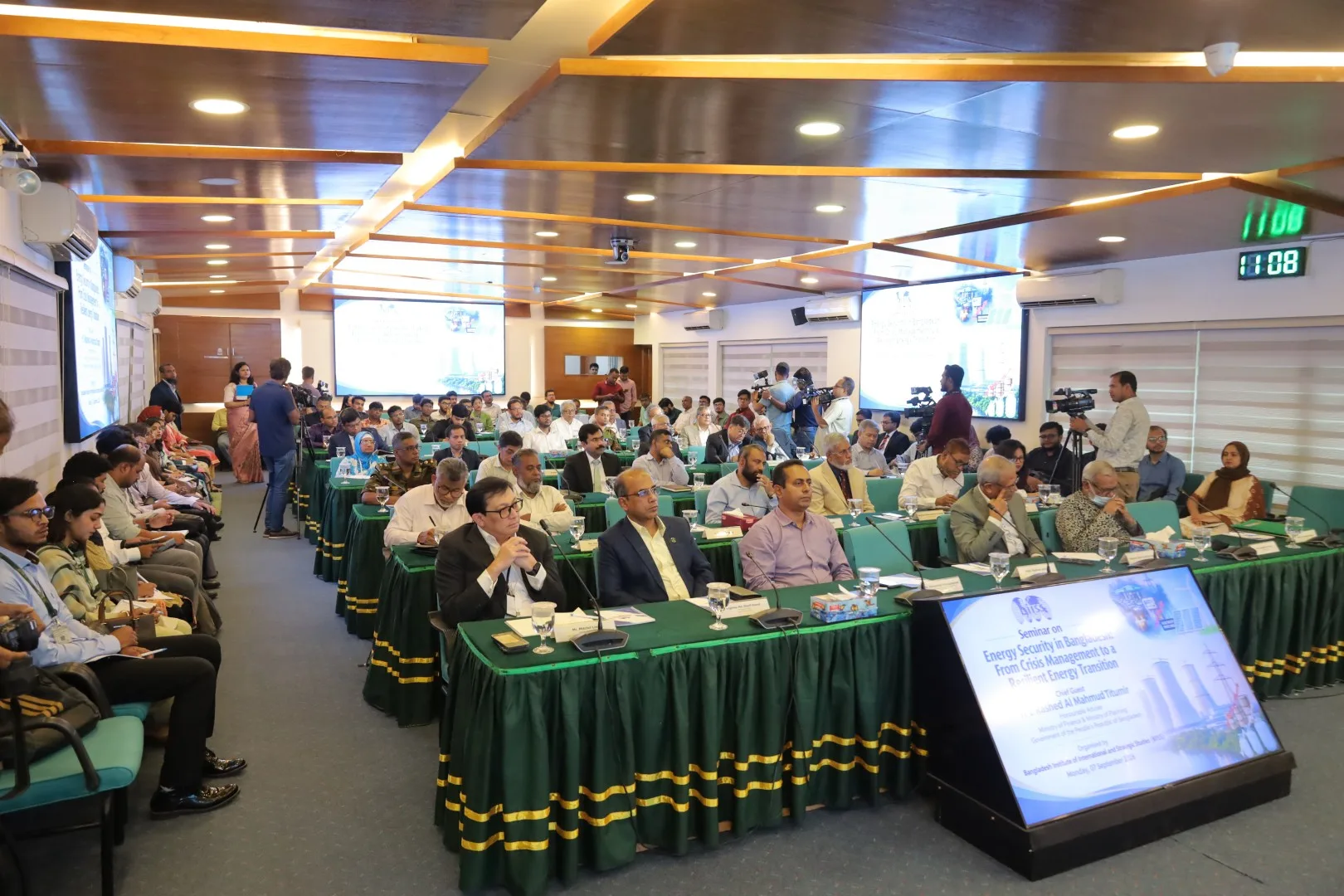
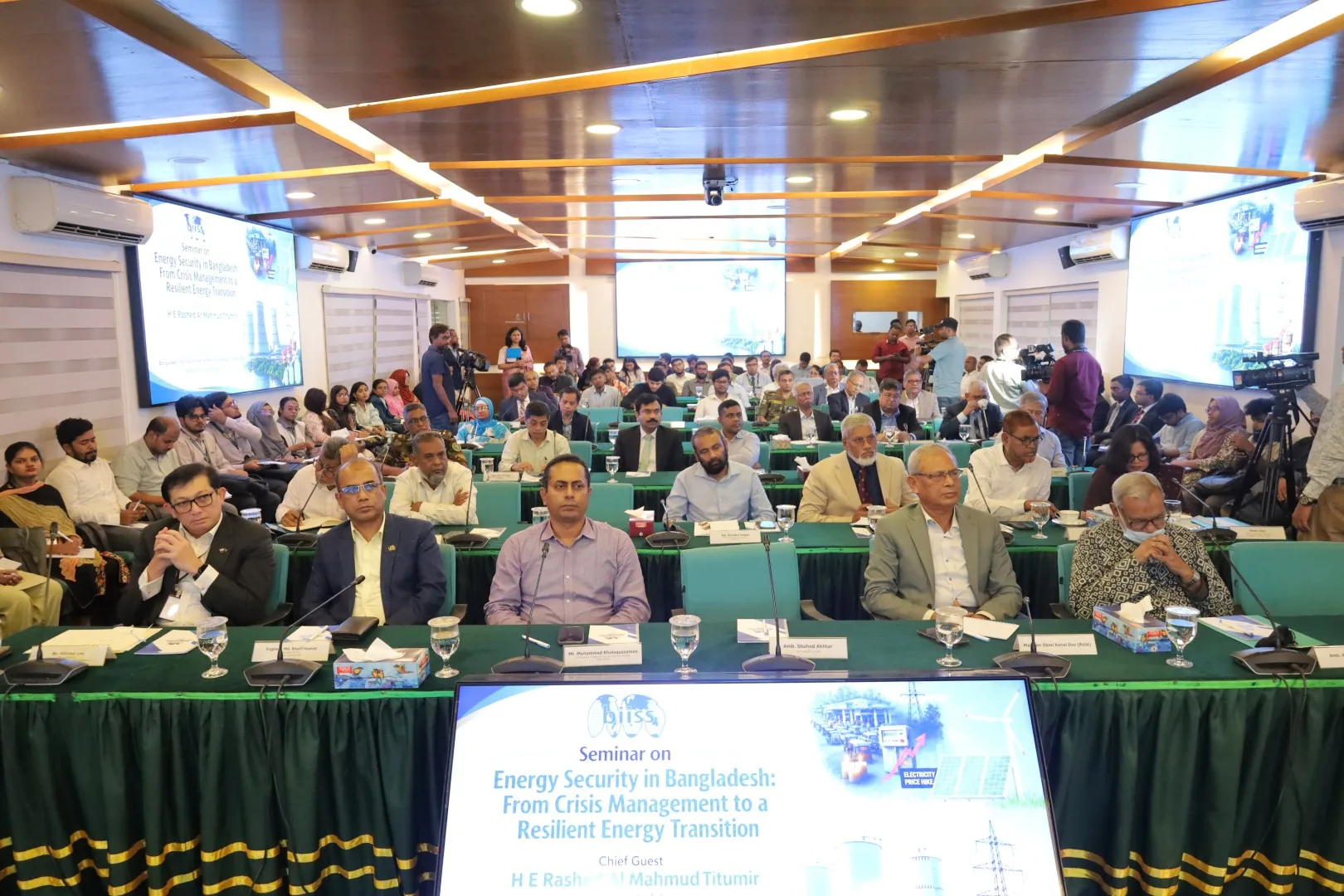
The seminar was attended by
senior government officials, diplomats, academics, researchers, energy experts,
representatives of the private sector and development partners, as well as
other distinguished participants.