Bangladesh Institute of International and Strategic Studies
Bangladesh Institute of International and Strategic Studies
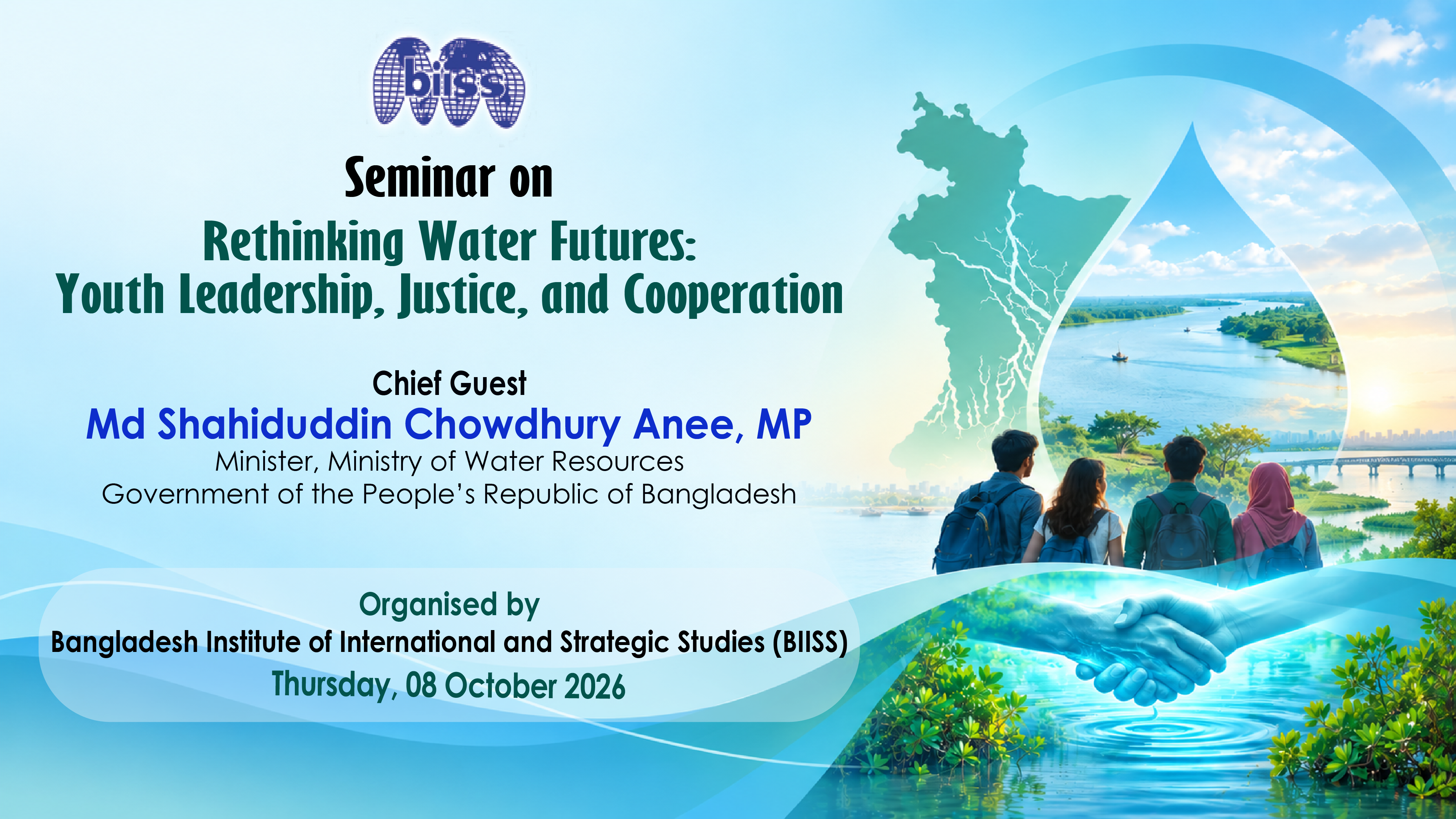
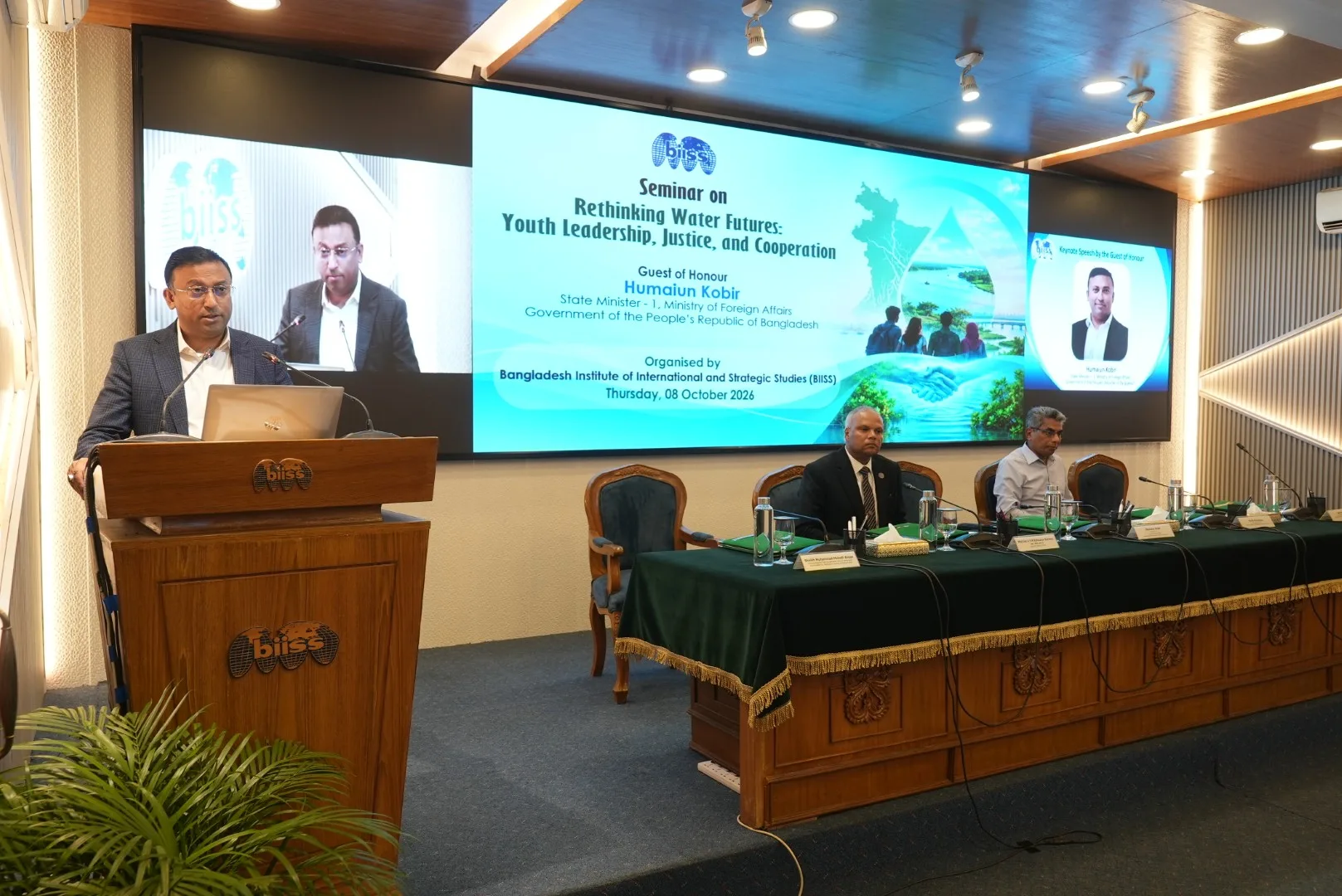
Seminar on “Rethinking Water Futures: Youth Leadership,
Justice, and Cooperation”
Date: 08 October 2026
Venue: BIISS Auditorium, Dhaka
Organised by: Bangladesh Institute of International and Strategic
Studies (BIISS)
The Bangladesh Institute of
International and Strategic Studies (BIISS) organised a seminar titled “Rethinking
Water Futures: Youth Leadership, Justice, and Cooperation” on 08 October
2026 at the BIISS Auditorium, Dhaka.
Md. Shahiduddin Chowdhury Anee
MP, Minister, Ministry of Water Resources, Government of the People’s Republic
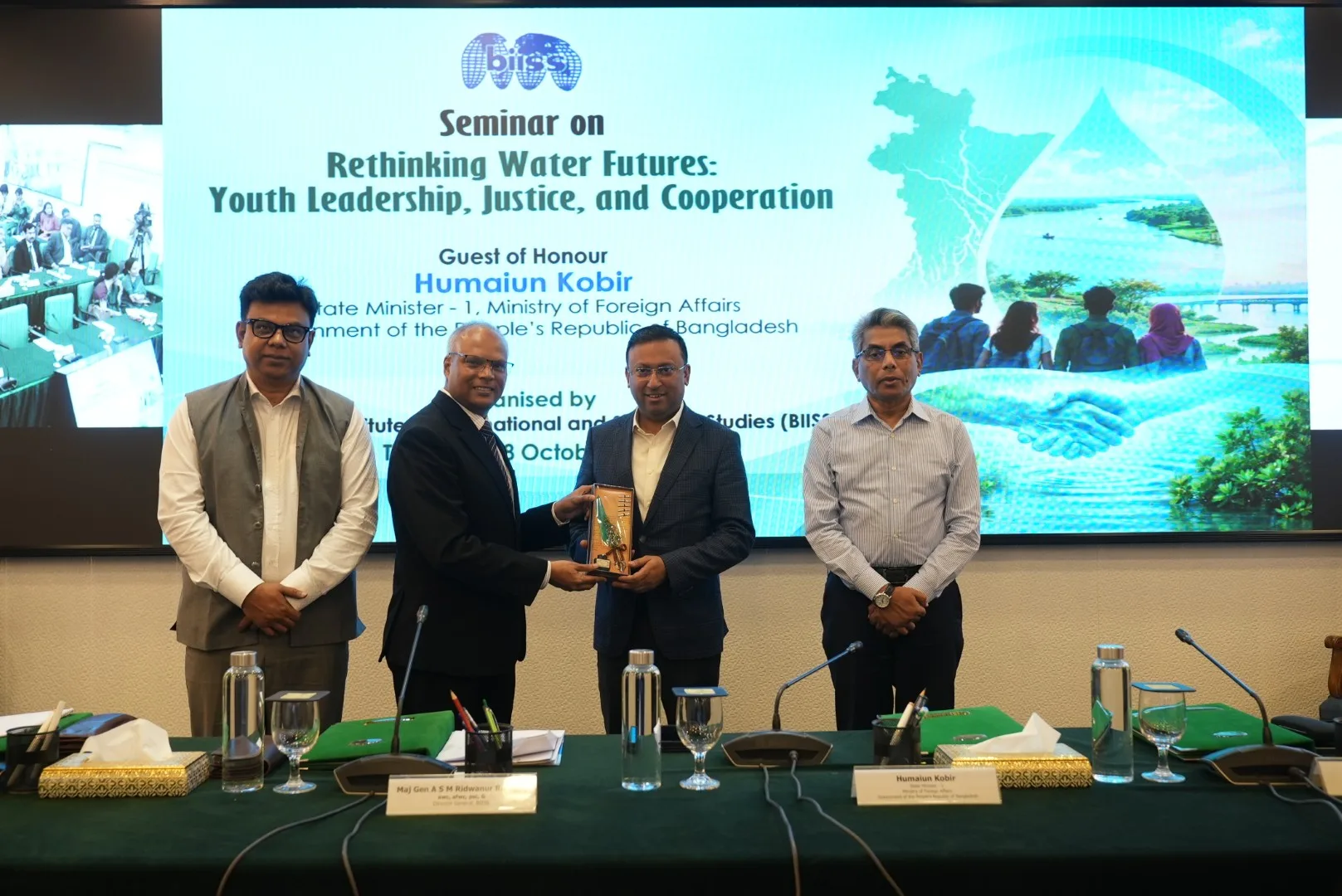
of Bangladesh, attended the seminar as the Chief Guest. Humaiun Kobir,
State Minister-1, Ministry of Foreign Affairs, Government of the People’s
Republic of Bangladesh, delivered the keynote speech as the Guest of
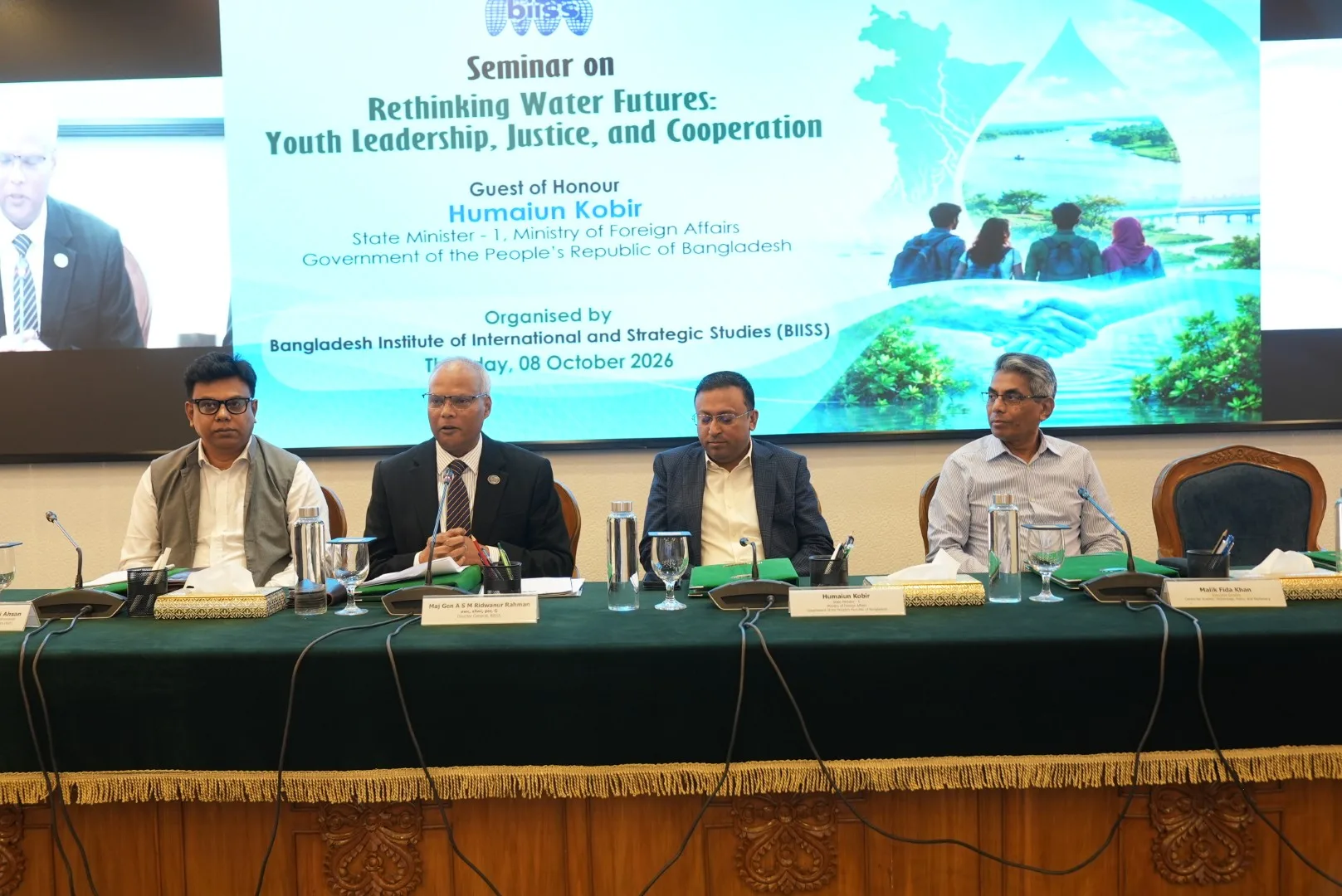
Honour. The seminar was chaired by Major General A S M Ridwanur Rahman, awc,
afwc, psc, G, Director General of BIISS, who also delivered the welcome
address.
In his welcome address, Major
General A S M Ridwanur Rahman highlighted the importance of effective water
management and transboundary water cooperation for Bangladesh. He emphasised
meaningful youth participation in water diplomacy, equitable water governance,
and the sustainable management of water resources for future generations.
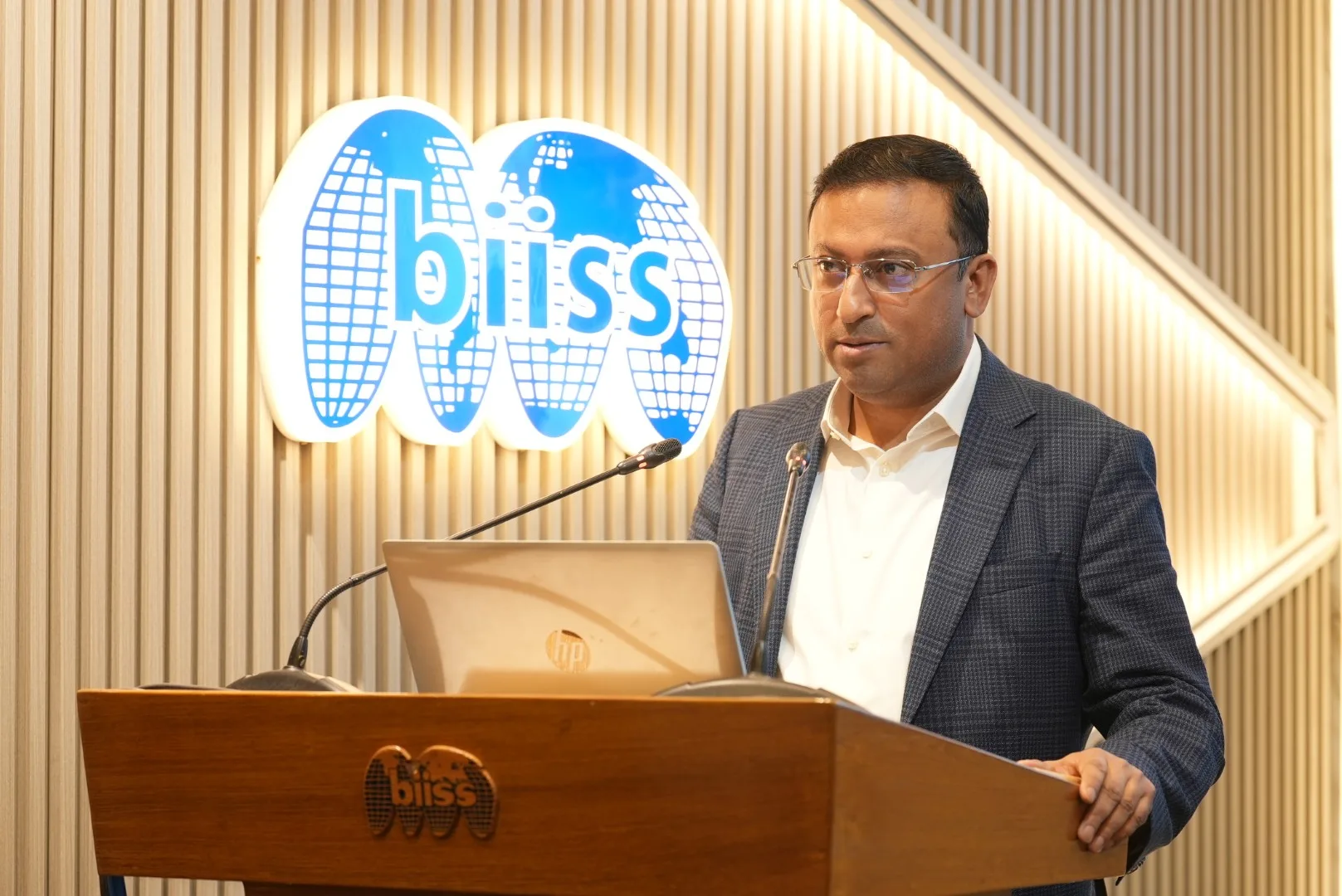
In his keynote speech, Humaiun
Kobir underscored the importance of water diplomacy on multilateral platforms
and highlighted opportunities for Bangladesh to strengthen international
partnerships, promote technology transfer, and enhance scientific cooperation.
He also emphasised effective international engagement and cooperation with
like-minded countries to advance Bangladesh’s interests in transboundary water
management.
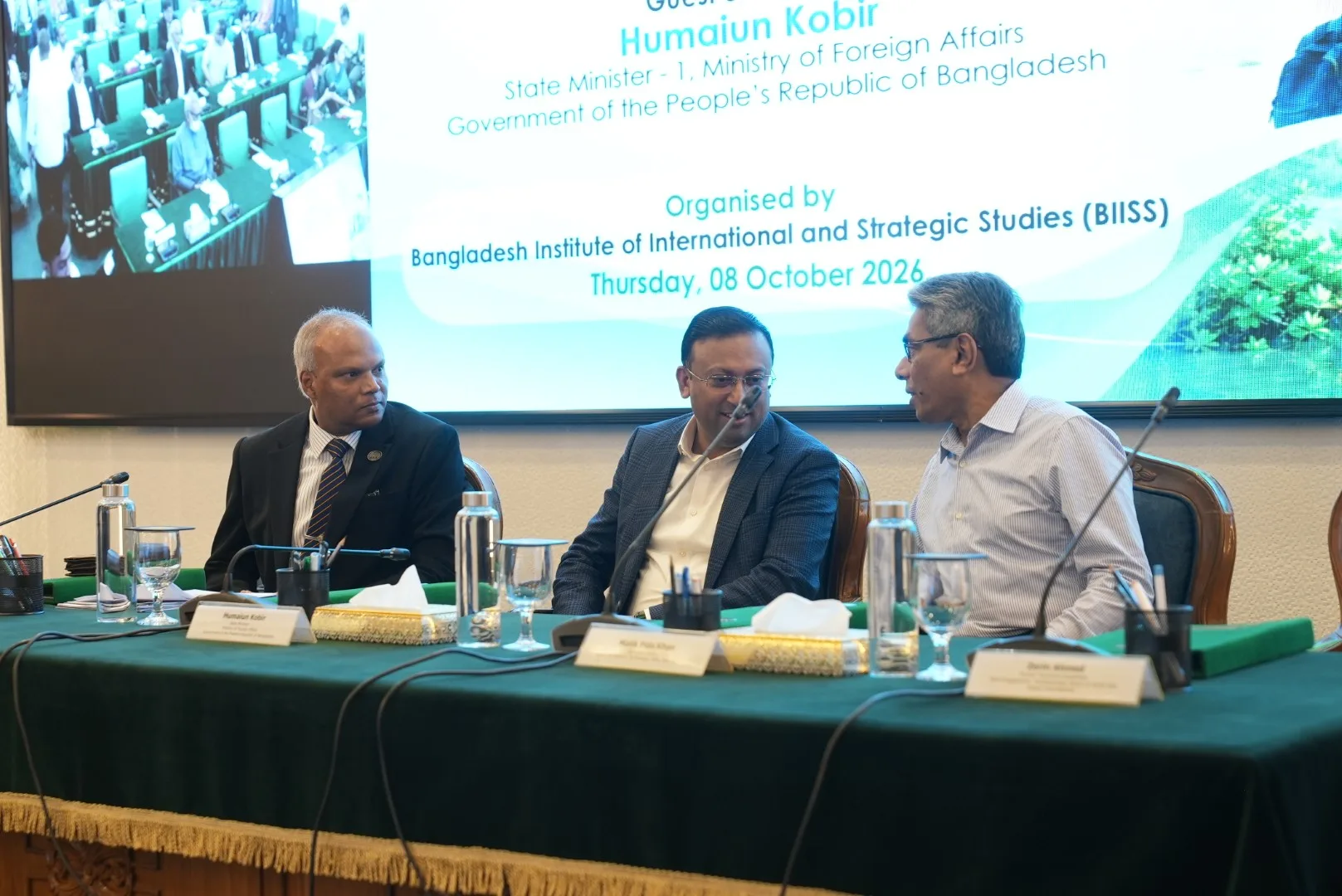
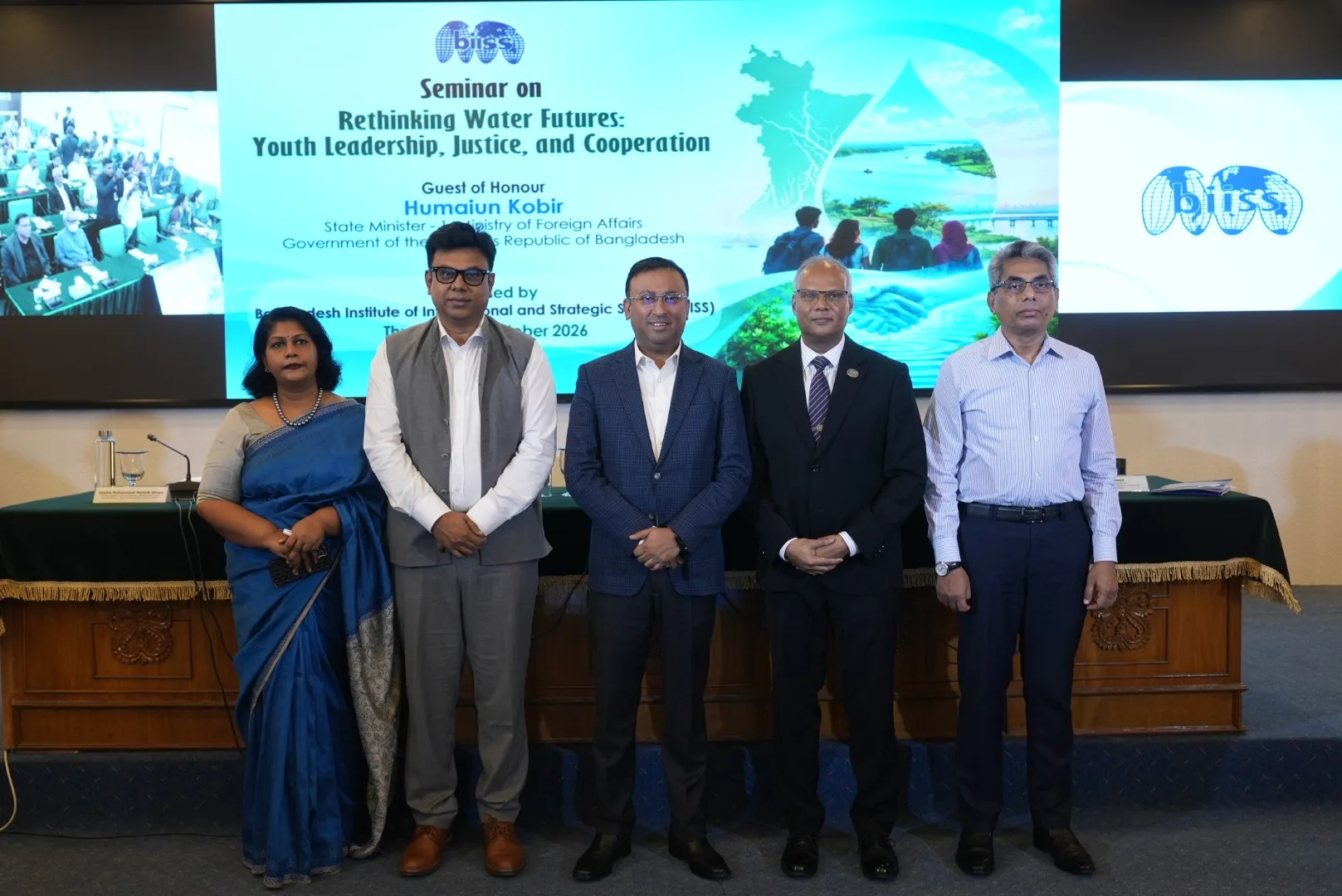
The working session featured
three panellists: Malik Fida Khan, Executive Director, Centre for
Science, Technology, Policy, and Diplomacy; Shaikh Muhammad Mehedi Ahsan,
Principal Adaptive Planning Specialist, Deltares, Netherlands, and Vice
President (01), Bangladesh Institute of Planners (BIP); and Zerin Ahmed,
former Technical Coordinator, Y&W Engagement, Transboundary Rivers of South
Asia, Oxfam International.
The discussions explored various
dimensions of transboundary water management, including water justice,
inclusive governance, scientific and data cooperation, multilateral water
diplomacy, and public-private partnerships. The panellists highlighted that water
management extends beyond resource allocation, encompassing interconnected
concerns relating to the environment, economy, food security, livelihoods,
peace, and regional cooperation. They also stressed the importance of creating
meaningful opportunities for young people to contribute to decision-making and
policymaking processes concerning transboundary water governance.
In his remarks, Chief Guest Md.
Shahiduddin Chowdhury Anee MP emphasised equitable and sustainable approaches
to water resource management and transboundary water cooperation. He
underscored the importance of inclusive stakeholder participation and ensuring
that the interests of future generations remain central to water governance and
policymaking.
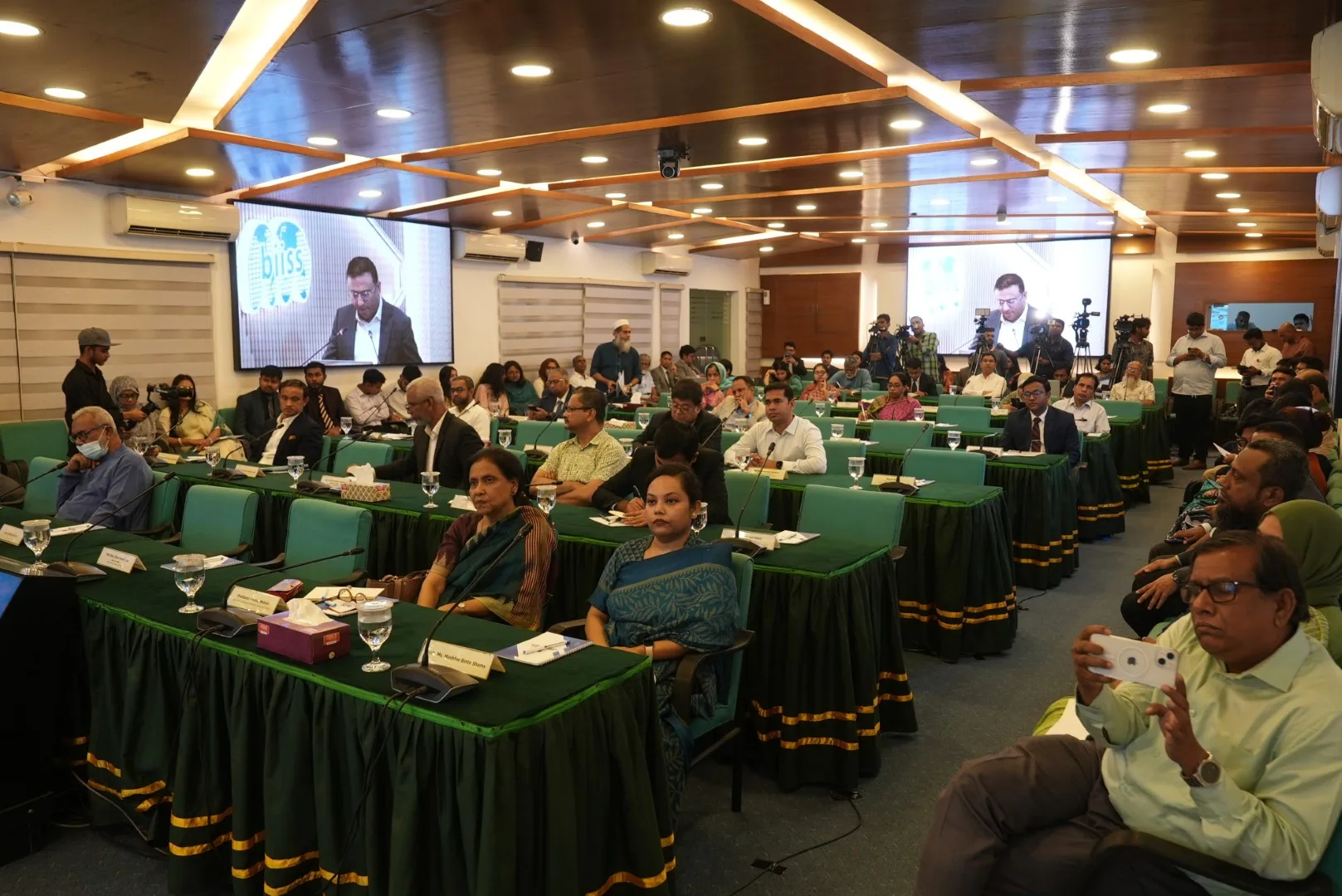
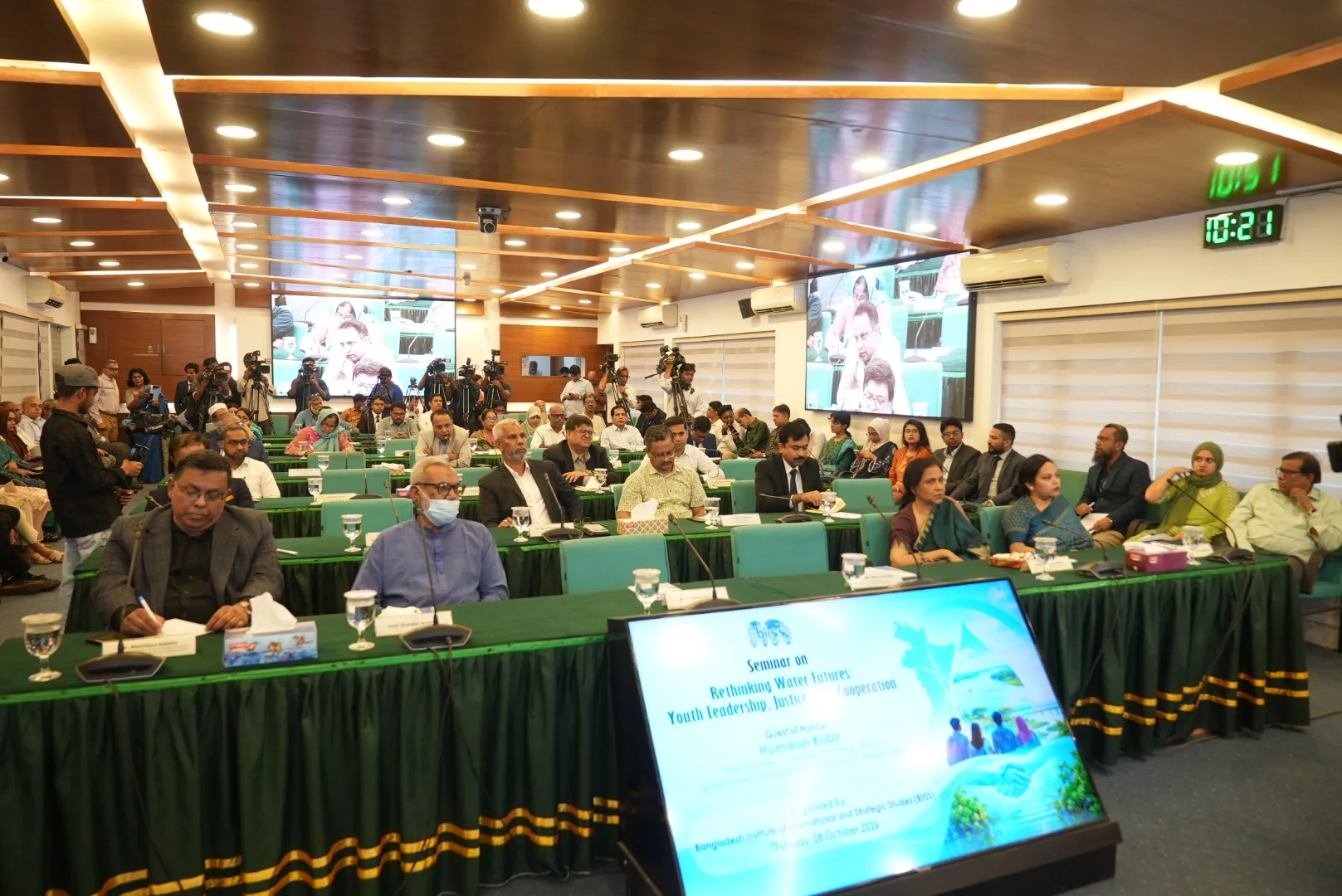
The seminar brought together
senior officials from various ministries and government agencies, diplomats,
researchers, academics, water and environmental experts, university faculty
members and students, youth representatives, private-sector representatives,
civil society members, NGO representatives, think-tank representatives, and
media professionals. The exchange of views and experiences during the open
discussion session enriched the deliberations and highlighted the importance of
collaborative approaches to sustainable water governance.
The seminar underscored the need
for stronger regional and international cooperation, inclusive water
governance, and meaningful youth leadership to address emerging water
challenges and promote a more equitable and sustainable water future.