Bangladesh Institute of International and Strategic Studies
Bangladesh Institute of International and Strategic Studies
Roundtable on “The Power of Local: How Grassroots Communities Drive SDG Achievement in Bangladesh”
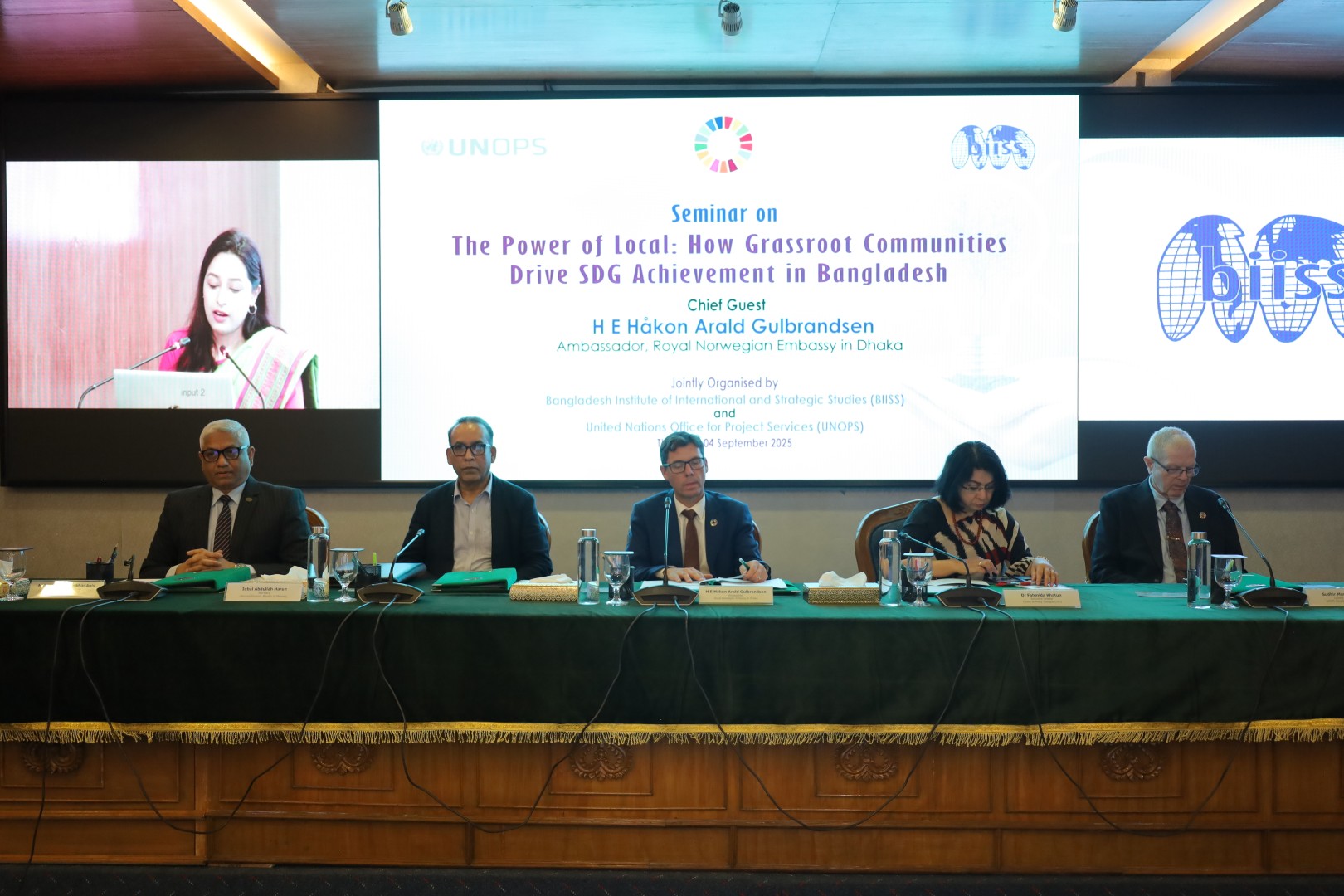
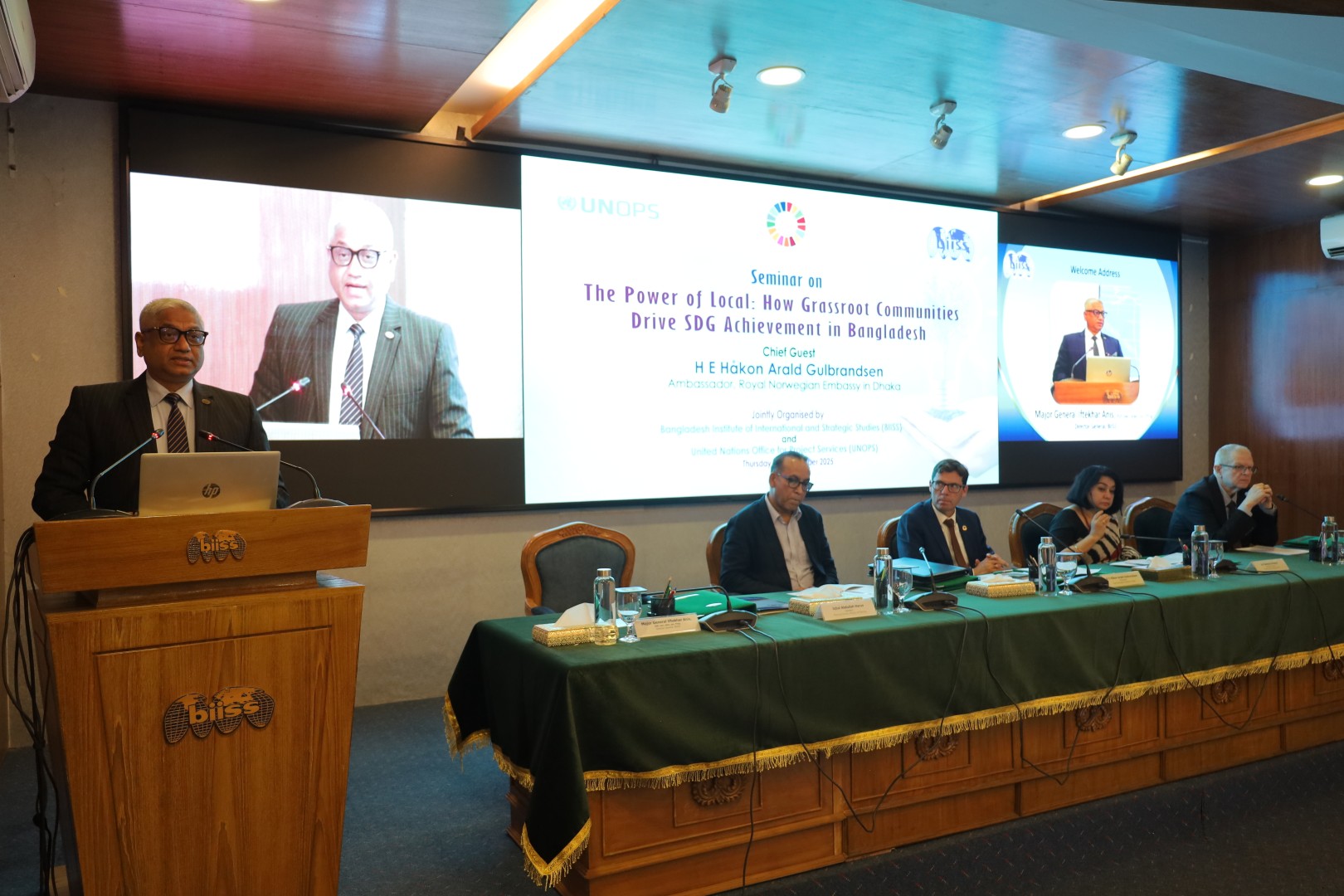
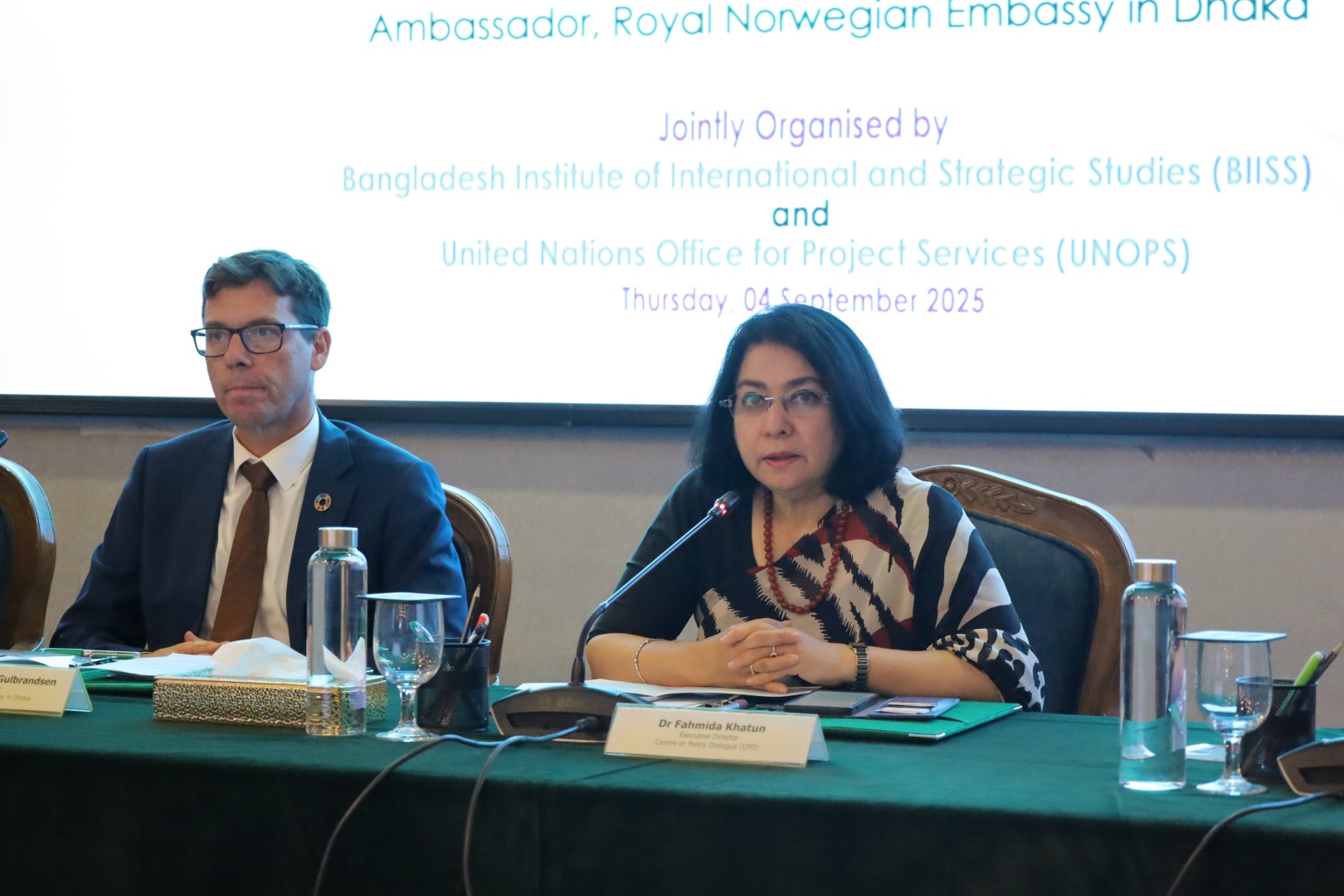
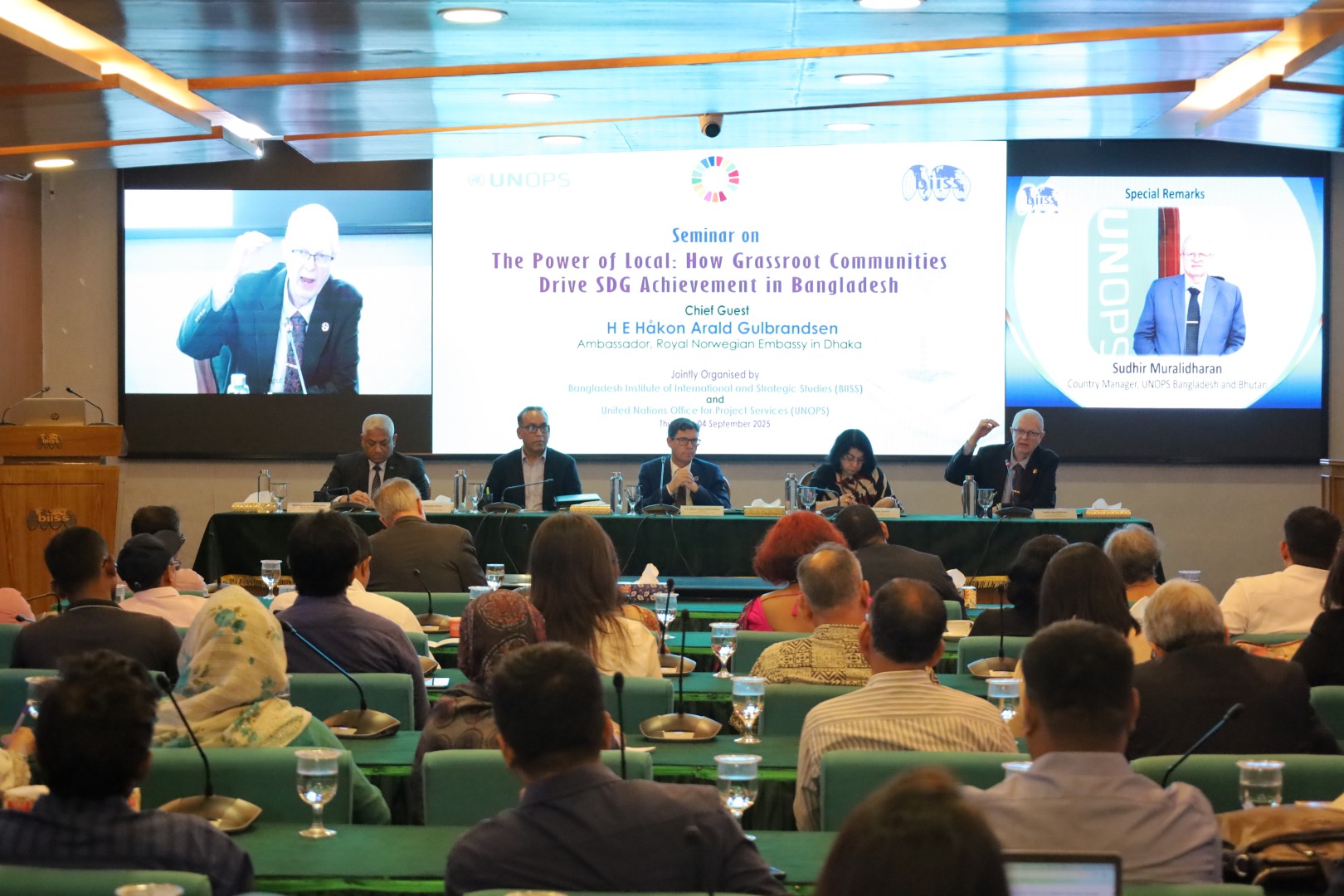
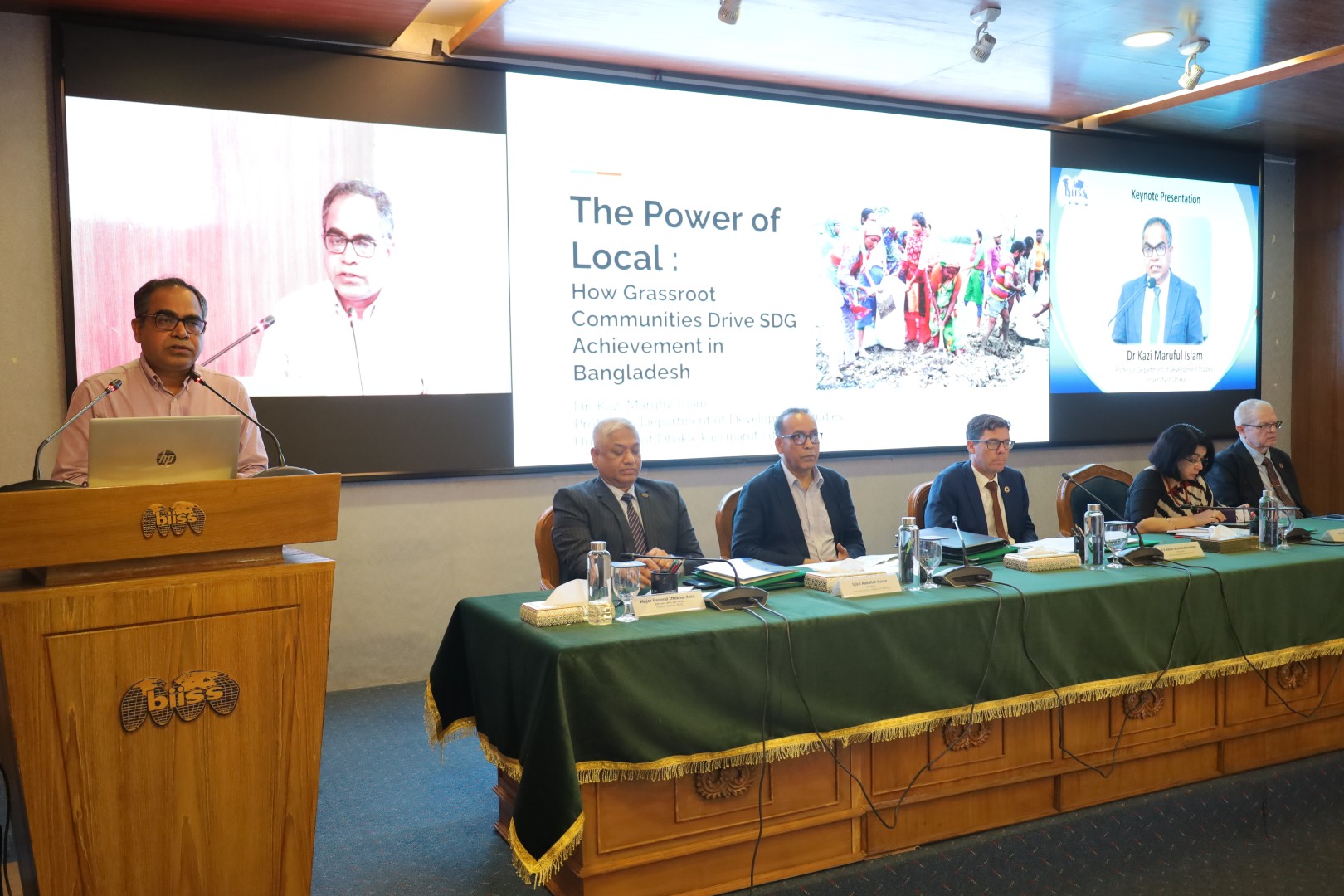
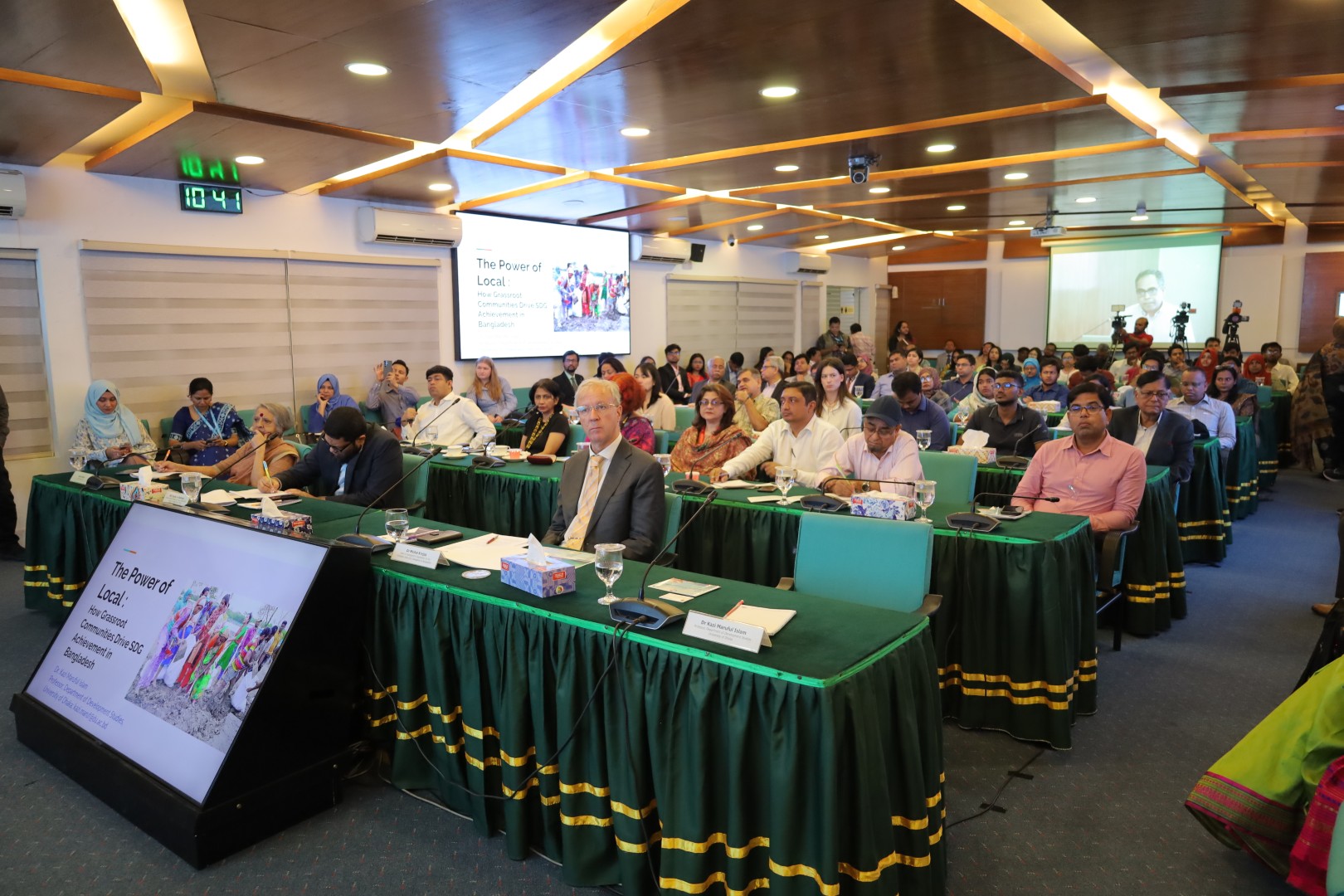
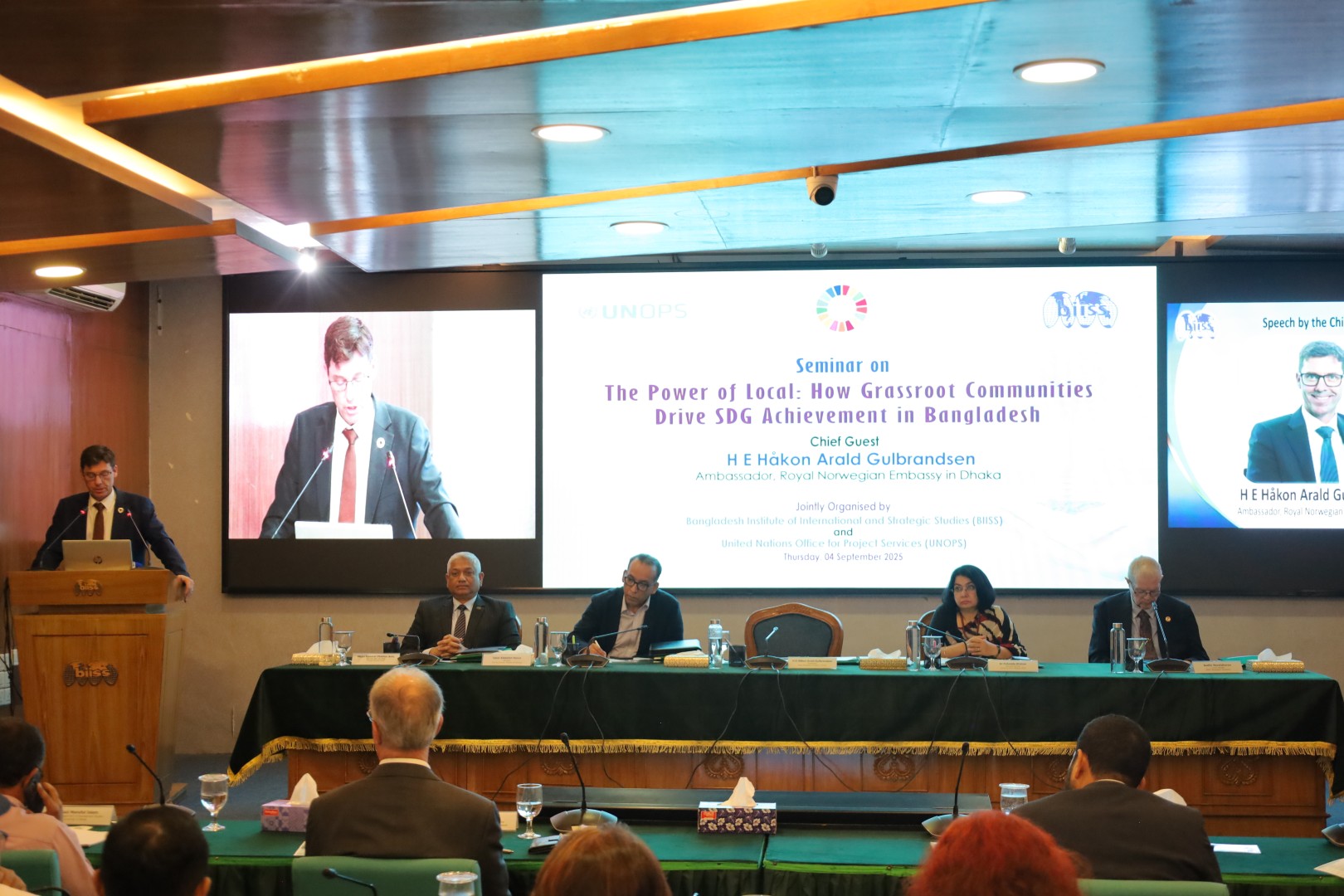
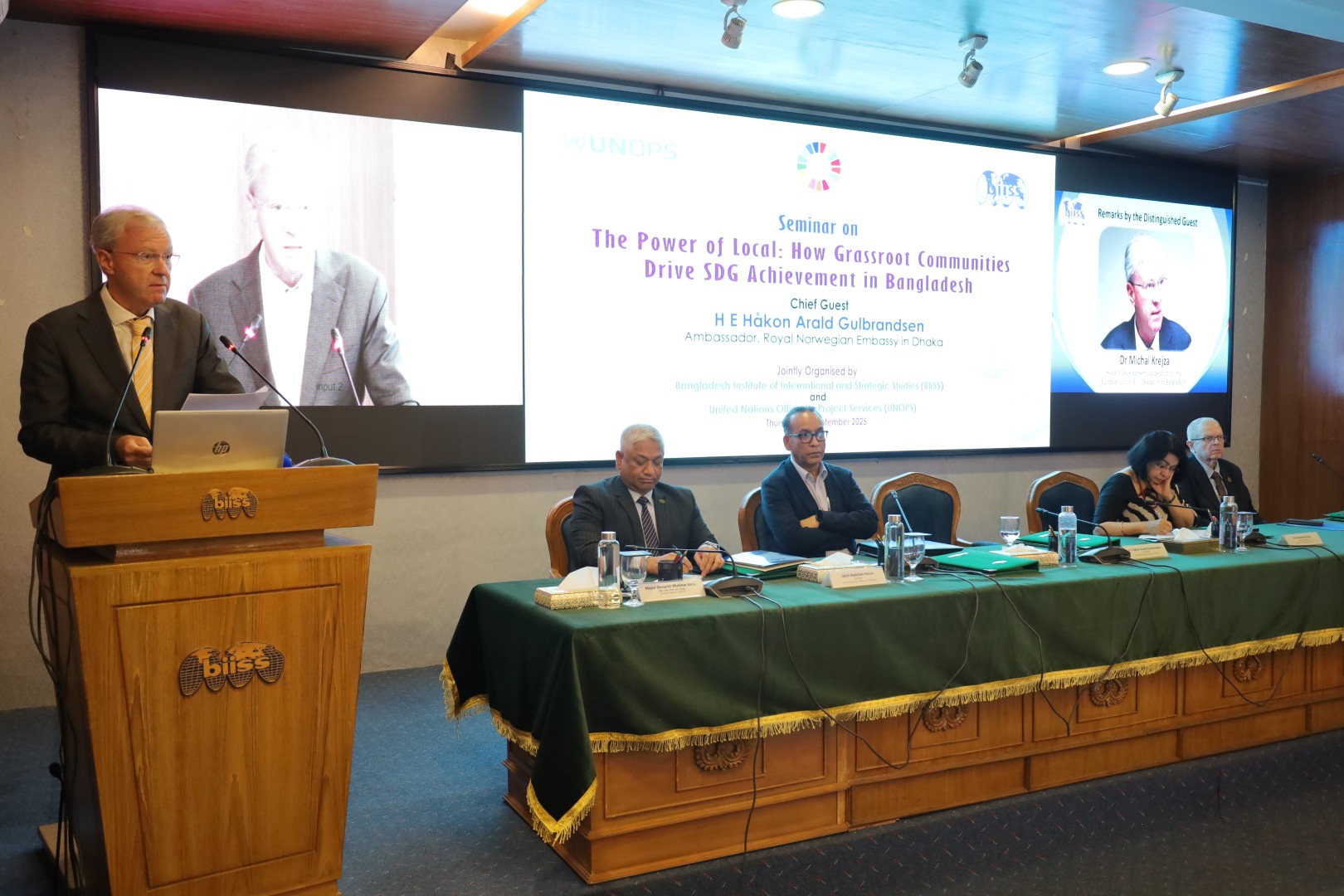
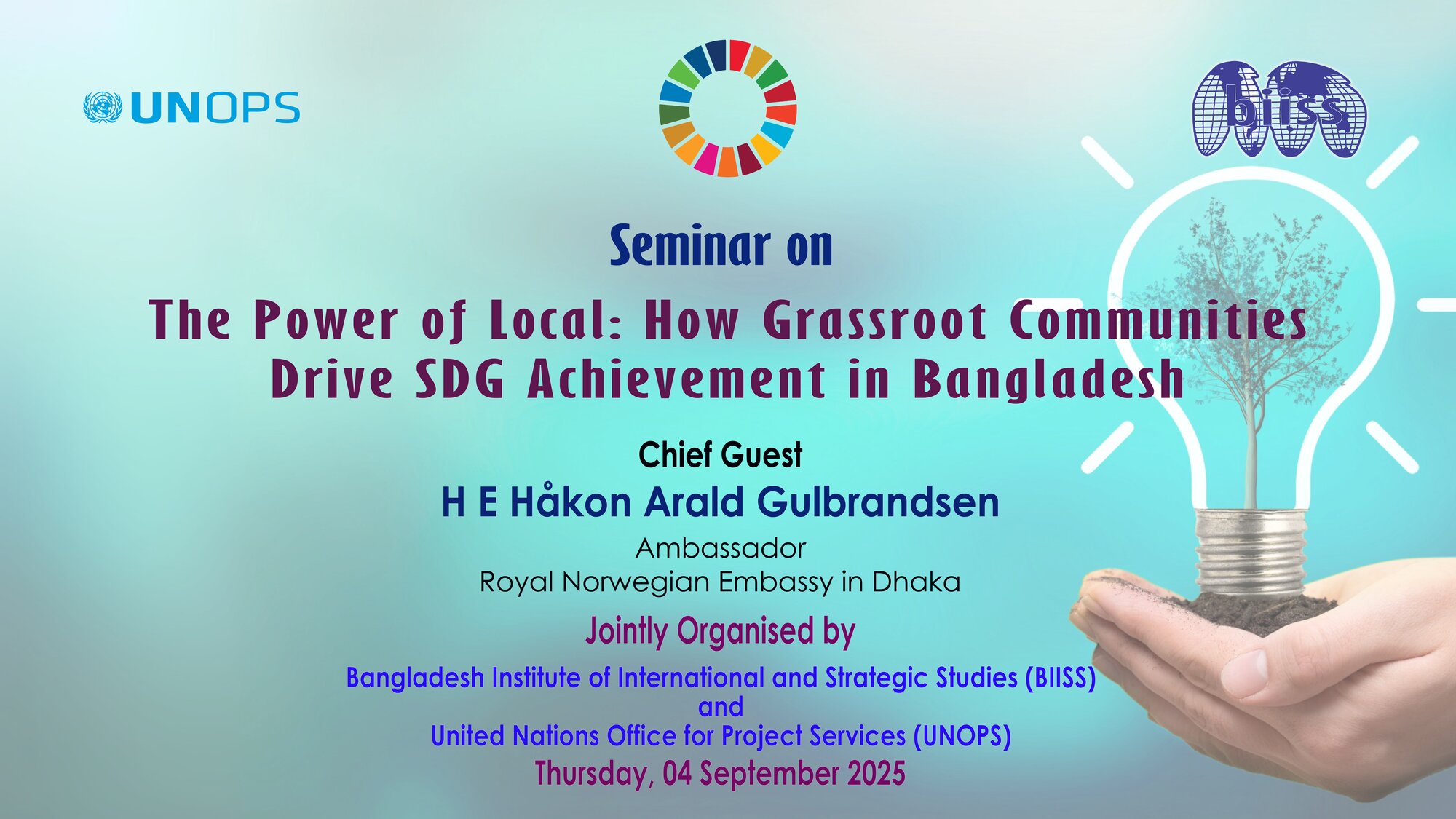
The Bangladesh Institute of International and Strategic Studies (BIISS), in collaboration with the United Nations Office for Project Services (UNOPS), organized a roundtable discussion titled “The Power of Local: How Grassroots Communities Drive SDG Achievement in Bangladesh” on 04 September 2025 in Dhaka.
The roundtable brought together policymakers, development practitioners, academics, community leaders, diplomats, and representatives from national and international organizations to discuss the critical role of grassroots communities in advancing the Sustainable Development Goals (SDGs) in Bangladesh. The programme featured a keynote presentation by Dr Kazi Maruful Islam, Professor, Department of Development Studies, University of Dhaka, and was moderated by Dr Fahmida Khatun, Executive Director, Centre for Policy Dialogue (CPD).
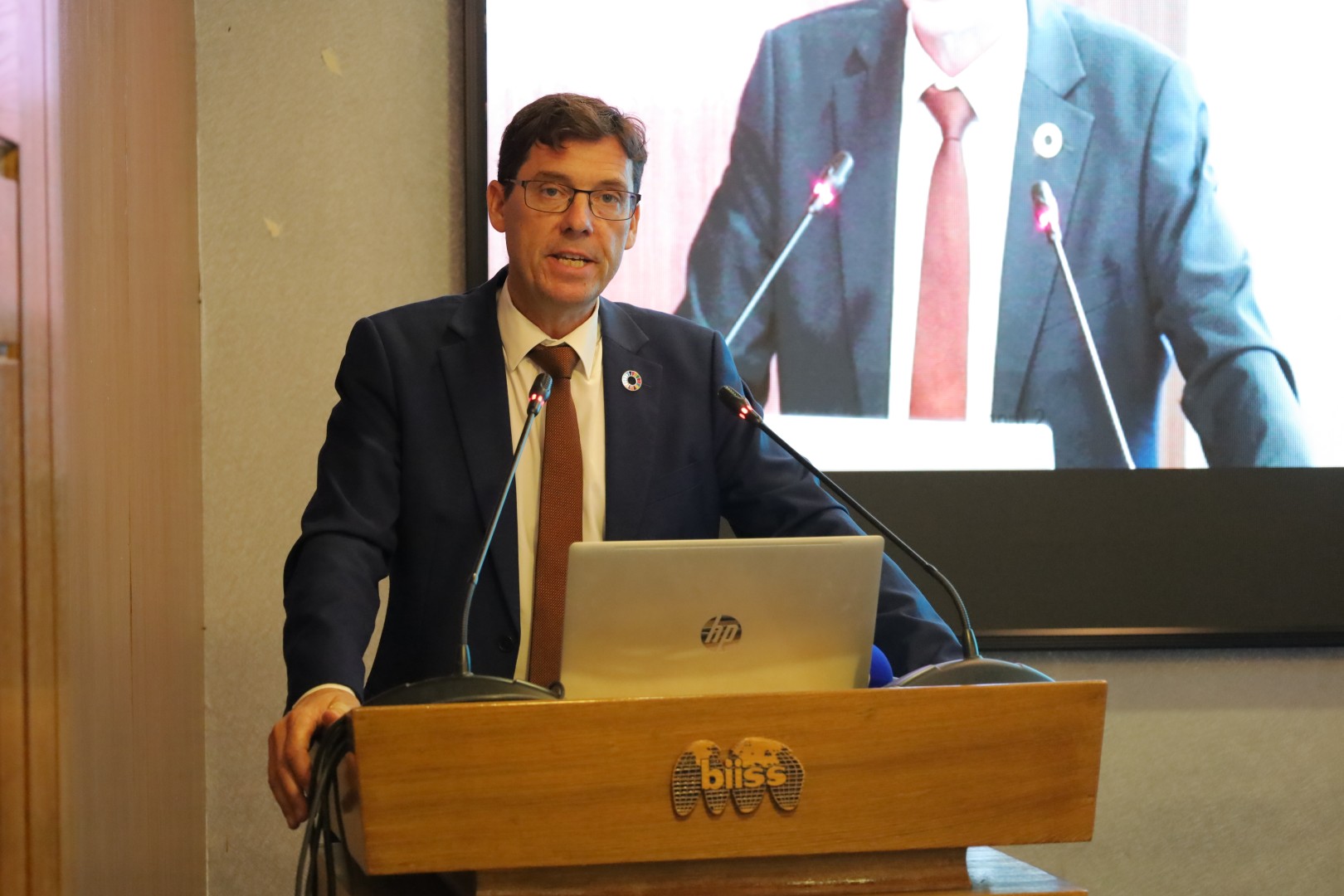
Håkon Arald Gulbrandsen, Ambassador of the Royal Norwegian Embassy in Dhaka, attended the event as the Chief Guest. Special remarks were delivered by Sudhir Muralidharan, Country Manager, UNOPS Bangladesh and Bhutan, while Iqbal Abdullah Harun, Secretary, Planning Division, Ministry of Planning, participated as the Special Guest. Distinguished remarks were also provided by Dr Michal Krejza, Head of Development Cooperation, European Union Delegation to Bangladesh, and Md Toufiq-ur Rahman, Director General, Multilateral Economic Affairs Wing, Ministry of Foreign Affairs. The discussion was further enriched by the perspective of grassroots leadership shared by Khushi Kabir, Secretary, Nijera Kori.
The roundtable examined how locally driven initiatives and community-based approaches contribute to achieving the SDGs by addressing development challenges at the grassroots level. Participants discussed the importance of empowering local communities, strengthening inclusive governance, enhancing community resilience, and fostering partnerships among government institutions, civil society organizations, development partners, and local stakeholders. Discussions also highlighted the need to ensure that local voices and experiences are effectively integrated into national development planning and SDG implementation processes.
The event provided a valuable platform for exchanging ideas and experiences on community-led development and identifying practical strategies to accelerate progress toward the SDGs. Participants underscored that sustainable and inclusive development outcomes can be achieved more effectively when local communities are empowered as active partners in the development process.
Objectives of the Roundtable are:
• To examine the role of grassroots communities in advancing the implementation of the Sustainable Development Goals (SDGs) in Bangladesh.
• To explore how community-led initiatives contribute to inclusive development, poverty reduction, social empowerment, and environmental sustainability.
• To identify opportunities for strengthening local participation in development planning, implementation, and monitoring processes.
• To assess the challenges faced by grassroots actors and explore policy measures to enhance their capacity and effectiveness.
• To promote collaboration among government agencies, development partners, civil society organizations, academics, and community leaders in achieving the SDGs.
• To generate policy recommendations for integrating local knowledge, experiences, and priorities into national development strategies and sustainable development efforts.