Bangladesh Institute of International and Strategic Studies
Bangladesh Institute of International and Strategic Studies
Response of the International Community and the Repatriation Process on 21 April 2021
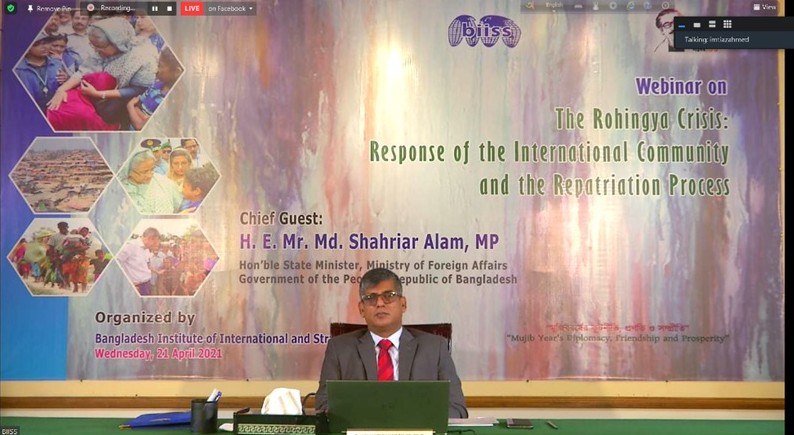
Bangladesh Institute of International and Strategic
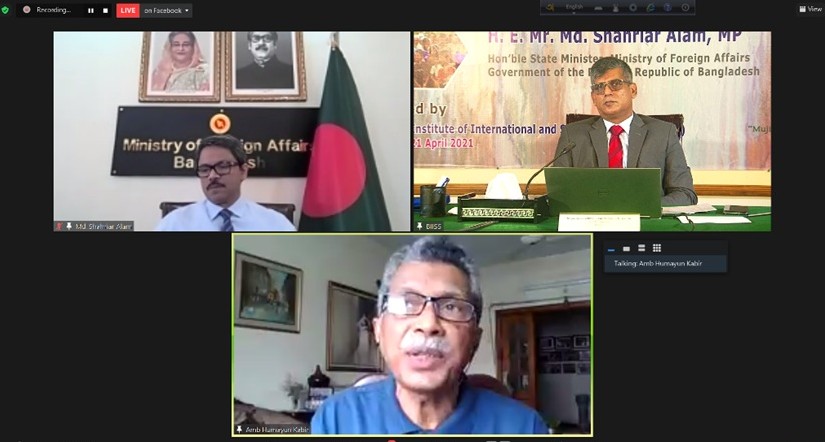
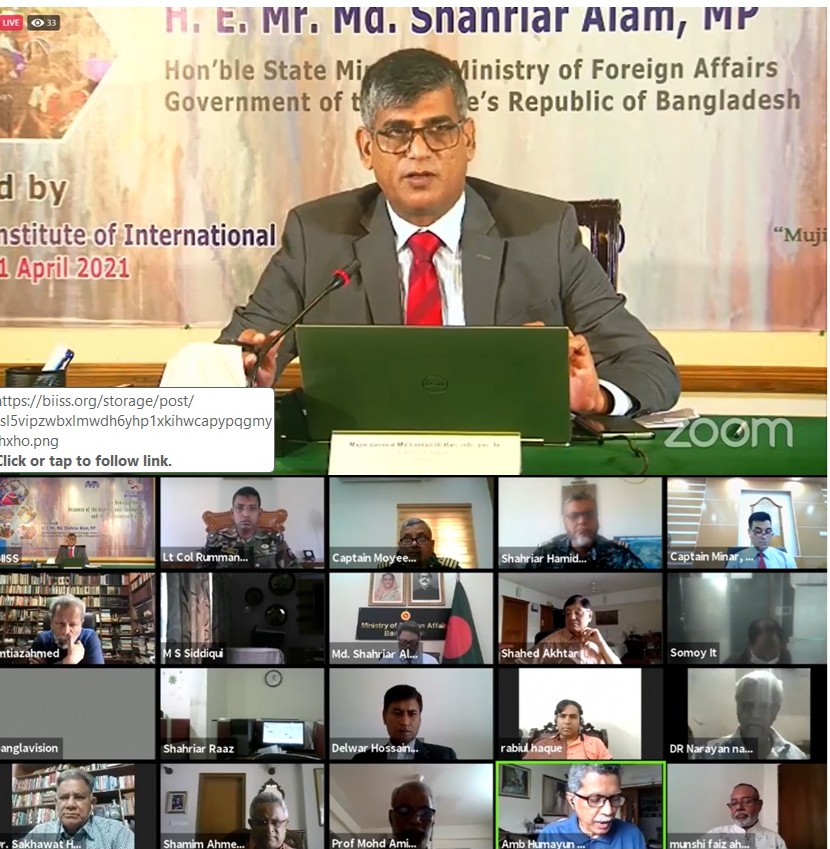
Studies (BIISS) organised a Webinar titled “The Rohingya Crisis:
Response of the International Community and the Repatriation Process”, on
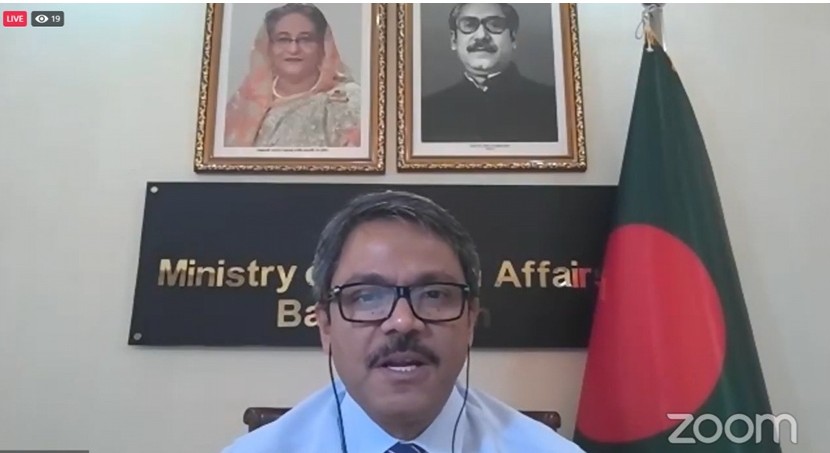
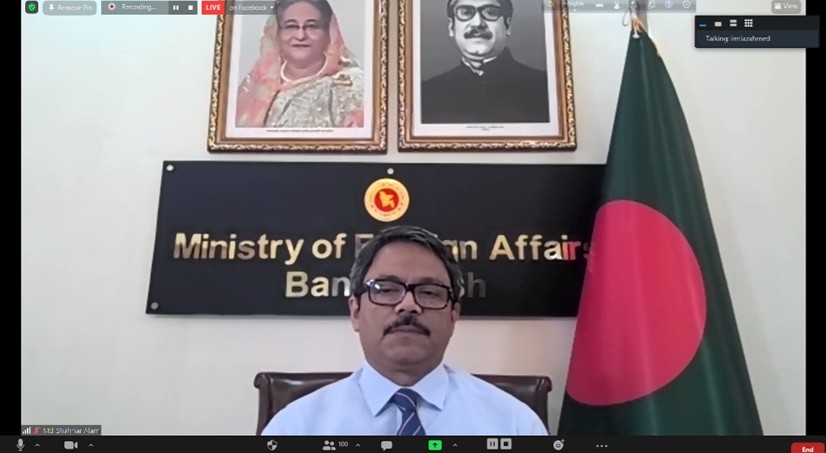
21 April 2021. His Excellency Mr. Md. Shahriar Alam, MP, Hon’ble State
Minister, Ministry of Foreign Affairs, Government of the People’s Republic of
Bangladesh graced the occasion as the Chief Guest. Major General Emdad Ul
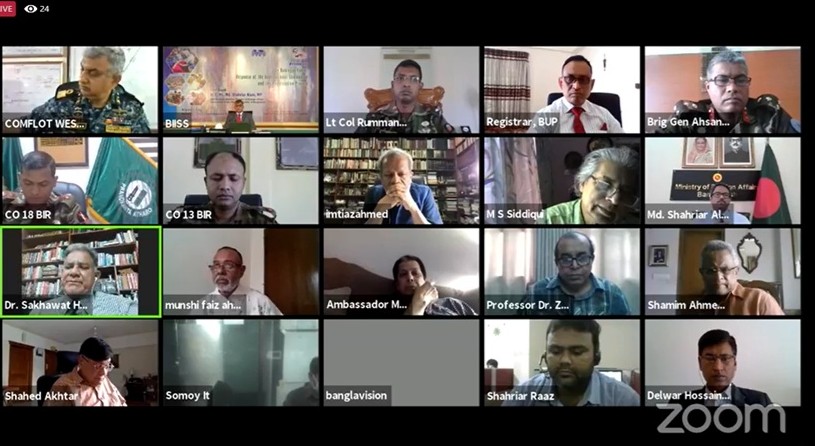
Bari ndc, psc, te, Director General, BIISS chaired the webinar. Five papers
were presented in the webinar: “The West and the Rohingya Crisis”,
presented by Ambassador M. Humayun Kabir, President,
Bangladesh Enterprise Institute (BEI); “ASEAN, Myanmar and the Rohingya Crisis”
presented by Brigadier General M Sakhawat Hossain (Retd), Senior Fellow, South
Asian Institute of Policy and Governance, North South University, Dhaka,
Bangladesh, “The Role of India and China in the Rohingya
Repatriation Process,” presented by Professor Dr. Imtiaz Ahmed, Department of
International Relations, University of Dhaka; “Multilateral Organisations and
The Rohingya Crisis: The UN, EU and OIC”, presented by Mr. Md. Delwar Hossain,
Director General, Myanmar Wing, Ministry of Foreign Affairs, Bangladesh; and,
“The Dilemmas of US Sanctions against Myanmar” by Mr. Abu Salah Md. Yousuf,
Senior Research Fellow at Bangladesh Institute of International and Strategic
Studies (BIISS).
Major General Bari pointed out to the increasing predicament
caused by a million of refugees and praised Bangladesh for showing a great
example of generosity and compassion by opening the border for those displaced
people. He showed his concern about the Rohingya community being vulnerable to
human trafficking and exploitation by radical or organised criminal groups.
Referring to Bangladesh’s formal negotiations with Myanmar as well as the
recent military coup in February 2021, he expressed his concern that the
repatriation efforts were not producing desired results for Bangladesh. He
added that the Sino-Indian competition in Myanmar is visible in the strategic
and investment aspects. He emphasised that the Association of Southeast Asian
Nations (ASEAN), Bay of Bengal Initiative for Multi-Sectoral Technical and
Economic Cooperation (BIMSTEC), ASEAN Regional Forum
(ARF), global civil society organisations (CSOs) and think tanks
should come forward to pursue Myanmar to understand the necessity of cooperation with
Bangladesh regarding the Rohingya repatriation.
Ambassador Kabir proposed an arbitrary grouping
where he would include the United States (US), the European Union (EU), the
United Kingdom (UK), Canada, Australia, Japan and South Korea, and examine the
issue from two perspectives—official and civil society. He emphasised on the
humanitarian aspect and asked for further consideration of the livelihood and
survival of the Rohingya community. Although he lauded the support of the
Western countries for the Rohingyas and the host community, he addressed the
nuanced views of the Western countries, Japan, South Korea, India and China,
given their geopolitical interests. Finally, he underscored the idea of a
federal Myanmar and opined that it could open up some space for Rohingyas and
other small minorities who are facing difficulties.
Brigadier General Hossain referred to the organisational
structure of ASEAN and the lack of collective mechanism which do not allow
discussion on internal issues of the member states. He also said that Myanmar’s
Senior General Min Aung Hlaing’s invitation indicated that the ASEAN countries
were not much interested in what was happening inside Myanmar. Regarding the
Military junta’s handling of the Rohingya issue, General Hossain highlighted
that the military government in Myanmar might try to open a dialogue with
Bangladesh in the coming days to showcase to the West that they are trying to
negotiate this humanitarian issue. However, the repatriations might not be easy
since they would not risk the North Arakan to be dominated by the Rohingyas.
General Hossain suggested to look into the East, particularly Singapore,
Indonesia, Thailand and Malaysia, to resolve the Rohingya crisis and proceed
diplomatically.
Professor Dr. Ahmed highlighted four similar
interests of China and India: keeping peace at the Northeast borders of India
and the Southern borders of China; improving connectivity; and, getting access
to Myanmar’s market. He also identified two factors for driving out the
Rohingyas from Myanmar on 25 August 2017: first, the Kofi Annan Commission
Report and the international community’s positive stance on reviewing
Myanmar’s Citizenship Law as well as granting the Rohingyas human rights; and,
second, recognition of the Rohingyas making them entitled to a zone of their
own as per the Constitution. He argued that the Rohingyas cannot ever be
repatriated without the consent of the Myanmar military. He suggested
decoupling India and China from Myanmar as well as called for active
international effort to shame the international investors in Myanmar.
Mr. Hossain informed that it is very difficult to raise certain
issues in bilateral settings as they require collective efforts. After the
crisis began in August 2017, Bangladesh took this issue to several
international bodies, including the United Nations Security Council (UNSC), the
United Nations Human Rights Council (UNHRC) and the Organisation of
Islamic Cooperation (OIC). According to him, these attempts resulted in a few
signs of progress, including UNSC’s comprehensive reports on atrocities in
Myanmar and a green signal from the OIC’s ad hoc Ministerial Committee to file
a case at the International Court of Justice (ICJ) etc. Nevertheless, he also
pointed that there had been very little commitment on the part of the
international community. He urged to take the solution as a collective
responsibility of all and not only of the governments of Bangladesh.
Mr. Yousuf tried to answer three issues regarding the US
sanctions against Myanmar : the motives, the effectiveness and the future
prospects. He categorised the US sanctions against Myanmar into three phases:
1997 to 2010, when the US was not closely connected with Myanmar; 2010 to 2017,
or the “engagement period”; and the post-2017 period or the “paradoxical
phase”. Mr. Yousuf also briefly explained several dilemmas on US sanctions
against Myanmar, i.e. US’s geopolitical interests in the region, the policies
of close allies of the US on Myanmar, stakes of several multinational companies
and the opportunity cost related to sanctions. In the end, he opined that the
China factor and US’s strategic interest in the region would continue to
dominate US policy regarding Myanmar.
His Excellency Mr. Alam said that Bangladesh surely saved the
world from a possible catastrophe when the people’s plight emerged in 2016 and
2017. He praised Bangladesh’s contribution as a responsible member of the
international community, which includes providing food, shelter, medical
facilities and a dedicated place for the Rohingya’s in Bhashan Char where
20,000 of them are at refugee. He condemned Myanmar’s effort to misguide the
international community through unsubstantiated claims and unjustifiable pieces
of information against Bangladesh and hoped that soon enough the UN will start
to take responsibility.
In the concluding remarks, Major General Bari noted the
different dimensions of the Rohingya crisis and emphasised that Bangladesh
needs to develop a long term approach. He urged all the stakeholders to make an
all-out effort to solve the crisis and thanked the panelists for sharing their
knowledge and expertise.