Trade War 2.0 and Its Implications for Bangladesh
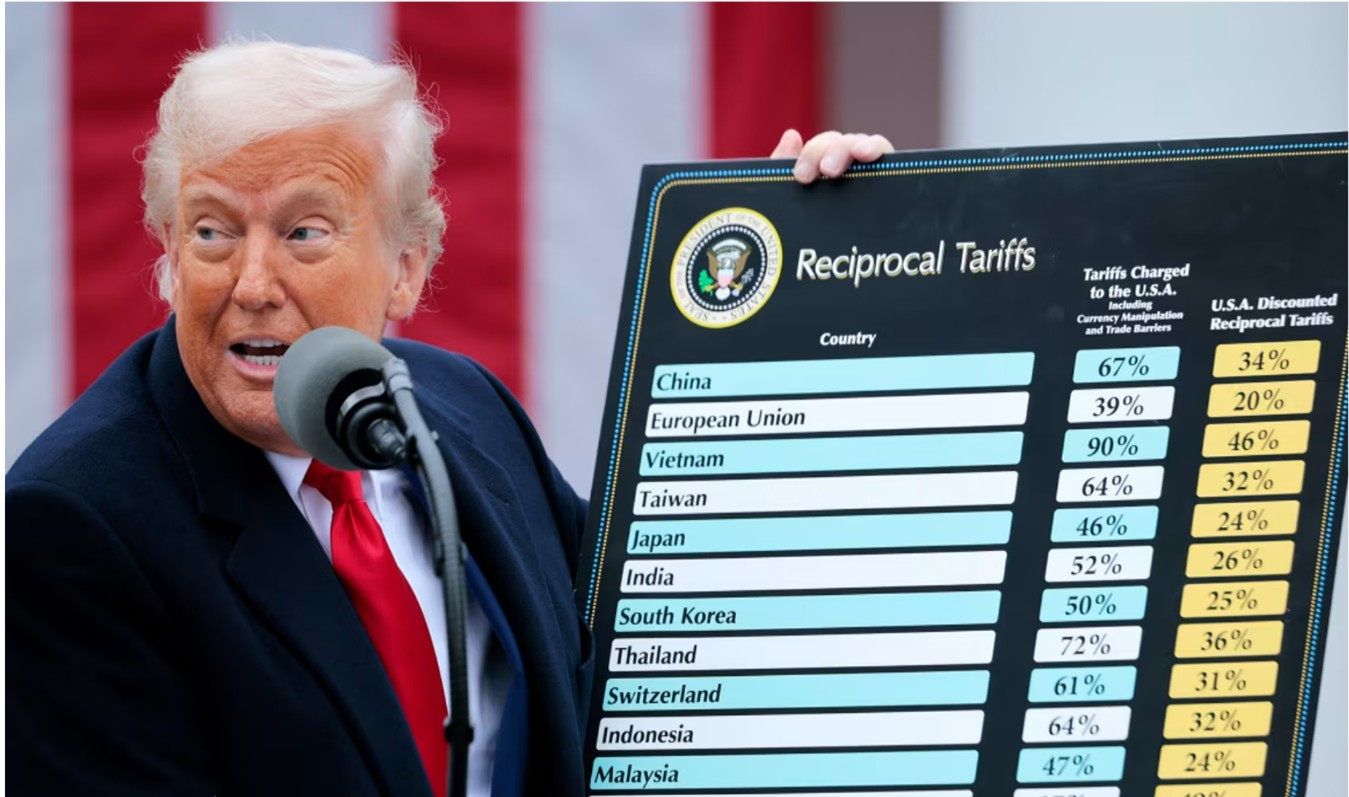
The renewed phase of the U.S. trade war, termed “Trade
War 2.0,” marks a dramatic escalation in global economic tensions and presents
complex challenges for emerging economies such as Bangladesh. On April 2,
President Trump announced a sweeping tariff regime targeting nearly all trading
partners, granting a temporary 90-day pause before implementation. By August 1,
the administration declared new tariff rates as part of what it called a
“reciprocal tariff framework.” This recalibration underscored both the unpredictability
and the unilateral nature of U.S. trade policy under Trump’s leadership.
The new tariffs—effective from August 7—include
broad-based hikes alongside sector-specific duties: 25% on cars and auto parts,
and 50% on steel and aluminium. Additionally, countries aligning with what
Washington perceives as the “anti-American policies” of the BRICS bloc face an
extra 10% tariff penalty.

At its core, these measures reflect a U.S. attempt to
reassert economic dominance and curb China’s global influence. While framed as
a measure to secure “fair trade,” the broader strategic aim is to consolidate
U.S. leverage over key sectors and supply chains. This new round of tariffs not
only disrupts global trade patterns but also injects uncertainty into
international markets, undermining the predictability essential for investment
and long-term planning. For developing economies, the consequences extend
beyond economics; they influence political alignments, industrial
competitiveness, and macroeconomic stability.
For Bangladesh, the trade war presents both risks and
limited opportunities. The U.S. had initially imposed a 35% reciprocal tariff
on Bangladeshi goods, alongside a demand that exports labelled “Made in
Bangladesh” demonstrate at least 40% local value addition. After several rounds
of virtual and in-person negotiations, Bangladesh succeeded in lowering the
tariff rate to 20% for key sectors, including ready-made garments (RMG).
Despite this partial success, the RMG industry still faces an effective tariff burden
of 35%, threatening its competitiveness in the U.S. market, which is
Bangladesh’s single largest export destination.

Compounding these challenges is the limited political
engagement between Dhaka and Washington, which has constrained Bangladesh’s
negotiating leverage. The U.S. has also reportedly tied tariff reductions to
expanded imports of American goods, including wheat, cotton, and aircraft; though
the full details remain confidential under a non-disclosure agreement. This
raises a key concern: whether Bangladesh’s domestic economy can absorb such
imports without undermining its balance of payments or local industries.
Moreover, any bilateral deal between the U.S. and China will have ripple
effects across South and Southeast Asia, potentially marginalising Bangladesh
in global value chains.
The broader implication of Trade War 2.0 is a
fundamental reshaping of global supply networks. As multinational corporations
reassess production bases to avoid tariffs, Bangladesh must position itself
strategically to attract investment and secure new markets. This requires
accelerating export diversification beyond garments, strengthening domestic
value chains, and improving trade facilitation infrastructure. At the same
time, Dhaka must deepen its engagement with regional and multilateral platforms
to mitigate the risks of unilateral U.S. policies.
Ultimately, the new U.S. tariff regime is not merely
an economic maneuver, it is a geopolitical tool designed to project influence
and constrain competitors. For Bangladesh, survival and success in this
turbulent landscape will depend on proactive diplomacy, structural reform, and
a shift toward a more diversified, resilient, and innovation-driven trade
strategy.